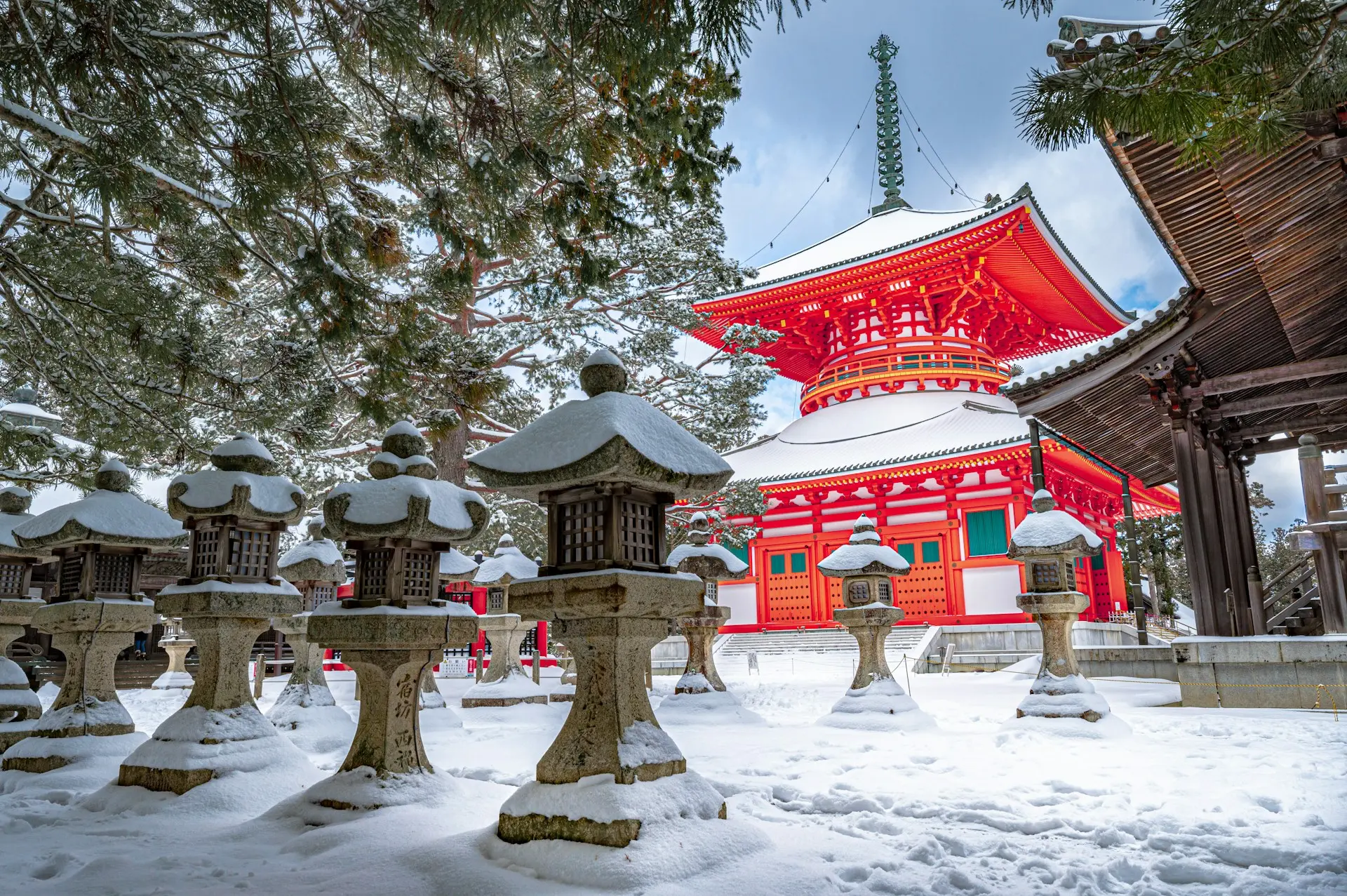
Introduction to Koyasan: Unveiling the Mystical Mountain
Koyasan, located in Wakayama Prefecture, is a place shrouded in mystique and spiritual energy. Surrounded by lush forests and nestled in the mountains, this UNESCO World Heritage site is renowned as the birthplace of Shingon Buddhism.
At the heart of Koyasan lies the sacred Okunoin Cemetery, a sprawling expanse of moss-covered gravestones and ancient trees. This sacred site is the final resting place of Kobo Daishi, the revered Buddhist monk who founded Koyasan and is believed to be in eternal meditation.

As you wander through the forested paths, the air is imbued with a sense of tranquility and reverence. The centuries-old gravestones, some of which date back over a thousand years, stand as silent witnesses to the passage of time. Okunoin Cemetery is a place where the boundary between the living and the dead becomes blurred, a testament to the profound spirituality that permeates this mystical mountain.

The History of Koyasan: Kobo Daishi and the Shingon Sect
Koyasan, a sacred mountain located in Wakayama Prefecture, Japan, holds a significant place in the country’s religious history. At the heart of this historical importance lies the presence of Kobo Daishi and the Shingon sect of Buddhism.
Kobo Daishi, also known as Kukai, was a visionary monk and scholar who founded the Shingon sect, which is known for its esoteric practices and teachings. Born in 774, Kobo Daishi played a pivotal role in shaping the spiritual landscape of Japan, leaving behind a profound legacy that continues to attract pilgrims and visitors to Koyasan.
The Shingon sect, established by Kobo Daishi, holds a unique place among Buddhist traditions in Japan. Its teachings and practices focus on harnessing the power of mantra, mudra, and mandala, and it is distinguished by its profound emphasis on esoteric rituals and meditation techniques. Kobo Daishi’s intention was to make the esoteric teachings of Buddhism more accessible to the general public, aiming to foster spiritual awakening and enlightenment.
This dedication to spreading the wisdom of Shingon Buddhism led to the establishment of Koyasan as a spiritual hub, attracting scholars, practitioners, and curious individuals seeking spiritual growth and enlightenment.
Navigating Koyasan: How to Get There and Best Times to Visit
To reach Koyasan, visitors have a few options, depending on their preferences and starting location. The most common way to get to this sacred mountain is by train and cable car. From Osaka, travelers can take the Nankai Koya Line to Gokurakubashi Station and then transfer to the cable car that will take them up to Koyasan. The journey from Osaka takes approximately two hours in total. Alternatively, visitors can also take a direct bus from Osaka or Kyoto to Koyasan, which takes a little longer but offers a more scenic route.
The best times to visit Koyasan largely depend on personal preferences and the desired experience. Koyasan is beautiful year-round, with each season offering its own unique charm. Spring, specifically April and May, is a great time to visit as the cherry blossoms bring stunning bursts of color to the mountain. The autumn foliage in October and November is equally breathtaking, with vibrant shades of red, orange, and gold covering the landscape. However, Koyasan tends to be more crowded during these peak seasons, so visitors looking for a quieter experience may prefer to visit during the slightly less busy months of June or September.
Visitors to Koyasan have the following transportation options:
- Train and cable car: Take the Nankai Koya Line from Osaka to Gokurakubashi Station, then transfer to the cable car to Koyasan.
- Direct bus: Take a direct bus from Osaka or Kyoto to Koyasan for a scenic route.
Best times to visit Koyasan:
- Spring (April and May): Cherry blossoms bring bursts of color to the mountain.
- Autumn (October and November): Vibrant foliage in shades of red, orange, and gold covers the landscape.
Note: Koyasan tends to be more crowded during peak seasons, so consider visiting in June or September for a quieter experience.

Okunoin Cemetery: Walking Through Centuries of History
ucked away in the sacred grounds of Koyasan, lies the ancient Okunoin Cemetery. As one of Japan’s most revered burial sites, this cemetery boasts a rich history that stretches back for centuries. The tranquil atmosphere and the towering cedar trees create a serene ambiance, making it a perfect spot for contemplation and inner reflection.
Wandering through the labyrinthine pathways of Okunoin Cemetery, visitors can’t help but feel a sense of awe and reverence. Here, amidst the moss-covered tombstones and elaborate mausoleums, lies the final resting place of Kobo Daishi, the founder of the Shingon sect of Buddhism. It is said that Kobo Daishi, also known as Kukai, entered eternal meditation in 835 AD and that he still resides in eternal meditation to this day. This belief has drawn countless pilgrims over the years, making Okunoin Cemetery a central part of the Koyasan pilgrimage experience.
Temple Lodging: An Authentic Experience in Shukubo
One of the most unique and immersive experiences visitors to Koyasan can have is staying in a shukubo, or temple lodging. These traditional accommodations offer a chance to live like a monk, providing an authentic glimpse into the daily life and rituals of the Buddhist community. As guests, visitors are expected to follow certain rules and etiquette, such as engaging in morning prayers or participating in meditation sessions. This allows for a deeper understanding and appreciation of the spiritual practices that are core to the Shingon sect of Buddhism, which is predominant in Koyasan.
Shukubos are typically situated within temple grounds, allowing guests to easily access the various religious sites and activities nearby. The accommodations themselves are often simple and modest, providing a serene and peaceful environment that is in harmony with the natural beauty of the surroundings. Many shukubos offer traditional Japanese-style rooms, complete with tatami floors, futon beds, and sliding paper doors. Some may even have shared bathing facilities or hot spring baths, adding to the rejuvenating experience of staying in a shukubo.
Overall, the temple lodging experience in Koyasan offers a rare opportunity to immerse oneself in the spirituality and tranquility of this mystical mountain.
Benefits of staying in a shukubo:
- Unique and immersive experience
- Authentic glimpse into the daily life and rituals of the Buddhist community
- Deeper understanding and appreciation of Shingon Buddhism
- Serene and peaceful environment in harmony with nature
- Access to various religious sites and activities
- Traditional Japanese-style rooms with tatami floors and futon beds
- Shared bathing facilities or hot spring baths for relaxation
Immersing yourself in the spirituality and tranquility of Koyasan through a temple lodging experience is truly a remarkable journey.
The Spiritual Practices of Koyasan: Goma Fire Rituals and Morning Prayers
Goma Fire Rituals are an integral part of the spiritual practices in Koyasan. These ancient rituals, also known as Goma Gyo, are performed by the monks to purify negative energies and invite positive forces into the world. The ritual involves the burning of wooden sticks that represent the individual’s desires, attachments, and negativities. As the flames engulf the sticks, it is believed that these impurities are purified, and the smoke carries away the prayers and wishes, reaching the heavens.
The Goma Fire Rituals are held in a dedicated hall, where visitors can witness this powerful and mesmerizing ceremony, immersing themselves in the deep spirituality of Koyasan.
Morning prayers are another significant spiritual practice in Koyasan. As the first rays of the sun paint the sky, monks assemble in the temple halls for a profound and serene prayer session. Known as Otsutome, these morning prayers are conducted in both large and small temples across Koyasan. The monks chant sutras and offer their prayers, creating a harmonious atmosphere of devotion and tranquility.
Visitors are welcome to participate in these morning prayers, embracing the serene energy of the rituals and experiencing the profound spirituality that permeates Koyasan.
Goma Fire Rituals:
- Purify negative energies
- Invite positive forces into the world
Morning Prayers:
- Conducted in temple halls
- Monks chant sutras and offer prayers
- Create a harmonious atmosphere of devotion and tranquility
Visitors can witness the Goma Fire Rituals and participate in the morning prayers, immersing themselves in the deep spirituality of Koyasan.

Kongobuji Temple: The Heart of Shingon Buddhism
Kongobuji Temple, nestled in the heart of Koyasan, holds great significance for followers of Shingon Buddhism. As the head temple of this ancient sect, Kongobuji serves as a spiritual and administrative center for Shingon practitioners. Its tranquil atmosphere and stunning architecture make it a must-visit destination for those seeking a deeper understanding of Japanese Buddhism.
The origins of Kongobuji Temple can be traced back to the 9th century when Kobo Daishi, the founder of Shingon Buddhism, established the sect on the sacred grounds of Koyasan. The temple’s name, Kongobuji, translates to “Diamond Peak Temple,” representing the indestructible and pure teachings of Shingon Buddhism. Within its hallowed halls, visitors can admire magnificent fusuma paintings and intricate woodcarvings, offering a glimpse into the rich history and artistic heritage of the Shingon tradition.
Danjo Garan Complex: Exploring Koyasan’s Architectural Wonders
The Danjo Garan Complex is a must-visit destination for architecture enthusiasts exploring the mystical wonders of Koyasan. This iconic landmark showcases an array of impressive structures, each representing significant facets of the Shingon Buddhist tradition.
From its awe-inspiring pagodas to its intricately carved wooden sculptures, the complex embodies the essence of Japanese craftsmanship and spiritual devotion. As visitors wander through the complex, they are greeted by the sight of towering gates adorned with vibrant colors and elaborate motifs, a testament to the grandeur and significance of this sacred space.
Beyond its visual appeal, the Danjo Garan Complex offers a profound insight into the rich history and cultural heritage of Koyasan, serving as a gateway to a world filled with architectural marvels.
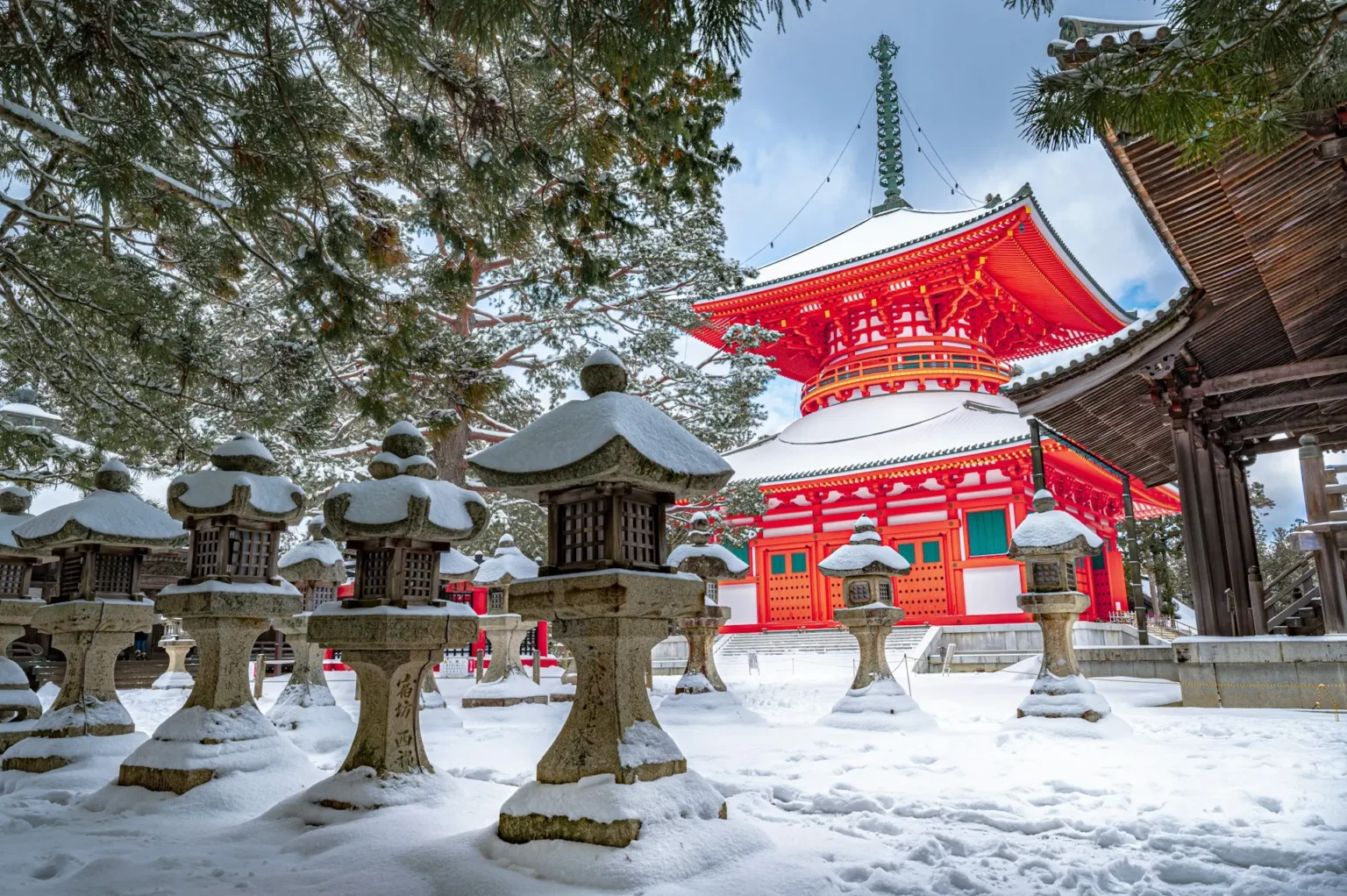
One of the highlights of the Danjo Garan Complex is the Konpon Daito, a towering pagoda that serves as a focal point of spiritual gathering and reflection. Standing at an impressive height, this architectural masterpiece features a striking blend of intricate carvings, vibrant colors, and symbolic ornaments.
As visitors ascend the stairs to reach the pagoda, they are enveloped in a sense of tranquility and reverence, amplifying the sacred atmosphere of the entire complex. Inside the Konpon Daito, one can find sacred relics, prayer halls, and serene meditation spaces, providing a sanctuary for spiritual seekers amidst the bustling energy of Koyasan.
Whether marveling at its external beauty or seeking solace within its walls, the Konpon Daito offers a profound experience that encapsulates the essence of Koyasan’s architectural wonders.
Pilgrimage Routes: Tracing the Sacred Paths around Koyasan
There are several pilgrimage routes in Koyasan that allow visitors to immerse themselves in the sacred atmosphere of the mountain.
- Koyasan Choishi Michi: This 7.2-kilometer trail takes pilgrims through beautiful forests and past stone markers called choishi. These markers, with inscriptions of various sutra passages, serve as reminders of Koyasan’s spiritual significance. Walking along this path, surrounded by ancient trees and the gentle sounds of nature, is a serene and contemplative experience.
- Nyoninmichi: Translating to “path for women,” this trail was historically used by women to reach Okunoin Cemetery since they were not allowed to enter through the main gate. Today, both men and women can walk this path, which is lined with stone statues representing female deities. Along the way, pilgrims can find small shrines and pagodas that offer a peaceful space for reflection and prayer. The Nyoninmichi is not only a route of pilgrimage but also a testament to the evolving inclusivity of spiritual practices in Koyasan.
Culinary Journey: Vegetarian Cuisine and the Art of Shojin Ryori
If you are a food enthusiast, then Koyasan offers a unique culinary journey that you won’t want to miss. The vegetarian cuisine known as Shojin Ryori is the centerpiece of this experience, showcasing the artistry and philosophy behind Buddhist cooking. Shojin Ryori is characterized by its focus on simplicity and mindfulness, using only fresh and natural ingredients while avoiding the use of meat, fish, and pungent vegetables like onions and garlic. This diet not only nourishes the body but also aligns with the spiritual practices of Koyasan, promoting a sense of harmony and balance. So, while in Koyasan, be sure to indulge in the flavors of Shojin Ryori and discover a new dimension of gastronomic delight.
The art of Shojin Ryori extends beyond the plate and into the presentation of the dishes. Each meal is carefully prepared to be visually appealing, incorporating a variety of colors, textures, and arrangements. Delicate stoneware and lacquerware are used to serve the meals, enhancing the overall aesthetic experience. Moreover, the emphasis on seasonality is evident in Shojin Ryori, with the menu changing to reflect the freshest ingredients available and to honor the natural cycles. From refreshing salads and pickled vegetables to flavorful tofu-based dishes and delicate soups, every bite of Shojin Ryori transports you to a world where food is not just sustenance but a form of art and a symbol of reverence.
FAQs
What is Shojin Ryori?
Shojin Ryori is a form of vegetarian cuisine that originated in Buddhist temples in Japan. It focuses on using plant-based ingredients and avoiding the use of meat, fish, and other animal products.
Why is vegetarian cuisine important in Koyasan?
Vegetarian cuisine is important in Koyasan because it aligns with the Buddhist principles of compassion and non-violence towards all living beings. It also allows visitors to experience the traditional and cultural aspects of Shojin Ryori.
What can I expect from a Shojin Ryori meal in Koyasan?
A Shojin Ryori meal in Koyasan typically consists of multiple small dishes, which showcase seasonal and local ingredients. The flavors are often subtle and delicate, and the presentation is thoughtfully arranged to enhance the dining experience.
Can I experience Shojin Ryori without staying at a temple lodging?
Yes, some temples in Koyasan offer the option to have a Shojin Ryori meal without staying overnight. However, it is recommended to make a reservation in advance as availability may be limited.
Are there any dietary restrictions to consider when having Shojin Ryori in Koyasan?
Shojin Ryori is generally vegan-friendly, but it may contain ingredients derived from soy, gluten, or nuts. If you have any specific dietary restrictions or allergies, it is best to inform the temple in advance so that they can accommodate your needs.
Can I learn how to prepare Shojin Ryori in Koyasan?
Some temples in Koyasan offer cooking classes where visitors can learn how to prepare Shojin Ryori. These classes provide a hands-on experience and insights into the techniques and philosophy behind this culinary art.
Is Shojin Ryori expensive in Koyasan?
The cost of Shojin Ryori meals in Koyasan can vary depending on the temple and the specific menu. However, in general, it is considered a unique and special dining experience, so the prices may be higher compared to regular restaurants in the area.
Can I request non-vegetarian meals in Koyasan?
While Koyasan is known for its vegetarian cuisine, some temple lodgings may offer non-vegetarian options upon request. It is best to check with the specific temple beforehand to see if they can accommodate your dietary preferences.
Is it necessary to book temple lodging in order to try Shojin Ryori in Koyasan?
No, it is not necessary to book temple lodging in order to try Shojin Ryori in Koyasan. Some temples offer the option to have a meal without staying overnight. However, staying at a temple lodging provides a more immersive experience and allows you to fully embrace the spiritual atmosphere of Koyasan.