


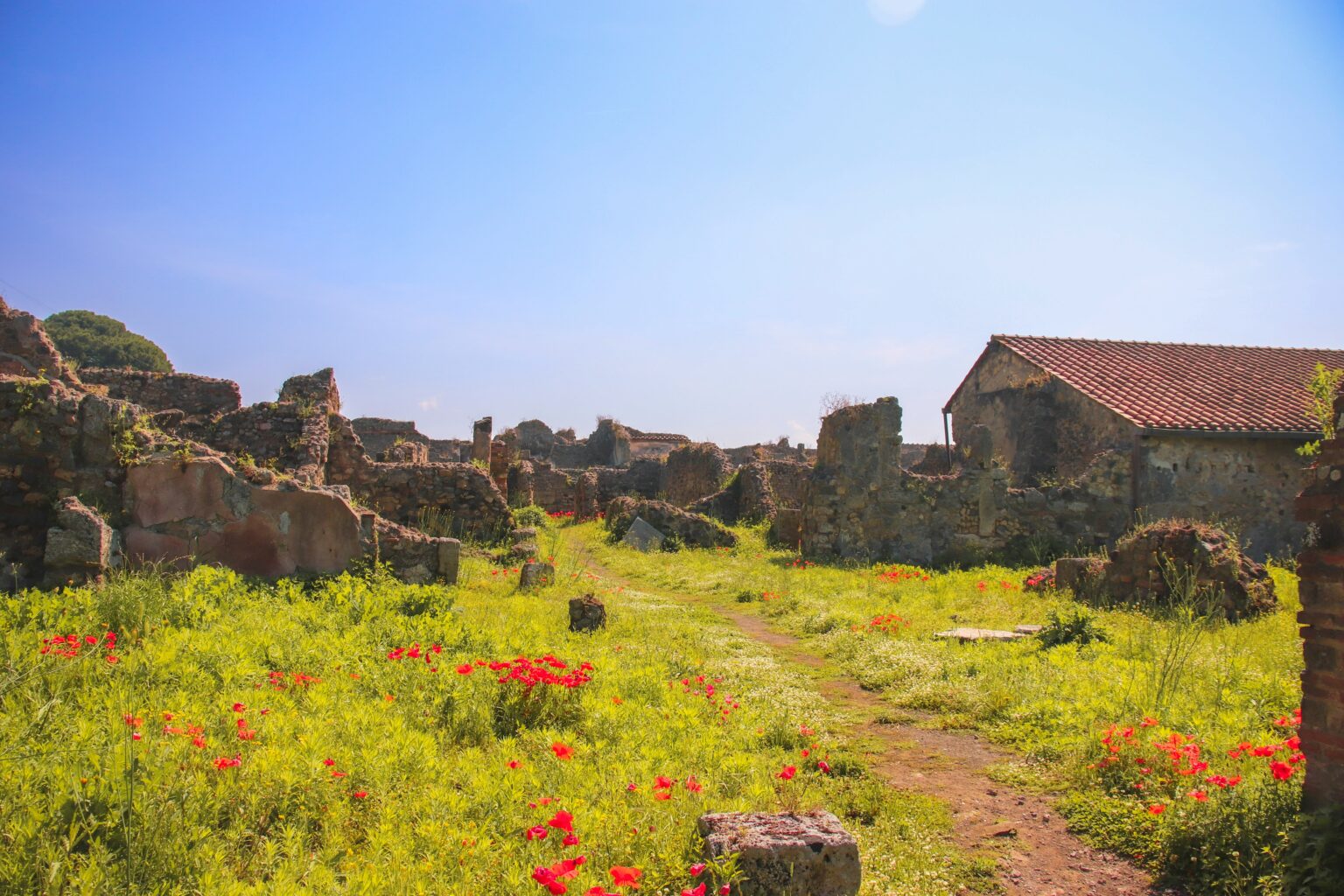

Pompeii was an idyllic coastal resort town south of Rome. But on August/October 79 AD, Mount Vesuvius suddenly erupted, decimating Pompeii.
As the cloud of ash, rock and scorching-hot gas engulfed Pompeii it changed day into night, pliny the Elder described people covering their heads while wails and prayers could be heard coming from every direction.
History
Pompeii has an almost haunting quality about it. Once a bustling town full of life and culture, suddenly everything changed in 79 AD when Mt Vesuvius erupted. Pompeii was blanketed in hot pyroclastic ash that virtually obliterated all evidence of life within its boundaries, save for some lucky survivors who managed to flee before its devastation was complete.
After over 2000 years since its destruction, Pompeii archaeologists have gained much insight into ancient life in Italy and how its residents died. One particularly amazing discovery were plaster casts made of victims who perished during the eruption allowing scientists to recreate every momentous detail of their last moments on Earth.
Pompeii initially featured walled streets organized into insulae (city blocks). These were constructed at the edge of a fertile plain. Over time, its walls grew and houses were built; both large villas and modest apartments. Over time the wealthy cultivated olives, wine, wheat and other crops while trade with other cities brought wool, silk, fish sauce, sandalwood and live animals for use in its arena.
The city also had a forum that served as the political, commercial and religious heart of their town surrounded by temples, markets and law courts. By the 2nd century BCE this core had taken on monumental form and design.
As with any Roman town, Pompeii had a variety of shops for each specialty imaginable, some open to the public while others were private. One fast food establishment still shows holes where containers held ready-to-eat food for customers.
As Pompeii was submerged, its inhabitants desperately attempted to flee. Some sought shelter within their homes but as volcanic ash accumulated it blocked doorways and roofs collapsed resulting in people remaining being suffocated and eventually killed – archaeological digs have unearthed over 1000 victims due to these piles; those killed during initial phase were covered with pumice stones and lapilli before high temperature pyroclastic flows moved quickly filling all open spaces with volcanic materials killing instantly all who weren’t covered within them by these mass death traps engulfments.
Archaeology
Pompeii was covered by a thick layer of volcanic ash from Mount Vesuvius’ eruption in 79 AD and preserved its buildings and artefacts within. When discovered later on, its discovery left people shocked as it revealed a sophisticated Greco-Roman city seemingly frozen in time.
Pompeians had become prosperous due to its abundant food production and seaport, boosted by wine and oil sales to cities in eastern Mediterranean. Their economy thrived even more thanks to wine exports to these cities – which ultimately resulted in increasingly Romanized institutions, architecture, and culture; Latin replaced Oscan as the official language, and it is estimated that about one third of their population moved there following Rome’s victory against Hannibal’s army during Second Punic War.
Pompeii boasts more than just its world-renowned Forum and Theater as iconic destinations; there are still intact homes, shops and brothels with original frescoes in some cases. Furthermore, political graffiti on walls – some restored- offers fascinating insights into everyday life during that period; including Pliny’s quote that refers to “a terrible toxic cloud with wails, prayers and horse manure.”
Over time, excavation work at Pompeii revealed its intricate urban system. Surrounded by thick walls, its urban system comprised insulae or “city blocks,” roughly rectangular in shape, housing residential, commercial, and production buildings; streets that branched off main east-west and north-south avenues (via della Fortuna, via di Nola and via dell’Abbondanza) featured numerous bakeries, fulleries and factories; an amphitheater was used for gladiator fights while an amphitheater hosted gladiatori combats while an amphitheater hosted public speeches while an amphitheater hosted gladiatori combats as well as spectacles and concerts.
Museums
Mount Vesuvius’ eruption buried Pompeii with an ash that preserved it, and now we can visit the excavated site to witness what life was like in those days. Wall frescoes and statues that have survived provide remarkable insight into ancient Roman culture, technology, lifestyles and lifestyles; artifacts provide remarkable information about daily life at Pompeii as it shows what people ate, where their homes were and who worshiped there.
Pompeii’s most astounding discoveries are its numerous villas (domus). These luxurious apartments typically featured large rooms that led to a central atrium with columns. Movable screens separated these rooms for winter heating using braziers; walls were decorated with various themes including mythological figures and animals.
One of Pompeii’s most impressive finds was this fresco depicting Demeter and Persephone worship, located in one of its largest villas. Painted between 200 BCE and 100 CE, its rich colors create an immediate feeling of excitement when viewing it; likely meant to emphasize their power over humans worshiping them.
Another stunning mosaic piece sponsored by Silla is this statue of Venus wearing tight robes and holding a scepter; likely created during Pompeii’s transformation into a Roman colony following the bloody Social War (91-89 BC).
Pompeii’s museums feature many stunning mosaics, like this stunning example from the House of the Faun. This mosaic blends Greek and Roman traditions to commemorate Diana. Additionally, its mural features the sacrifice of a bull which would often be displayed to emphasize Roman state power.
Tours
An organized tour is the best way to experience Pompeii. A guide can make following maps and deciphering ruins much simpler, providing a deeper understanding of what you see. Your tour guide will take you not only to popular sights such as Roman bakeries or ancient family restaurants but also lesser-known gems like brothels where “Umberto was here” graffiti can be found. Furthermore, they’ll teach you more about Roman habits like eating and drinking habits as well as fun activities they had and misguided beliefs regarding Mount Vesuvius eruption.
Visit Pompeii during spring or fall when temperatures are milder, crowds are reduced and there is less heat reflected off paved streets from the sun. Water and sunscreen should also be brought along since its reflection can make things hotter. Since exploring an archaeological site can be tiring work, wear comfortable shoes and plan a full-day trip if visiting Pompeii.
One way to reach Pompeii from either Naples or Sorrento by train is via the Napoli-Sorrento Circumvesuviana line, stopping directly outside Pompei Scavi – Villa dei Misteri station, just feet from its entrance to the ruins. Or alternatively you could rent a car from Rome and drive via Sorrento onto SS 117 towards Naples – either way this journey should only take around three hours!
If you’re visiting Pompeii, make sure you buy tickets in advance online in order to avoid lines. Arrive before noon if possible to avoid crowds and read your free Pompeii guide book (known as the red book) available upon entry as it contains useful background information about what awaits. Wear sunglasses and a hat as the interior lighting may not be sufficient and bring along water, snacks and sunscreen so as not to become dehydrated on your journey – don’t forget your camera too!
Trip-ready gear from Amazon
As an Amazon Associate, grandgo.com earns from qualifying purchases. Links below are affiliate links — clicking them may earn us a small commission at no extra cost to you. Prices and availability are shown on Amazon.co.uk.
- Universal travel adapter — 150+ countries covered.
- Anker portable charger 20000mAh — All-day phone battery.
- Lonely Planet destination travel guide — Trip planning essential.