


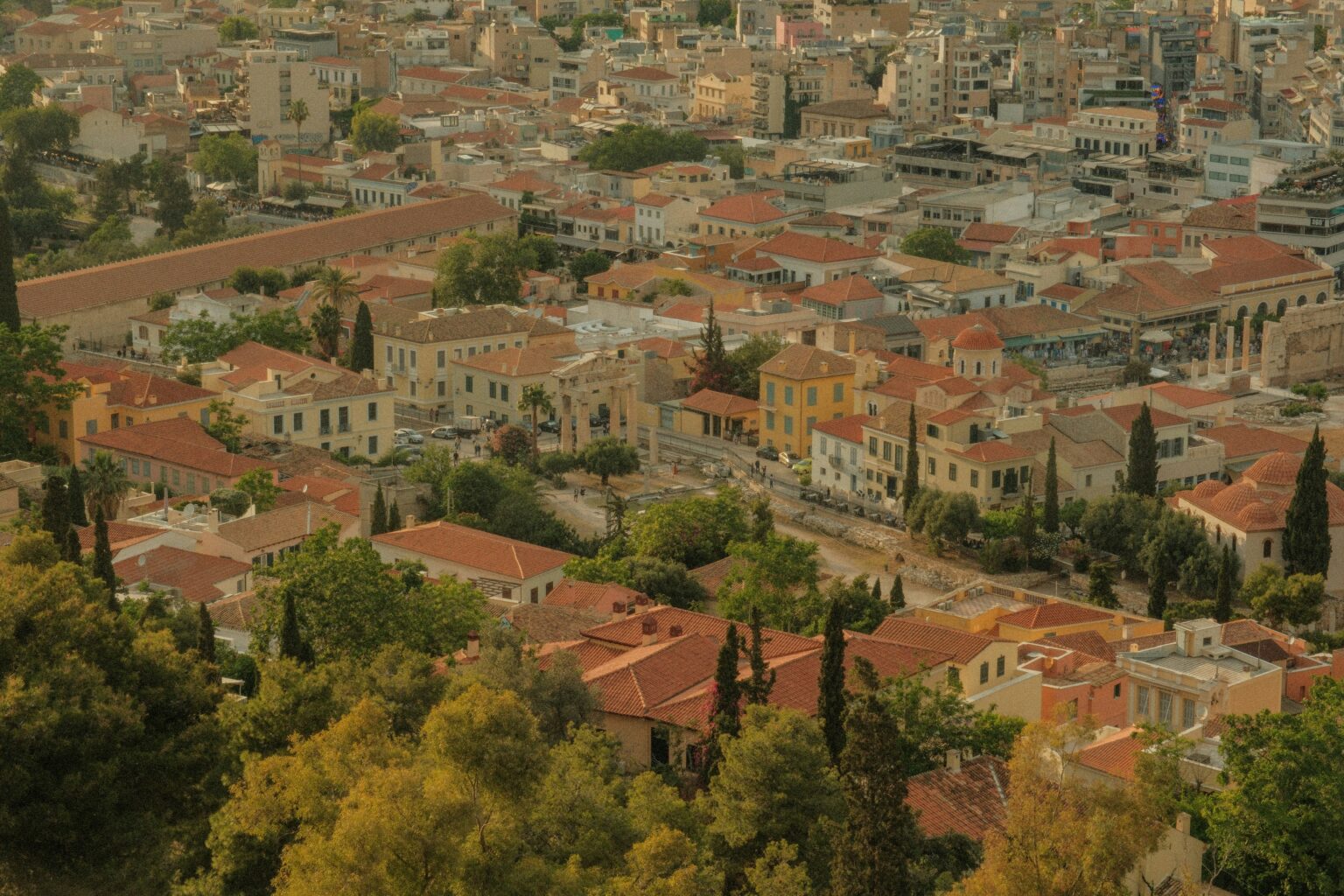

Athens was enjoying an unprecedented period of rapid development during this era; citizens became wealthier while merchants gained in influence, while its bourgeoisie started playing an active role in making political decisions for the state.
Solon divided his city into four classes, established the first separation of church and state and promoted trade and industry; thus giving birth to democracy.
The Acropolis
The Acropolis of Athens was an ancient sacred precinct where Athenians engaged in important artistic, political and religious activities. Its highest point is the Parthenon, an immense Doric temple containing a beautiful statue of Athena that stood upon it. Other prominent structures included Erechtheion, Propylaea and Athena Nike temple.
Archaic Athenians saw the Acropolis reach its greatest glory during the mid-6th century BC during Archaic period. Following their victory against Persians, Athenians under Pericles initiated an ambitious building program. He hired prominent architects Callicrates and Ictinus along with Phidias as his executors to implement his visionary scheme.
When to Visit
To avoid crowds and the heat of Greece, visit the Acropolis in the early morning or late evening – this will enable you to beat both crowds and hot weather! Open daily except on 1 January, 25 March, 1 May and 25 December (closed only for ceremonies).
The Acropolis can be reached either from the west, through its beule gate erected after the third century AD Herulian invasion, or from the south through a door under Athena Nike temple. Once inside you can walk to the Parthenon, Erechtheion, Propylaea and Athena Nike temple located directly to its right which was built during Classical times.
The Ancient Agora
The Ancient Agora was at the core of ancient Athens, serving as a hub of commercial, political and cultural activity. Playwrights such as Aeschylus, Sophocles and Euripides staged their works here while philosophers such as Socrates, Plato and Anaxagoras debated their ideas – it also served as a marketplace and center of public life where citizens transacted business; discussed politics; enjoyed music or comedy performances; even gambled!
Pericles (l. 495-429 BCE), who rebuilt much of the district after Persian King Xerxes invaded in 480 BCE, rebuilt three stoas, including the famous Poikile Stoa (Painted Stoa, Painted Porch). Also renovated were Hephaestus Temple and shrines in addition to mycenaean period tombs known as tholos tombs that had become derelict.
Today, the restored Stoa of Attalos houses the Museum of the Ancient Agora which displays finds from archaeological excavations conducted by the American School of Classical Studies at Athens during 1950s and 1960s excavations. Admission to this museum is included with admission price to Ancient Agora.
Agoraios Kolonos or Market Hill is a large circular building near Hephaestus’ Temple that was used as workshops by artisans working in pottery and textile production. Two cisterns provided water to this facility while its floor plan suggests it may have also served for assemblies, sales or exhibitions.
The Archaeological Museum
Entertain or educate the family at one of the world’s largest and most acclaimed museums – this remarkable archaeological gem offers five collections that cover Greek history from 6 millennium BC up until 4th century AD, including finds from Cyprus, Egypt and Italy as well as Greece itself.
The Prehistoric Antiquities Collection includes objects that provide visitors with a glimpse into ancient Greece, such as a Neolithic pottery vessel and Cycladic-era statue head from Neolithic Greece. Meanwhile, the Sculpture Collection details the development of Greek sculpture, including an eye-catching bronze statue depicting Artemision Jockey (some believe Zeus), ready to unleash his trident. Other highlights include Geometric and Archaic art collections as well as Greek funerary figures (kouroi) collections as well as metalworking works (some with miniatures!).
The Museum’s Egyptian Art collection is also world-class, including tools, jewellery and mummies on display. Additionally, its Collosal Portrait Head of Hadrian – who built his capital city around ancient Greek culture and was an enthusiastic admirer – can also be found here, showing how these two cultures combined to form modern western culture today. Aside from these iconic archaeological gems, its stunning modern building takes full advantage of its location on the former royal palace site while keeping sustainability top of mind by using both natural and mechanical ventilation systems in its construction – its unique hybrid ventilation system provides excellent coverage throughout this impressive museum experience!
The Theatre of Dionysus
Athens was home to some of the earliest examples of Greek drama. At the Theatre of Dionysus on the south slope of Acropolis was where Greek drama first took root – its grand structure built around an encompassing sanctuary dedicated to Dionysus Elefthereus served as an introduction to theatre for Athenians at large. Although initially designed as an Archaic structure, over time reconstruction took place under Periclean, Lycurgean and Hellenistic rule.
The theatre could accommodate 15,000 spectators who sat on peripteroi seats carved into the cliff face, surrounding an orchestra where chorus members performed. Behind it was the skene which may have resembled a tent. During Classical times a low speaker’s platform (bema) was added at the front of orchestra with reliefs from mythological stories sculpted onto its walls.
Dionysus, god of wine and revelry, fertility, life and inappropriate humor was honored at his theatre as it hosted both classic tragedies and contemporary comedies; performances were considered offerings to him; this sacred atmosphere made the Theatre of Dionysus such a wonderful way to kickstart an Acropolis visit!
The National Garden
The National Garden can be found behind the Greek parliament near Syntagma Square. Filled with beautiful exotic flowers and trees, there are plenty of places to relax under its tall trees while there is also a children’s library and small cafe available – opening hours of this garden range from sunrise to sunset.
Queen Amalia once made this garden her private botanical gardens; its impressive line of palm trees at its entrance is a reminder. Today it covers 15.5 hectares, featuring lush vegetation, landscaped gardens, tropical trees from around the world and open grass fields – as well as narrow labyrinth paths, romantic corners, hidden benches and flower pergolas that create an impressive experience for visitors.
There is a small zoo with goats and peacocks, as well as a botanical museum and children’s library within this garden. Additionally, visitors often bring food left-overs for the ducks that inhabit this special space – popular attractions include an expansive duck pond where bread scraps are left for these aquatic friends who call the National Garden home!
The National Garden is open and free to enter, with entrances on Leoforos Amalias Street, Vasilissis Sophias Avenue and Herod Atticus Street. Additionally, its proximity to Zappeion Hall for exhibitions and conferences makes this beautiful space an excellent place to escape the bustle of city center life.
The Odeon of Herodes Atticus
The Odeon of Herodes Atticus is one of Greece’s most breathtaking theatres, built during Roman times by wealthy Athenian benefactor Herodes Atticus as a tribute to Regilla who died shortly thereafter. Renowned for its magnificent architecture and superior acoustics, it was often used for musical concerts or philosophical lectures in antiquity.
The theater was constructed as a semi-circle with 35 rows of marble seats arranged in a semi-circular formation. Built in traditional Roman style, its three-story stage building featured huge columns and ornate statues; additionally it boasted an entrance portico with expensive lebanese cedar wood roof tiles; furthermore the orchestra pit was covered with black and white marble, designed by architect Xygalleon himself.
Antiquity saw Odeons serving as places for citizens to gather to watch performances and forge community bonds while also showing the Greeks’ advanced understanding of acoustics. Music and poetry were celebrated at these performances, reflecting ancient Greece’s dedication to arts.
Today, the Odeon has become renowned as a venue for classical concerts and theatrical productions, drawing in major artists such as Placido Domingo, Jose Carreras, Alicia de Larrocha and Maria Callas to perform. Additionally, its historical importance includes hosting many significant political speeches, award ceremonies and festivals.