


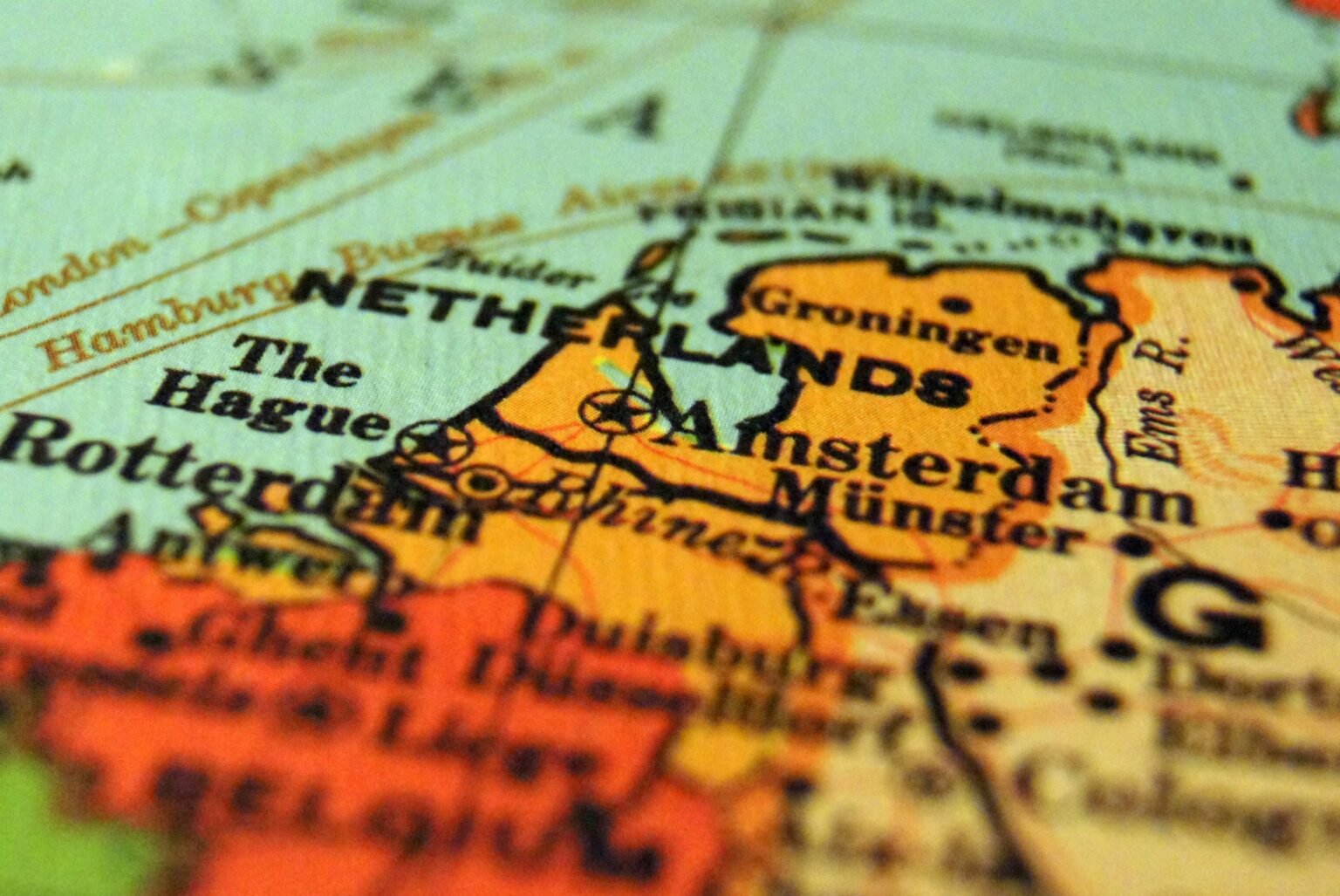

The Netherlands, commonly referred to as Holland, is a parliamentary constitutional monarchy located in Western Europe with Amsterdam serving as its capital and The Hague as its seat of government.
About one quarter of the Netherlands lies below sea level, so dikes were built to protect it from flooding. The highest point is Vaalserberg in Limburg Province.
Population
The Netherlands is a densely-populated nation renowned for its openness and entrepreneurialism. As one of the last Western European nations to become an aged society, its prosperity was bolstered by strong social safety nets that have fostered healthy aging among its older population. Unfortunately, however, financial crisis and recession ten years ago left serious doubts as to its future viability.
Netherlands is an extremely urbanized nation, and its three large cities (Amsterdam, Rotterdam and The Hague) form what is referred to as “Randstad”, an umbrella metropolitan area containing some 7.5 million residents with its agricultural green heart as its center. Most of its remaining population resides scattered among many small towns and villages that often possess distinctive regional traits.
Education is a fundamental aspect of Dutch culture and highly valued by families. The government provides financial support for schools and all children are required to attend primary school until age six; quality varies between towns but generally good; most pupils are bilingual while the national curriculum remains secular.
Up until the 1960s, Netherlands was home to one of the highest fertility rates worldwide. Since then, birth rates have significantly declined owing to wider use of birth control pills and secularization; people also now live longer.
This trend has created an increased need for immigrant labor, and the Netherlands has always been an accommodating environment. By early 21st century, about one fifth of its population had either been born abroad or had at least one foreign-born parent.
A majority of Dutch citizens are Christian (Roman Catholic and Protestant), with Muslims making up a small minority. Religion freedom is guaranteed under Dutch law; however, religious organizations still face many restrictions and challenges enforcing it in practice. Christianity and Islam remain prominent religions with nonreligious people making up an equal share.
Economy
The Netherlands boasts a highly developed, export-driven service economy. Services account for about half of national income and include hotels, restaurants, transportation, storage and communications as well as finance and business services. Industries contribute another third, featuring metalworking, petroleum refining, chemical processing and food production while agricultural activities like cheese making and fishing also play key roles.
The Dutch economy boasts a high standard of living and one of the lowest unemployment rates in Europe, making it a prime international trade and investment center. It boasts a stable political climate, well-educated workforce and cutting-edge logistics and telecom networks as its strongest advantages, plus has a rich tradition of providing overseas development assistance (ODA).
Though relatively small in size, the Netherlands ranks among the world’s premier industrialized countries. Although its industrial development started later than many other European nations, after World War II population growth and farm labor surpluses necessitated creating modern manufacturing industries.
Economy of Spain The economy of Spain is an international powerhouse when it comes to international trade, financial markets and energy production. Furthermore, its advanced research and development facilities make it a prime location for companies seeking entry to European Union markets.
Government plays an integral part in the Dutch economy through taxes and spending. The Council of Ministers, composed of ministers representing each ministry, plans and implements government policy while being answerable to States General (parliament). However, unlike in England, Dutch ministers cannot simultaneously be members of parliament.
Taxation policies in the Netherlands provide for excellent public services and social security benefits, and their international reach has grown rapidly over time, expanding in areas like telecom, IT and renewable energy production.
Wealth inequality in Sweden is relatively low, although some disparity exists between rich and middle class households. This disparity stems from our generous pension system which provides people with after-tax income that’s comparable to pre-retirement earnings compared to household savings which do not attract capital gains tax and mortgage interest deduction, thus favoring wealthy individuals over middle-class ones.
Environment
The Netherlands lies within the temperate zone, boasting mild winters and hot summers. Due to its location between high pressure air masses and low pressure air masses, unsettled weather such as winds and fog are frequently experienced, while autumn and spring rainfall is common.
At the late Pleistocene Epoch (126,000 to 11,700 years ago), glacial ice covered a significant part of what is now the Netherlands, leaving behind deposits of sand, gravel and clay that formed dunes belts inhabited by nature and wildlife today.
Over the course of this century, the Dutch have constructed an intricate system of dikes and levees to protect themselves against flooding. When combined with its highly populated parts not rising more than three feet (1 meter), the result is an exceptionally flat landscape.
Though one of the world’s densestly populated nations, The Netherlands also ranks highly for per capita land use – roughly half its surface is covered by forests, rivers and lakes – making it one of the greenest per capita land use countries in terms of density. Industrialisation remains strong throughout its economy while renewable energy development also remains at the forefront.
Dutch businesses have made an increasing effort to reduce their carbon footprint through using energy sources other than fossil fuels. While water quality in the Netherlands is improving, heavy pollution from traffic and intensive farming still remain major problems; additionally high concentrations of nitrogen and phosphorus in soil as well as atmospheric particulate matter pose health threats to residents living here.
The Dutch government has ambitious climate change ambitions and made significant strides towards combatting air and water pollution. Yet at the same time it remains one of the major emitters of sulphur dioxide emissions while new coal power plants continue to be built. On an EU level, however, The Netherlands actively advocates cost-effective measures that reduce short-lived climate pollutants (SLCPs) through international forums such as UNFCCC.
Culture
Dutch culture is deeply shaped by its unique geography, history and location. Most of the land lies below sea level, connected by rivers and protected from the North Sea by dikes and dunes – contributing to an extensive nautical culture. Additionally, The Netherlands boasts one of the world’s premier art collections featuring works from Rembrandt, Vermeer, Van Gogh and other Dutch masters; their modernist artists also possess an undeniably open aesthetic characteristic of open spaces and light.
The Netherlands has always been an open and inclusive country with significant minority populations, which have had an immense influence on Dutch culture in their own distinctive ways. Their contributions helped shape an open and welcoming society, which values equality and tolerance of differences, with minimal displays of wealth or status and low power distance between individuals. Dutch speakers often prefer direct, honest conversations over making small talk or engaging in small-talk dialogue, preferring direct eye contact throughout dialogues instead.
Families are an integral component of Dutch culture. Parents serve as household heads and establish rules for their children, though they allow their kids to express their own opinions and even argue with them, seen as a positive sign of healthy parenting. Dutch children tend to be curious and ask many questions; sharing stories about their day with family over meals.
Most Dutch people do not consider themselves religious and consider themselves secular in outlook. While there may be regional variance, such as more Protestant areas in the north and west as opposed to Catholic areas in the south and east; those outside of Randstad tend to prefer calling themselves ‘The Netherlands’ over being called ‘Holllanders”, mirroring more closely those who belong to Protestantism or Catholicism alongside atheist or nonreligious practices.
Trip-ready gear from Amazon
As an Amazon Associate, grandgo.com earns from qualifying purchases. Links below are affiliate links — clicking them may earn us a small commission at no extra cost to you. Prices and availability are shown on Amazon.co.uk.
- Lonely Planet destination travel guide — Trip planning essential.
- Compact daypack travel — For city sightseeing.
- Universal travel adapter — 150+ countries covered.