


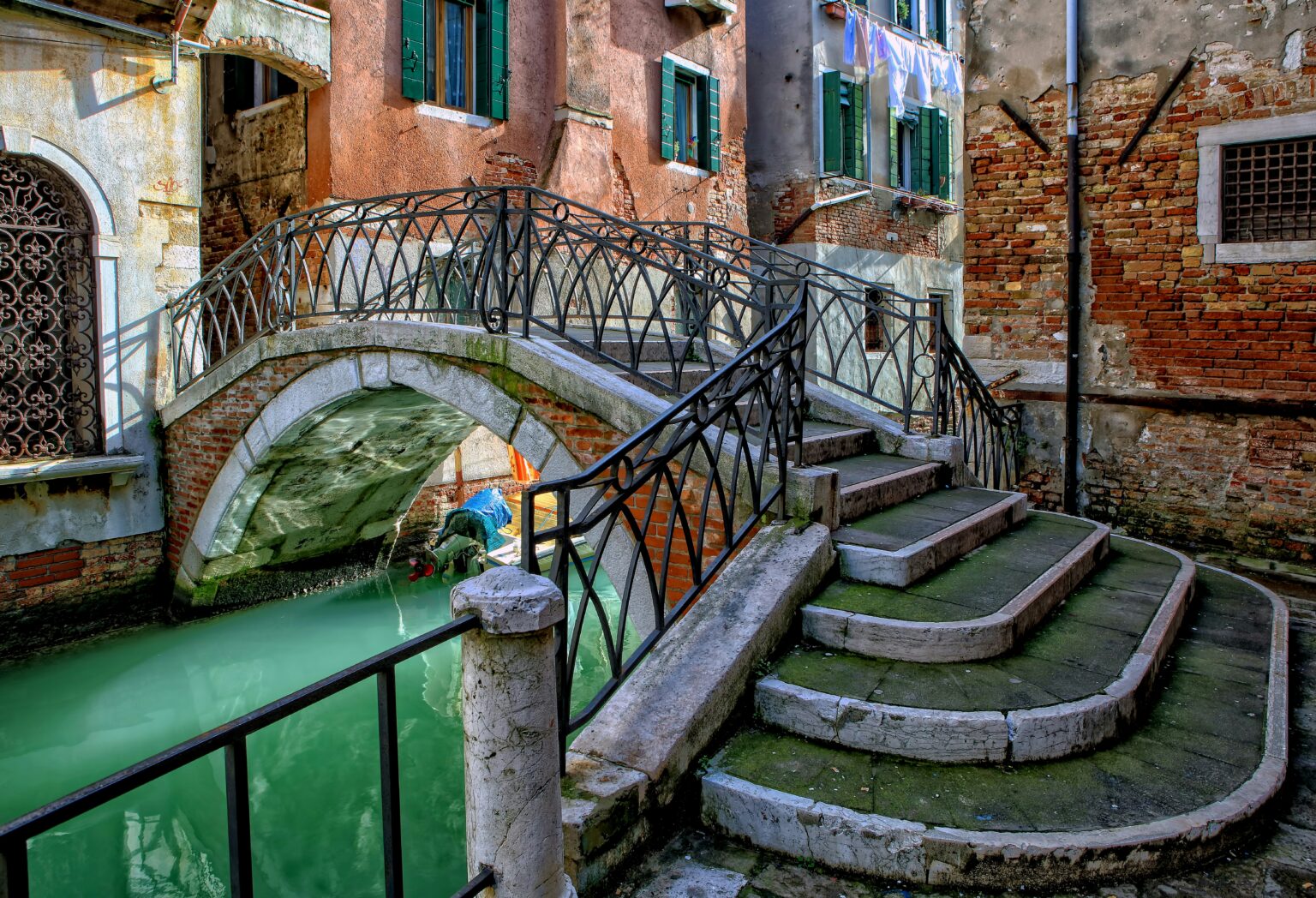

Venice has long been revered for its striking spectacle of ornate palaces, bell towers, and domes reflected in the shimmering lagoon under a blue Adriatic sky. This city’s layout and urban structure remain intact over time; making for an irresistibly captivating scene in paintings and films alike.
Visit the spectacular Rialto Bridge with its elegant Istrian stonework gleaming in the sun. Sample traditional Italian cicciotti at one of the neighborhood bacaro (bars). Don’t miss Peggy Guggenheim Collection which displays great Italian artists’ works.
History
By the fifth century, Venice’s lagoon had become home to refugees fleeing Ostrogoths and Huns’ destruction of Italy’s great cities in northern Italy. They established themselves by building homes made of wattle and daub called palazzi along the channels and shoals that separated Venice from Adriatic Sea.
Venetians’ unique situation on unstable mudbanks enabled them to build an urban economy much earlier than most European cities. By the middle of the ninth century, there existed a dense city centre complete with well-developed streets and canals; furthermore, its isolation from land routes provided protection from civil discord and allowed it to emerge as an early center for trade and manufacturing compared with other Italian cities.
Venetians’ success at turning sea power into wealth made this comeback possible, unlike in most medieval city-states which were dominated by monarchs who claimed divine right to rule; Venice embraced classical forms of government such as republics which offered its citizens safety and liberty through social contracts that guaranteed safety and liberty for its citizens.
At the center of this society was an elected figure known as a doge. At first, this role was hereditary but as power struggles between patrician families intensified over time, it eventually became elected post. Housed within a palace considered among the world’s most exquisite structures – Palazzo Ducale – was where this doge lived his office.
By the seventeenth century, however, Venice began to lose its maritime strength. As other European states developed colonies in Africa and America, they began blocking trade routes which had provided Venice with prosperity; additionally, Venice also suffered due to the loss of territories in Balkans and Crete.
Venice managed to retain its unique character despite these setbacks, due to its location on islands which limited modern suburban sprawl; its network of canals prevented automobile proliferation; and a commitment to sensitive conservation ensured most buildings from the period of Venetian dominance are preserved in excellent condition, thus contributing to humanity’s artistic and architectural legacy.
Architecture
Venice was well known as an invaluable maritime commercial power broker in Europe during the 1500s. In those years its trading network extended beyond Europe to India and even further East. Venice also led in silk manufacturing, paper production, glassmaking and printing as well as having amassed an imposing military force and vast fleet.
Venice consists of a series of islands connected by canals and narrow streets, creating a distinctively Venetian architectural style. Today it stands as part of humankind’s artistic and cultural patrimony – fitting recognition for a city which once was one of the world’s premier trading routes.
At the heart of Venice’s architectural patrimony are its intricate Istria marble facades. As you explore canals and squares of its historic centre, these facades gleam in the sunlight. Another highlight is Rialto Bridge: once wooden but now stone-made to span Rio di Palazzo canal between San Polo and San Marco neighborhoods and to offer craft and souvenir stalls.
Many of the buildings you’ll come across while walking through Venice’s historic centre were designed by legendary Renaissance architect Andrea Palladio, such as Church of Santa Croce – an early example of Neoclassicism that would sweep across Europe during the 1800s – which features an almost exact copy of Greek or Roman temple facade on its main facade; also notable is Monastery of San Giorgio by Andrea Palladio which stands in an impressive location on Giudecca island and completed 18 years after Il Redentore;
During the Renaissance period in Venice, its wealthiest families constructed canal-facing palaces and residences as a display of their wealth to each other. Overt competition was discouraged through laws restricting ornamental statuary or overly extravagant features; nonetheless, canal-facing facades remain testaments of Venice’s long tradition of lavishness.
The palazzo Ca’ d’Oro, one of Venice’s grandest and most celebrated residences, was commissioned by its most powerful family. Translating as “Golden House,” its lavish materials such as gold-leaf ornamentation lived up to its name. Furthermore, this building is notable for displaying some early examples of Gothic architecture with its impressive collonade of arches.
Food
The sea gives Venetian chefs more than ingredients; it also nourishes a unique way of cooking and dining. Scampi, sardines and cuttlefish from Veneto’s natural pantry feature in dishes such as risotto al nero di seppia; at restaurants such as Il Ristorante delle Spagne in Venice where their menu features seasonal produce from nearby waters like Il Ristorante delle Spagne’s menu is dedicated entirely to local seafood catch. Venice also boasts an extraordinary gastronomy heritage: enjoy eating at cicchetti bars or joining one of many food tours or cooking classes and immer yourself into this city’s rich and unique traditions!
Cicchetti are bite-sized snacks found throughout Venice that come in various forms. Similar to Spanish tapas, they can be found at neighborhood wine bars known as bacari. Typical toppings may include cured meats, cheeses, and seafood – popular options being shrimp with polenta (scampetti con polenta) or veal liver with onions and roasted polenta (fegato alla Veneziana).
Polenta is an integral component of Venetian cuisine and typically eaten as either a creamy risotto-style dish, or in fritters that typically feature something on top. Scampetti are one of the region’s signature dishes served alongside polenta; another delicious option is Baccala Mantecato which features marinated dried cod with garlic and parsley spread on small slices of toasted polenta for serving.
Bigoli in salsa, an iconic seafood-centric pasta dish, is an outstanding first course. These thick spaghetti-like noodles come topped with an aromatic tomato-onion sauce featuring salt-cured fish like sardines or anchovies, cuttlefish cooked in its own ink, and the city’s beloved cuttlefish cooked to perfection in its own ink. Vini da Gigio offers classic seafood risotto while Ristorante Al Covo features moleche or soft shell crabs as notable first courses.
Burano Island, famous for lace production and home to one of Venice’s top fine dining restaurants, La Zucca serves a menu that is hyperlocal. Husband-and-wife team Ruggero and Lucia Bovo set an upbeat tone at this family-run eatery while their son Massimiliano acts as maitre d’; all while supporting local fishermen by serving homemade tagliolini with spider crab.
Shopping
Venice has long been revered as an imperial capital and visitors are drawn here for its centuries-old traditions and distinctive local crafts, such as glassware from Murano, delicate lace from Burano, and Carnevale masks tucked into endless botteghe. Luxury shopping also attracts customers; high-end boutiques and renowned jewelers offer luxury shopping for customers willing to splurge.
As Venice thrives almost solely on tourism, shopping shrewdly can only help. Venetians don’t like haggling over prices so if possible it is best to pay in advance and buy multiple items.
San Samuele offers an abundance of independent boutiques and artisanal workshops where visitors can find souvenirs or clothing and jewellery pieces to take back home with them. More discerning shoppers may wish to explore Calle Larga XXII Marzo or Strada Nova; for high-end shopping options check out Calle Larga XXII Marzo or Strada Nova while Frezzeria stands out with its bold offerings.
The Libreria Acqua Alta has long been heralded as the world’s most beautiful bookstore. While its beauty cannot be overstated, if visiting during peak hours you might need to fight through crowds for photos; to enjoy this experience in peace it would be best to arrive early evening and escape the hoards of tourists and take in its interiors and books with complete serenity.
The Spider Bridge is truly remarkable architecturally, drawing visitors in for pictures. However, its overcrowded nature means most visitors come only for this purpose and it can be difficult to walk around comfortably – yet anyone visiting Venice must go here! It provides breathtaking views of the Grand Canal from this most famous bridge in Venice; make sure to visit! It also houses shops and offers delicious restaurants nearby – one of my favorite things to do there!
Trip-ready gear from Amazon
As an Amazon Associate, grandgo.com earns from qualifying purchases. Links below are affiliate links — clicking them may earn us a small commission at no extra cost to you. Prices and availability are shown on Amazon.co.uk.
- Portable spice travel kit — For picnics.
- Universal EU travel adapter — Bring back home appliances.
- Insulated coffee travel mug — Enjoy local coffee properly.