


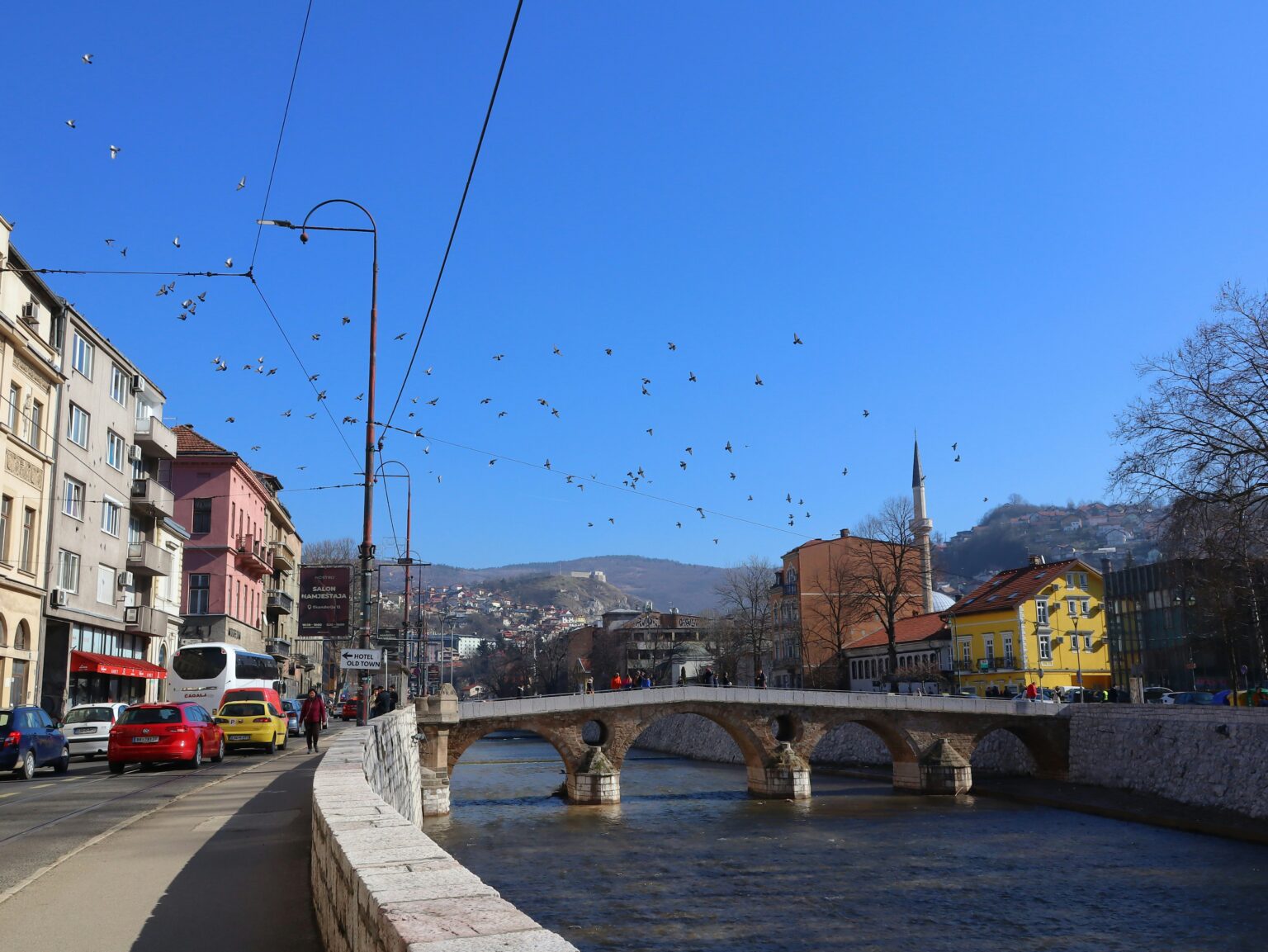

In 1914, Sarajevo witnessed an event which would forever alter history: Archduke Franz Ferdinand was assassinated, sparking World War I and ultimately taking millions of lives.
Sarajevo’s most iconic feature is Bascarsija. Not your average European city old town, Bascarsija stands out as an extraordinary network of 15th century single-floor market buildings that combine elements from Middle Eastern culture.
1. Old Bazaar
The Old Bazaar in Sarajevo is an historic landmark with shops, restaurants, cafes and artisan markets combined into one unique experience for visitors. At its economic height during 16th and 17th centuries, it became one of the largest Oriental-style old bazaars in all of Balkan.
The Old Bazaar, located at the heart of the city, serves as its main shopping district and attracts both residents and tourists. Here you’ll find shops, restaurants and artisan markets where you’ll be sure to find everything from souvenirs to traditional Bosnian foods.
One of the main attractions is Sebilj Fountain, a stunning, ornate fountain situated at the center of Old Bazaar. Locals frequently gather here as it makes for an excellent meeting point or scenic photo op and relaxing spot with a cup of coffee nearby.
Yellow Bastion, a former fortress with incredible views of the city, should not be missed as one of its must-see attractions. First constructed during the 18th century and later renovated numerous times over time.
The Old Bazaar of Sarajevo is both a cultural hub and major tourist attraction, enabling visitors to witness first-hand how Eastern and Western influences collide here. You can visit old mosques or artisan markets here to get a deeper sense of Sarajevo’s fascinating past.
At the heart of Old Town lies a museum that’s an absolute must-visit for anyone interested in Bosnian and Herzegovina history. There are various wings featuring artifacts from medieval and Roman eras; as well as sections dedicated to natural history and ethnography.
The museum is free to enter and offers an excellent way to gain more knowledge about Bosnian history. Additionally, it’s an enjoyable place for friends or families to spend an afternoon. Exhibits are very well organized, while staff is very accommodating. However, its presence may be overwhelming for someone without prior knowledge of Bosnian history.
2. Sarajevo Brewery
One of Sarajevo’s most prominent landmarks, established in 1864 and considered to be one of the first industrial production facilities in Bosnia and Herzegovina, is the Sarajevo Brewery, established as an industrial production unit to accelerate economic development of Bosnia and Herzegovina. Today it serves as a tourist attraction located near Bistrik with beautiful nineteenth century building featuring arches with red-ocher paintwork on arched towers adorned with arches that stand over time.
Throughout the Bosnian war, the brewery remained operational despite being under siege; acting as a lifeline to its city. Water from a nearby natural spring kept it running while nearby creeks dried up and water and power lines were cut or damaged by bombing raids; providing only reliable drinking water supply in its city of operation. While symbolic amounts of beer production occurred at times during this period of turmoil.
The Sarajevo Brewery has now become a museum, making it a key stop on sightseeing tours of Sarajevo. Visitors can tour and learn about its rich history while sampling some of its delicious beer that has been produced here since its establishment. Furthermore, souvenirs can be purchased here as well as access to its restaurant facilities.
Easy accessibility from the Old Town can be achieved via tram or taxi service, or alternatively from Dolac Malta bus station.
Once there, take a break and treat yourself to some exquisite craft beer at VOPI Bar. With its intimate atmosphere featuring plenty of candles and dimmed lights, VOPI Bar provides the ideal spot for relaxing after a busy day of sightseeing – and its prices are more than affordable – just 3 KM per pint!
Celtic Pub offers another fantastic option for beer enthusiasts in Central London; this low-ceilinged pub with Scottish football memorabilia on its walls is perfect for hanging out with friends and sipping some beers, not too busy, with friendly staff, regular football matches, delicious beer at affordable prices, delicious meals served here and delicious beverages served daily!
3. Colina Kapa Astronomical Observatory
Sarajevo stands as an epicenter where East meets West. This white building, once serving as an observation fortress-turned-observatory in Bosnia and Herzegovina, stood on top of Mount Sarajevo as a prominent reminder. Unfortunately, after World War II it was completely demolished and abandoned – now visited only by urban exploring hikers who enjoy climbing its crumbling walls; many Sarajevans wish that its former glory could be restored back into existence.
Before the war, Colina Kapa (literally “the cape of the sky”) was an impressive military lookout point with breathtaking views across Budapest and its environs. Beginning in 1960s, Austro-Hungarian military turret Bistrik Kula was transformed into an astronomical observatory by Orion Astronomical Society; by 1972 it boasted three domes as a leading scientific institution; however between 1992-1995 shelling completely demolished it and left to its fateful fate as ruin.
During the siege of Sarajevo, many buildings were reduced to rubble by constant bombardment from Serb-held side of city. But one building has since stood as a reminder of Sarajevo’s tragic history, becoming a popular spot for tourists visiting. Sniper’s Alley, where snipers would hide within nearby cemetery to shoot at city residents remains haunting today and should be visited.
Although now used as a museum, its interior remains impressively impressive. Notable features of this building’s interiors include its parliamentary style chamber and stained glass ceiling; one of only few places you can witness such architecture in Bosnia and Herzegovina; ticket prices are reasonably priced with parking available nearby for visitors. Plus it’s an incredible place to watch sunset! It provides breathtaking views over Sarajevo and its region!
4. The Golden Hour
Sarajevo’s bustling market square is at the core of city life and one of its must-see spots on any visit to Sarajevo. A place rich in culture and history with shops, cafes and restaurants lining its edge as well as mosques, churches and museums dotting its landscape, this hub of activity should not be missed! Soak in its atmosphere while strolling aimlessly!
One of the most renowned buildings in Sarajevo is its City Hall, commonly referred to as Gradska Vijecnica. Constructed at the end of the 19th century and featuring elements from both Ottoman and Austro-Hungarian styles, it stands as an impressive structure between old town and main station.
Morica Han, which served travellers during Ottoman rule, was one of Sarajevo’s notable landmarks. Commissioned by Governor Gazi Husrev-Beg, it could accommodate up to 300 people and 70 horses at once – now it offers great views over Sarajevo!
The Central Mosque of Sarajevo is another iconic destination worth seeing. Admission is free but visitors must dress properly with covered shoulders, knees and headscarves if female. It is an amazingly beautiful mosque that provides a relaxing space to soak up its ambience.
There is also a small museum dedicated to Franz Ferdinand’s death located in the same complex. Though small, this is still very interesting and a great way to learn more about Bosnia-Herzegovina under Austro-Hungary up until WW 1.
Visit Sarajevo’s 11/07/95 Memorial Museum and Gallery for an emotional but highly recommended experience. Here, it can be difficult to grasp just what took place there on July 7, 1995; exhibitions include archive material as well as documentary materials relating to this tragedy. It is therefore vital that every tourist visits this museum when in Sarajevo.
Related Guides
- How to Get from Budapest Airport (BUD) to City Centre — Airport guide
More Train Station Guides
- Budapest Train Stations Guide — Train station guide