


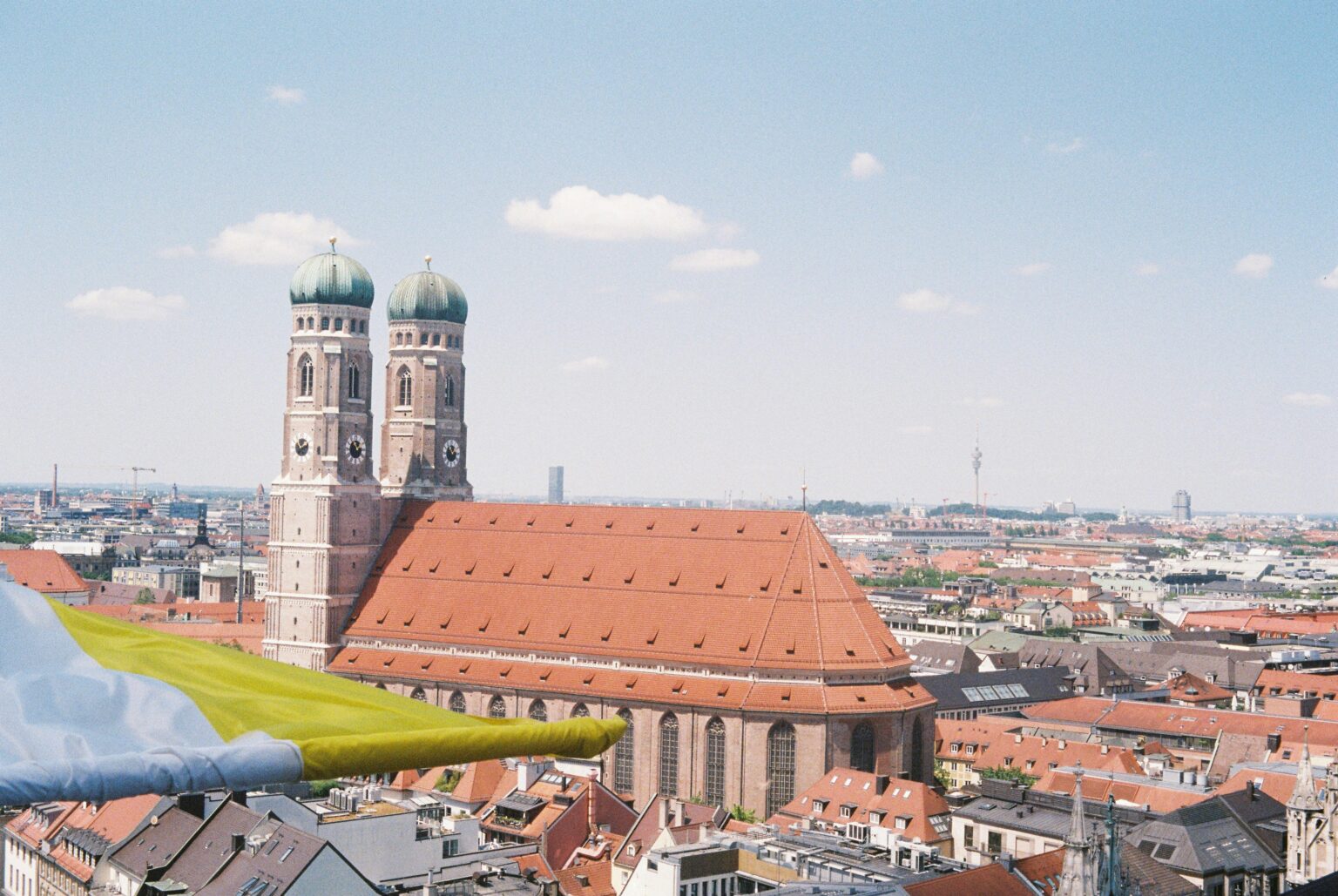

Munich offers many distinct experiences for its visitors – from shopping on the Viktualienmarkt to sampling Schlutzkrapfen at Das Laurin.
Start your day at Alte Pinakothek before embarking on a guided walking tour in the afternoon. Following this experience, explore the Old Town by yourself.
1. Hofbrauhaus
Hofbrauhaus Munich is one of the city’s most beloved attractions, providing guests with a taste of German Gemutlichkeit (celebrating comfortable enjoyment) while sampling some of their legendary bier.
A beer hall features long tables where guests are seated and served by “bier maidens”. To order bier, guests are instructed to hold up thumb and forefinger and say either ein or zwei bier bitte before a beer maiden comes with an 1 liter glass mug to your table and serves you your beverage.
Each year the Hofbrauhaus serves nearly 1,900,000 biers to people around the world – so much so that in the Thirty Years War King Gustavius of Sweden promised not to invade Munich in exchange for 600,000 barrels of Hofbrau beer!
Hofbrauhaus is an extremely touristy venue, but also hosts locals who come back for repeat business – many even have personalized bier steins stored away in lockers at the beer hall! Additionally, it’s also an excellent spot for sampling traditional German cuisine such as roast chicken, pretzels, sausages and cabbage dishes.
2. Messe
The Messe (German for Trade Fair) in Munich is one of the world’s premier exhibition centers. Boasting three main venues – Messestadt Riem Exhibition Center, ICM Internationales Congress Center Munchen and MOC Veranstaltungscenter Munich – its facilities can host everything from large trade fairs to conferences. As an established global provider of trade fairs and conventions as well as event marketing solutions.
At its Munich and international sites, this company hosts over 40 trade fairs for capital goods, consumer goods, and new technologies – such as analytica, automatica, BAU, bauma, ceramitec, electronica LOPEC productronica transport logistic – annually.
Subway line U2 provides easy access to the trade fair grounds from either Messestadt West or Messestadt Ost stations located directly beneath the exhibition complex, with large parking lots near entrances of Eastern and Northern Gates as well as fixed-price taxi services that can be booked online or at one of several staffed airport shuttle desks.
3. Riemer Park
Munich has many hidden gems, with the Riemer Park being one of the more beautiful yet often-overlooked areas. Boasting vast green areas, sports facilities and hiking paths; as well as great restaurants; this huge park near Nymphenburg makes for an amazing way to see some of Munich’s top parks and green spaces.
This 210-hectare park is situated immediately behind Messestadt and ranks as Munich’s third-largest urban park. Along its paths are stunning alpine views and the picturesque Riemer See lake that adds charm and beauty to this picturesque space.
There are multiple lakes within this park as well as tennis courts and football pitches; perfect for spending an enjoyable day relaxing under the sun, hiking through various trails or simply taking it easy in the shade! Our MASEVEN apartments make getting here simple thanks to a convenient public transport system.
4. Dachau Memorial
The Dachau Concentration Camp Memorial stands as an unsettling reminder of Nazi atrocities. Employing forced labour, an expansive compound was constructed using forced labour for thousands of prisoners; only two barracks have been restored as stark memorials at this site; as well as featuring Nandor Glid’s sculpture depicting different colored triangles representing various categories of prisoners at this monument.
Historians know little of the inhabitants of these barracks; however, when soldiers from the 2nd Battalion of 222nd Infantry Regiment arrived there in April 1945 they encountered what has since been termed the “death train”. Each boxcar and gondola car was filled to capacity with bodies that appeared gaunt and shrunken.
In 1933, Munich schoolteacher Sebastian Nefzger was found dead after being beaten at Dachau concentration camp. Although the SS administrators claimed he committed suicide, an autopsy indicated he likely died due to strangulation. Public prosecutors in Munich immediately filed murder charges against its leaders; however, Hitler overrode this decision and declared concentration camps exempt from German law.
To visit the memorial, take the S2 train from Munich’s Central Station (Hauptbahnhof) to Dachau/Petershausen and exit at its town station; from there take bus 726 directly to its memorial site – allow for at least half a day of exploration!
5. Dachau Concentration Camp
Theodor Eicke, commander of Dachau concentration camp, institutes an extremely stringent system of punishment and administration for his prisoners. Over one thousand individuals perish annually due to this harsh treatment at Dachau concentration camp.
Nazi leaders declare total war and order the mass mobilization of concentration camp prisoners for war production work. To facilitate this plan, the SS establishes numerous subcamps at Dachau nearby armament factories to facilitate this task.
By 1943, the camp is severely overcrowded and living conditions are appalling, leading to an outbreak of typhus which threatens its population and imprisoning thousands of Jews, Jehovah’s Witnesses and other minorities – many who were imprisoned at other concentration camps prior.
At first, Dachau Concentration Camp was intended to house workers from a munitions factory and train SS guards; later it served as the model for other concentration camps. Over time however, its purpose changed from housing workers as forced laborers to murdering them via disease, torture, starvation and medical experiments; thousands died at Dachau alone and in other concentration camps including Titus Brandsma who rejected joining Nazi Party membership and who wrote extensively against its influence.
6. Maximilianeum
The Maximilianeum is one of Munich’s most iconic structures. A grandiose building, it was first constructed as home for gifted students’ foundation founded by Friedrich Burklein and completed in 1874; since then it has also served as home for Bavarian Landtag (state parliament).
King Maximilian II established this foundation to support students regardless of their social or financial origin, and to develop them for civil service. Although its mission hasn’t changed much over time, scholarship holders no longer must commit themselves to either military or civilian service when accepting scholarships from it.
At the end of Maximilianstrasse and overlooking a large park, this magnificent monument can’t be missed. Illuminated at nighttime, its splendor truly stands out.
The Maximilianeum features ornate halls adorned with portraits of Bavarian kings and historical artifacts from its period. There is even an impressive two million book library. Visitors to guided tours can visit these halls and uncover its fascinating history.
7. Westpark
Westpark was constructed between 1978 and 1983 and later hosted the International Garden Show. This long, thin park features soccer fields, the Rudi Sedlmayer Sports Hall, a beer garden and several restaurants as well as rose gardens, Japanese gardens, Thai salas and pagodas in Little Asia – not forgetting its rose garden!
Westpark is famous for its sculptures by Lothar Fischer and Rodolf Wachter. Additionally, Oberpollinger offers high-end designer stores on five of its floors – another draw for many visitors to this park.
This neighborhood is particularly well-suited to international families, as it offers lots of shops, cafes, and a large English-language cinema. This makes it the ideal place to settle with your family if you wish to avoid more touristy parts of Munich.
8. Starnberg
Starnberg is located approximately 45 minutes outside Munich by either car or train, making it an attractive holiday destination both locally and from further afield. Boasting an illustrious history rooted in aristocracy, Starnberg offers breathtaking waters brimming with life that have become a mesmerising spectacle to locals and guests alike.
There are various ways to explore Lake Constance, with a selection of hotels tucked into its leafy surroundings. For an indulgent stay, the Hotel Vier Jahreszeiten might be worth looking at, while those on a tight budget might prefer Airbnb (click here for money off your first booking!).
Roseninsel (Rose Island), situated in the center of Lake Constance and once owned by King Ludwig II as his summer residence. This fairytale monarch cherished this romantic lake and often hosted notable visitors like Empress Elisabeth and Richard Wagner here.
To reach the lake from Munich, head to the section of Munich Central Station dedicated to train trips to Starnberg. Here, hop aboard an S-Bahn and be in the lake district within 15 minutes!