



Unveiling Switzerland’s Linguistic Diversity
The heartland of Europe, Switzerland, is often celebrated for its impressive mountains, picturesque landscapes, top-class watches, and delectable chocolates. However, beneath this well-known imagery lies an aspect not as immediately visible but just as vital to the essence of Switzerland: its linguistic diversity. Comprising four official languages, Swiss cultural fabric is a fascinating blend of German, French, Italian, and Romansh influences, each contributing distinct threads to the Swiss tapestry.
The rich linguistic diversity in Switzerland is no mere accident. It is a reflection of the country’s historical dynamics, geographical positions, and its emphasis on cultural inclusivity. The sheer multiplicity of languages spoken and written in this nation stands testimony to its social heterogeneity and respect for multiculturalism. Indeed, each language holds a mirror to a unique region, lifestyle, and way of thinking, each differing yet harmonized under the umbrella of Swiss nationality. The role of language in shaping Switzerland’s identity is a phenomenon worth understanding.
Understanding the Four Official Languages of Switzerland
Switzerland’s reputation for neutrality and peace stems not just from its political status but also from its linguistic landscape. The country nestles at the crossroads of Europe, with its four official languages – German, French, Italian, and Romansh – reflecting the diverse regional influences.
German, spoken by nearly 63 percent of the population, is the dominant tongue, with Swiss German being the common dialect. The language comes replete with assorted regional variations, morphological complexity, and an idiosyncratic vocabulary. Adding to this linguistic panorama, Swiss standard German or “High German,” predominantly used in the media, education, and literature.
In the western cantons, French is the primary language and is spoken by approximately 23 percent of the population. Here the French language exists in an environment that encapsulates a rich blend of French and Swiss cultures, contributing to a vibrant dialect often referred to as Swiss French.
Likewise, in the southern canton of Ticino and four valleys in the Grisons, Italian dominates, spoken by nearly 8.4 percent of the Swiss populace. The version spoken features plenty of Swiss-specific phrasing and vocabulary.
Finally, Romansh, the least spoken of the four (by nearly 0.5 percent of the nation’s population), persists in the eastern Alpine canton of Grisons, a linguistic testament to the ancient Romans’ influence.
Each language and dialect offers a unique perspective into the different cultural sectors of Switzerland, shedding light on the diverse community living within its borders.
Summary:
- Switzerland has four official languages: German, French, Italian, and Romansh.
- German is the dominant language, with Swiss German as the common dialect.
- French is spoken in the western cantons and has a vibrant dialect called Swiss French.
- Italian dominates in the southern canton of Ticino and four valleys in the Grisons.
- Romansh persists in the eastern Alpine canton of Grisons.
- Each language and dialect provides insight into Switzerland’s diverse cultural sectors.
Delving into German-Speaking Switzerland
Spread across 17 cantons, German is the widely spoken language in Switzerland, employed by nearly 63% of the Swiss population. This significant German-speaking faction predominantly spans over central, northern, and eastern parts of the country, radiating from Zurich, Basel, and Bern – cities often associated with Swiss political, financial, and cultural milestones.
The Swiss-German dialect, known as “Schwyzerdütsch”, is favored in everyday communication, distinct from standard German (“Hochdeutsch”), primarily used in formal contexts. This linguistic variation is rendered by distinct phonetics, vocabulary, and syntax, and is further dialectically fragmented depending on the region.
Despite the prevalent German language influence, English is known and utilized within this Swiss segment, symbolizing the international culture thriving within Switzerland’s borders.
Highlighting French-Influenced Swiss Regions
In the western stretch of Switzerland, French influence significantly shapes the linguistic and cultural landscape. The region, known as Romandy, constitutes nearly a quarter of the nation’s population, with Lake Geneva acting as the fulcrum.
Here, French is not merely a language of communication; it is entrenched in every aspect of daily life, from education and administration to media and literature. City names like Geneva, Lausanne, and Neuchâtel further underscore this French influence.
Moving beyond linguistic characteristics, the cultural aspects of the Romandy region also mirror a deep-seated French influence. This is manifested in the lifestyle, gastronomy, and aesthetics across Romandy’s cities and towns.
Notably, local customs and traditions bear a striking resemblance to those of neighbouring France, imbuing this part of Switzerland with a unique Francophone essence. Thus, beyond mere language, French influence permeates every facet of life in western Switzerland, creating a rich tapestry of vibrant Franco-Swiss culture.
Key Points:
- French influence significantly shapes the linguistic and cultural landscape in western Switzerland.
- Romandy, the region in western Switzerland, is deeply influenced by French language, education, administration, media, and literature.
- The cultural aspects of Romandy, including lifestyle, gastronomy, and aesthetics, reflect a strong French influence.
- Local customs and traditions in Romandy bear a resemblance to those of neighbouring France, adding to the unique Franco-Swiss culture.
Appreciating Italy’s Influence in Swiss Language and Culture
In the southernmost canton of Ticino, the Italian language graces the landscape, both metaphorically and literally. The subtropical climate of this beautiful canton harmonizes with the expressive, warm Italian language to create an atmosphere unique to this part of Switzerland. The Italian influence is not confined to the language, it embellishes the region’s architecture, gastronomic scene, and communities creating a Swiss-Italian symbiosis.
You’ll find:
- Pastel-colored houses
- Religious processions
- Specific culinary delights like polenta or risotto exemplifying the remarkable presence of Italy in this corner of Switzerland.
As we move further into the Swiss-Italian regions, like Grigioni, the Italian language transitions into an intriguing mix known as Swiss-Italian. This variety of Italian, while bearing a strong resemblance to standard Italian, is peppered with elements of French, German, and Romansh, reflecting Switzerland’s remarkable language spectrum.
Alongside the language, Italian culture too permeates into daily Swiss life, from rich culinary traditions to lively festivals, and even a quintessential passion for football. By experiencing these regions, it becomes evident how deeply ingrained Italy’s influence in Swiss culture and language is.
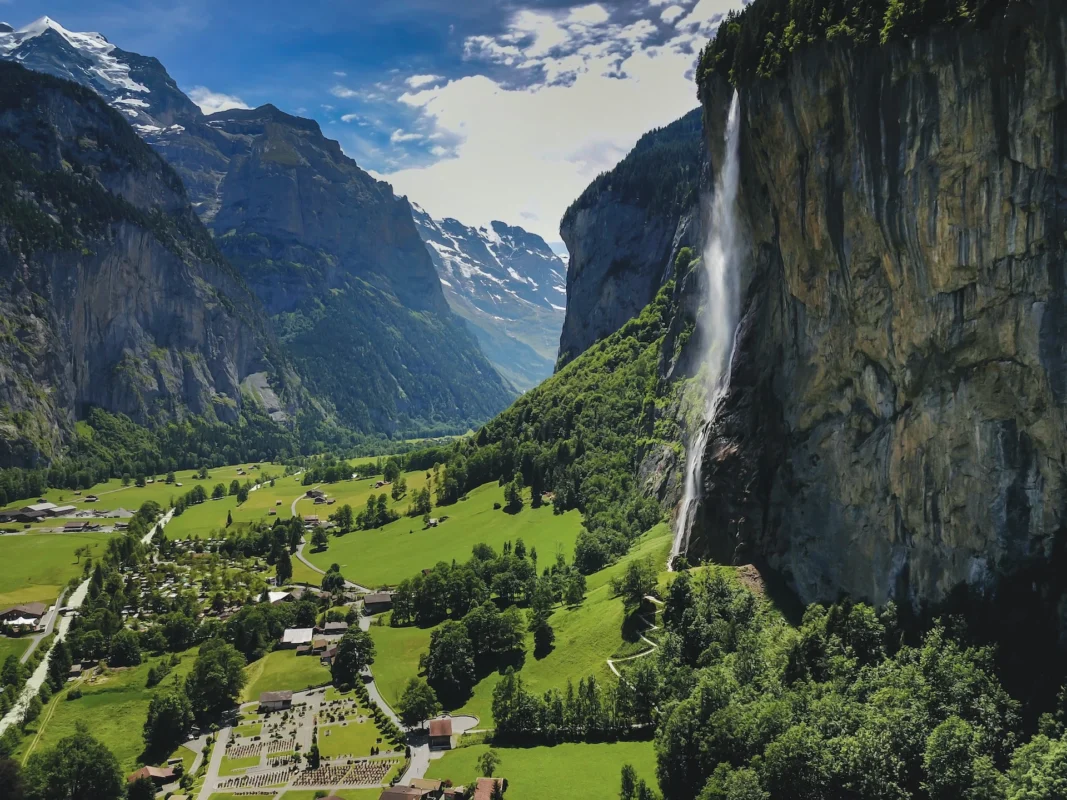
Romansh: The Fourth and Least Known Swiss Language
Romansh, the fourth official language of Switzerland, is intriguingly the least spoken and frequently overlooked due to its confined demographic. Predominantly spoken in the Graubünden canton, a mountainous region situated in the eastern part of Switzerland, this unique lingo embodies the linguistic heterogeneity of the country. Derived from Vulgar Latin, Romansh has stood the test of time, braving the influences of neighbouring languages and holding its ground since the Roman Empire’s decline.
Modern Romansh is divided into five different idioms, each with its distinct phonetic, morphologic, and syntax features, in line with the valley communities of Graubünden. The five idioms are:
- Sursilvan: the most widely spoken dialect
- Sutsilvan
- Surmiran
- Puter
- Vallader
Despite its comparatively meagre number of speakers, the significance of Romansh extends beyond mere communication; it serves as a quintessential emblem of Swiss diversity, a stark reminder of the nation’s rich and multi-layered cultural heritage.
Examining the Impact of Language on Swiss Lifestyle and Traditions
The broad spectrum of languages spoken in Switzerland casts a significant influence on the country’s lifestyle and traditions. The unique cultural experiences each language imparts are folded seamlessly into the Swiss way of life, shaping many aspects, from social interactions and traditions to creative expressions in music, literature, and art.
This linguistic diversity propounds distinct regional identities within the nation, each with its own customs and etiquettes, thereby enriching the overall Swiss culture.
Language, as an essential societal organ in Switzerland, impacts traditional festivities and events in profound ways.
- Fasnacht, for instance, the largest carnival in Switzerland, celebrated in the German-speaking region, exhibits traditions that are distinctly different from the Fête de l’Escalade, a historic celebration based in Geneva, a French-speaking region. The variance evidences the impact of language on the evolution of rituals and celebrations.
In this manner, Switzerland presents an intriguing case where language intertwines with lifestyle and traditions to create a rich multicultural tableau against the magnificent Swiss landscape.
Inter-regional Linguistic Differences and Commonalities in Switzerland
Switzerland’s intriguing linguistic landscape is a mosaic of inter-regional differences and commonalities. Due to its nationwide multilingualism, it becomes intriguing to investigate the complexities that tie these languages together and explore the aspects that set them apart. Rather than erecting linguistic barriers, these differences have facilitated a culture of language learning, fostering greater mutual understanding among the Swiss populace.
Taking a closer look, one can observe that Swiss-German, Swiss-French, Swiss-Italian, and Romansh regions all showcase distinct dialectal variations and accents within their respective communities. Yet, close geopolitical relationships and peaceful cohabitation have led to a unique linguistic blend, resulting in interesting linguistic commonalities. For instance, the usage of certain words and phrases, or a shared propensity for multilingualism, can be traced across these regions. Such linguistic symphony harmonizes the diversity, making Switzerland a fascinating hub of inter-regional linguistic interplay.
- Swiss-German: This is the most widely spoken language in Switzerland, predominantly used in regions such as Zurich, Lucerne, and Bern. The Swiss-German dialect varies significantly from standard German, making it challenging for non-native speakers to comprehend.
- Swiss-French: Primarily spoken in western parts of Switzerland like Geneva and Lausanne, this variant of French has slight differences in vocabulary and pronunciation compared to standard French. However, native French speakers can generally understand and converse with ease.
- Swiss-Italian: Predominantly found in the canton of Ticino and some areas of Graubünden, this dialect maintains a close resemblance to standard Italian but incorporates certain unique words and expressions influenced by surrounding languages.
- Romansh: As one of the four national languages yet only spoken by a small percentage of the population primarily in the Graubünden region; Romansh exists in five different varieties which all have their own written standards but share common grammar rules.
Despite these linguistic differences among regions, there are several noteworthy aspects:
- There’s an observable mutual influence between these languages due to geographical proximity, resulting in borrowing words or phrases from each other.
- A shared propensity for multilingualism across all regions fosters greater understanding among citizens irrespective of their linguistic backgrounds.
- All communities show respect towards each other’s cultural identity, reflected through language preservation efforts leading to peaceful coexistence despite diversity.
The inter-regional linguistic blend gives rise to:
- An eclectic mix that enriches local vocabularies while maintaining distinctive regional accents.
- A fascinating culture where people are not just bilingual but often trilingual or even quadrilingual – a testament to Switzerland’s rich linguistic heritage.
- A dynamic sociolinguistic landscape that continues evolving while preserving its core elements – truly encapsulating the essence of Swiss multiculturalism.

Language and its Influence on Swiss Cuisine
The culinary landscape of Switzerland is as diverse as its linguistic panorama, drawing influences from Germany, France, Italy, and the indigenous Romansh community. With each region demonstrating its unique language, it is palpable how the regional languages have seeped intricately into local gastronomy. Regional preferences, cooking techniques, and even the names of dishes mirror the strong interplay of language and culinary artistry, making Swiss cuisine a linguistic adventure.
In the German-speaking cantons, for instance, one would notice hearty dishes like Rösti (grated and fried potatoes) and Wurst (sausage), reflecting the robust and practical nature of the German language.
Meanwhile, the French-speaking regions boast of an elegant cuisine, with dishes like Raclette (melted cheese served with potatoes and pickles) and Fondue (melted cheese dip for bread), mirroring the sophistication and poise of the French language.
This intermingling of language and food culture paints a vivid picture of Switzerland’s linguistic diversity, reflected in every bite of its rich and varied cuisine.
- Influences from Germany, France, Italy, and the indigenous Romansh community.
- Regional languages seeped intricately into local gastronomy.
- Regional preferences, cooking techniques, and even dish names mirror the interplay of language and culinary artistry.
- Swiss cuisine is a linguistic adventure.
In the German-speaking cantons:
- Hearty dishes like Rösti (grated and fried potatoes) and Wurst (sausage) reflect the robust and practical nature of the German language.
In the French-speaking regions:
- Elegant cuisine with dishes like Raclette (melted cheese served with potatoes and pickles) and Fondue (melted cheese dip for bread) mirrors the sophistication and poise of the French language.
This intermingling of language and food culture paints a vivid picture of Switzerland’s linguistic diversity, reflected in every bite of its rich and varied cuisine.
Language Barriers and Multilingualism: A Swiss Perspective
In Switzerland, one of the world’s few truly multilingual countries, the ability to navigate between different languages is a fundamental aspect of daily life. The population’s multilingual proficiency is boosted by its educational system which necessitates the learning of multiple national languages from an early age. However, this linguistic diversity does occasionally give rise to language barriers, especially in regions where one language is more dominant than others.
Despite these obstacles, Swiss society has demonstrated exceptional resilience and adaptability. A notable display of this adaptability can be seen in the functioning of public institutions, where multilingualism is the norm. For example, federal laws are written in all four official languages and parliamentary debates allow the use of any national language. It is these concerted efforts towards linguistic inclusion that contribute to Switzerland’s distinctive character and reputation for social harmony, even in the face of such considerable linguistic diversity.
Multilingualism in Switzerland
Switzerland is known for its linguistic diversity. The ability to speak multiple languages is highly valued in the country, as it enables individuals to navigate through different linguistic communities. This proficiency is fostered by the educational system, which emphasizes the learning of multiple national languages from an early age.
Language Barriers and Adaptability
While Switzerland embraces its linguistic diversity, language barriers can still arise, particularly in regions where one language dominates. However, Swiss society has shown remarkable resilience and adaptability in overcoming these obstacles. Public institutions, in particular, prioritize multilingualism as the norm, ensuring that federal laws are written in all four official languages and allowing parliamentary debates to take place in any national language.
Linguistic Inclusion and Social Harmony
The concerted efforts towards linguistic inclusion in Switzerland contribute to the country’s distinctive character and reputation for social harmony. By valuing and accommodating different languages, Switzerland fosters an environment where people from various linguistic backgrounds can coexist peacefully.
Key points:
- Switzerland is a multilingual country where navigating between different languages is essential.
- The educational system emphasizes the learning of multiple national languages.
- Language barriers can occur, especially in regions with a dominant language.
- Public institutions prioritize multilingualism, with laws written in all official languages.
- Linguistic inclusion contributes to Switzerland’s social harmony and distinctive character.
FAQs
What are the four official languages of Switzerland?
The four official languages of Switzerland are German, French, Italian, and Romansh.
How does the German language influence Swiss culture and lifestyle?
The German language significantly shapes Swiss culture and lifestyle, particularly in the German-speaking regions of the country. It influences local traditions, customs, and everyday interactions.
Can you tell us more about the French-influenced Swiss regions?
The French-influenced regions in Switzerland are primarily in the western part of the country. These areas have a unique blend of Swiss and French cultures, reflected in their lifestyle, traditions, and culinary practices.
How has the Italian language impacted Swiss culture?
The Italian language has profoundly influenced the Swiss regions bordering Italy. It manifests in the local traditions, architectural styles, and especially in the distinct Italian-inspired Swiss cuisine.
What is Romansh, and how prevalent is it in Switzerland?
Romansh is the fourth official language of Switzerland, but it’s the least known and spoken. It’s primarily used in the canton of Grisons and significantly contributes to the cultural diversity of the country.
How does language impact Swiss lifestyle and traditions?
Language deeply affects Swiss lifestyle and traditions, shaping regional customs, festivals, and social interactions. Each linguistic region has unique cultural characteristics related to its language.
What are the inter-regional linguistic differences and commonalities in Switzerland?
Inter-regional linguistic differences in Switzerland come from the four official languages, each influencing its respective region’s culture and lifestyle. However, a commonality is the mutual respect that Swiss people have for each other’s languages and cultures.
How does language influence Swiss cuisine?
Language significantly influences Swiss cuisine, with each linguistic region having its unique culinary traditions. German-influenced areas are known for hearty fare, French-influenced regions for sophisticated dishes, Italian areas for pasta and pizza, and Romansh regions for distinctive Alpine cuisine.
What challenges and benefits does multilingualism bring to Switzerland?
Multilingualism in Switzerland brings both challenges and benefits. It can lead to language barriers in communication and complicate administrative matters. However, it also contributes to Switzerland’s cultural richness, international reputation, and fosters mutual understanding among its citizens.