


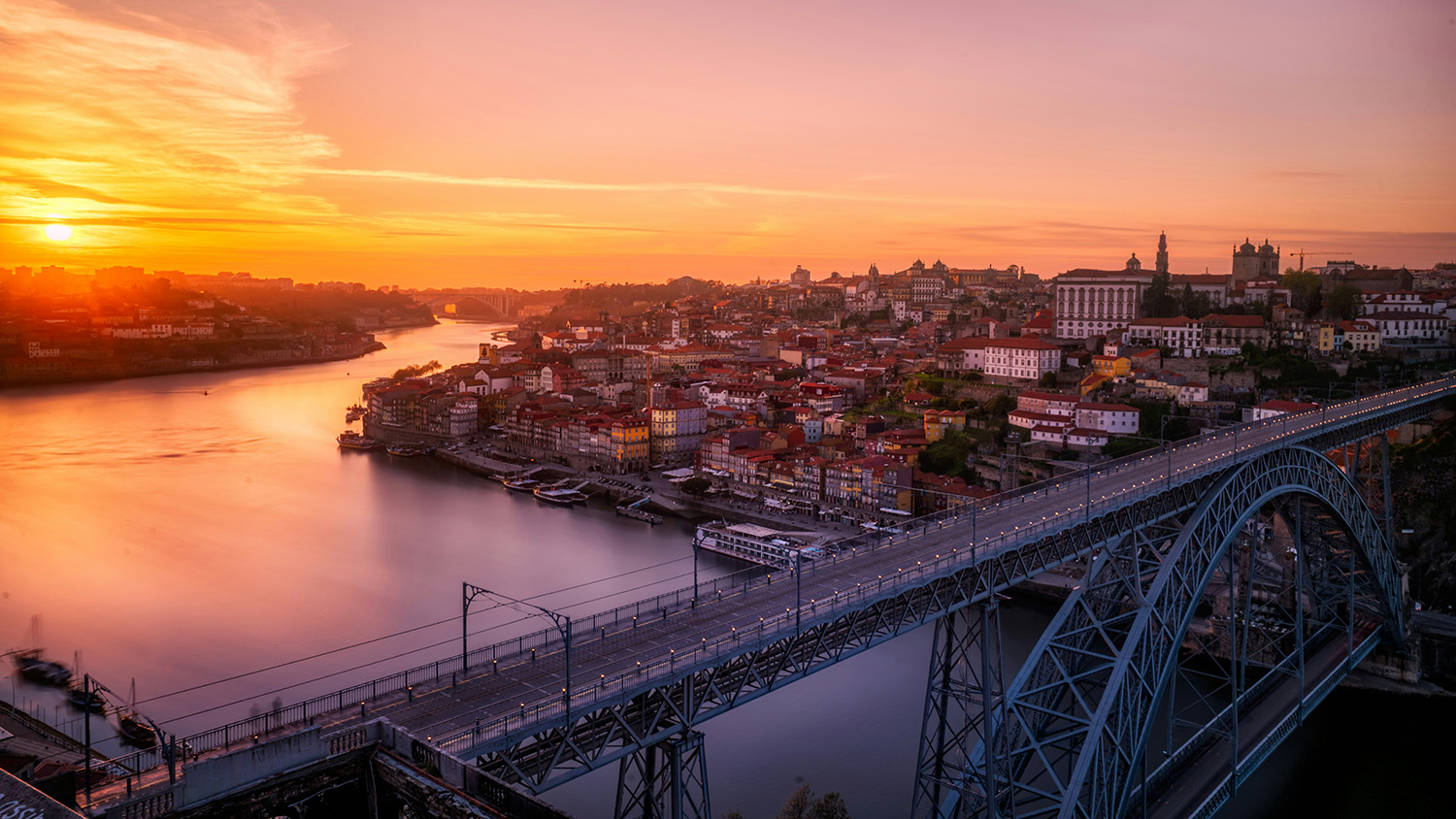

Porto is Portugal’s “second city”, an impressive hub with an idyllic riverfront, bustling food scene and Old World charm that dates back centuries – perfectly preserved along with its port wine heritage.
Vila Nova de Gaia offers two major attractions for visitors – its photogenic Ribeira quarter and Vila Nova de Gaia’s tourable port-wine lodges across the river, both featuring big brand names as well as quick free tours with tastings.
The Douro Valley
The Douro Valley is not only beautiful to look at but is also renowned for its long history of wine production. Although most famous for its port wines, it has also garnered international acclaim as an outlet for non-fortified table wines.
Vineyards can be found scattered across the valley, making it easy to visit one for a tour and tasting session. Many sites also provide more than drinks; visitors may also experience meals, workshops, harvest experiences or even spend the night at an attractive vineyard hotel!
Cultural heritage of the area can also be explored here, with festivals and rituals celebrating its strong connections between people and land that help define this region. Miranda do Douro offers visitors an unforgettable experience thanks to Pauliteiros who perform traditional dances that will enthrall all who visit.
Cruise down the Douro for an exquisite experience of this picturesque region’s stunning scenery. Your cruise takes you past some of its most notable towns and villages such as Lamego, Pinhao and Regua which are rich with culture. In between stops along your itinerary you will see terraced vineyards clinging to hillsides, simple villages producing traditional handicrafts, elegant cities boasting their region’s wealth, terraced vineyards clinging to hillsides clinging on hillsides as well as elegant cities that stand as testaments of wealth that speak volumes of their region’s richest.
There are various cruise operators that provide tours to Douro Valley vineyards as part of a day or multi-day excursion from Porto, and it is well worth taking the time out to do so. Ideally, visit during grape harvest season (late September through October) when grape picking can take place and get firsthand experience in Portuguese culture.
The Douro River is a stunning natural resource, yet unfortunately has undergone many major transformations since damming was introduced for hydroelectricity generation and navigational purposes in the 20th century. While these developments have provided safer and more sustainable conditions in some ways, they have caused serious impacts to its natural habitat and caused major biodiversity loss in this river valley. As such, groups and individuals are working collaboratively to protect its future through environmental education efforts as well as conservation measures.
The Ribeira Quarter
Ribeira District is the historic and cultural heart of Porto, housing its medieval streets and alleyways which transport you back in time. Sloped steeply up from its waterfront location through narrow twisted pathways.
At the center of Ribeira is Praca da Ribeira, featuring a 17th century fountain and austere granite walls topped with the Portuguese coat of arms. Restaurants and bars surround this square where locals congregate for drinks or street performers to perform.
Casa do Infante houses the city’s archives. This building holds special significance to Portuenses as Prince Henry the Navigator was born here in 1394. Now open to the public and featuring a small museum.
Ribeira is home to the river Douro, and strolling its banks is an enjoyable way to take in its sights and sounds. A highlight is Ponte Dom Luis I bridge spanning across to Vila Nova de Gaia; designed by Gustave Eiffel’s student as both beautiful and functional structure carrying metro trains as well as road traffic.
Ribeira is an integral part of visiting Porto for many visitors to the city, boasting beautiful homes and unique buildings as well as some of the city’s best traditional restaurants. On Vila Nova de Gaia side of bridge are shops specializing in Port Wine production – something no other country in Europe can match!
Purchase of property in this historic district can be a real treat, making it easier than ever before to find something that meets both your lifestyle needs and investment objectives. From peaceful views over Porto harbor to downtown action close by – The Ribeira has it all and with its historic importance will likely maintain its value over time.
The Port Wine Cellars of Gaia
Gaia’s Port wine cellars are an integral part of its history and culture, showcasing centuries of craftsmanship that have gone into producing this iconic beverage.
Wine cellars often offer guided tours and tasting sessions. This is a fantastic opportunity to gain knowledge on different varieties of Port wine as well as how they’re aged; additionally it gives visitors a great glimpse of these historic structures’ stunning architecture.
One of the world’s premier port wine producers is Cockburn’s (pronounced Coburn’s) cellars, established by Robert Cockburn from Scotland during the early 1800s. Now owned by the Symington family – responsible for other famous Port wine brands such as Dow’s and Graham’s. Their cellars can be found near Gaia Bay waterfront where tours take place regularly throughout the day.
Kopke Wine Company was established as a small family business in 1638 and can be found at Gaia near Caves Calem on the waterfront. Tours are also provided throughout the day for larger groups.
Be on the lookout when visiting Gaia’s cellars for large metal grids near its doors – these serve to prevent barrels from rolling and becoming mixed during flooding – something more likely to have happened prior to 1971 when Douro river dam was constructed and damming stopped being an issue.
Gaia Wine Cellars in Porto are an absolute must for wine enthusiasts, yet even those not particularly fond of Port can experience Gaia without tasting or touring any wines! Enjoy strolling along its waterfront promenade or visiting one of Porto’s monasteries that offers incredible panoramic views.
Gaia is best experienced during spring and autumn when temperatures are milder and there are fewer tourists. Additionally, summers can become extremely hot and humid; many locals choose Gaia as it offers a quieter lifestyle close to the city center.
The Historic Centre
Porto’s historic centre is at the core of city life and a UNESCO World Heritage Site, meaning that this area along the Douro River will be preserved and protected into the future. In order to become a World Heritage Site, cities must fulfill certain criteria – which includes having ancient architecture or buildings, an important cultural or natural landscape, or overall urban and architectural harmony as part of its criteria – before receiving this distinction.
Porto’s historic centre should be top priority for all visitors to this Portuguese city. As you explore its winding streets, history comes alive. There are ancient churches, houses, monasteries and buildings lovingly restored back to their former glory as well as more modern structures from early 20th century era buildings dotted around. Many streets have also been pedestrianized to make for an enjoyable and relaxing stroll through history.
Porto lies along the Douro River and boasts many historic landmarks and architectural gems that make up its cityscape. As one of Europe’s oldest centers, it was declared a UNESCO World Heritage Site in 1996.
As trade increased throughout Portugal during the Middle Ages, its settlement near the Douro River increased. To safeguard their citizens and provide protection, Portugal constructed the Cerca Nova or Gothic Wall; this massive 30-foot high wall covered 44 acres and included towers and gates to keep out any intruders.
Following the Napoleonic Wars, France invaded Porto. Field Marshal Soult’s French Army became trapped inside, yet managed to hold out until Lord Wellesley’s arrival and lift of siege by British General Lord Wellesley. Following this event, siege was lifted.
The 19th century in Portugal was marked by political upheaval. Inspired by revolutions taking place throughout Europe, a liberal constitution was implemented in 1822 – leading to division between those supporting constitutional monarchy and those advocating near-absolutism – King Miguel I led one such faction that refused to accept the new Constitution, which earned Porto the moniker “Cidade Invicta” (English for Unvanquished City).
If you enjoy exploring old machines, don’t miss the chance to ride one of Berlin’s historic tram lines! Three traditional lines still operate throughout its historic core for romantic journeys through its heart.