


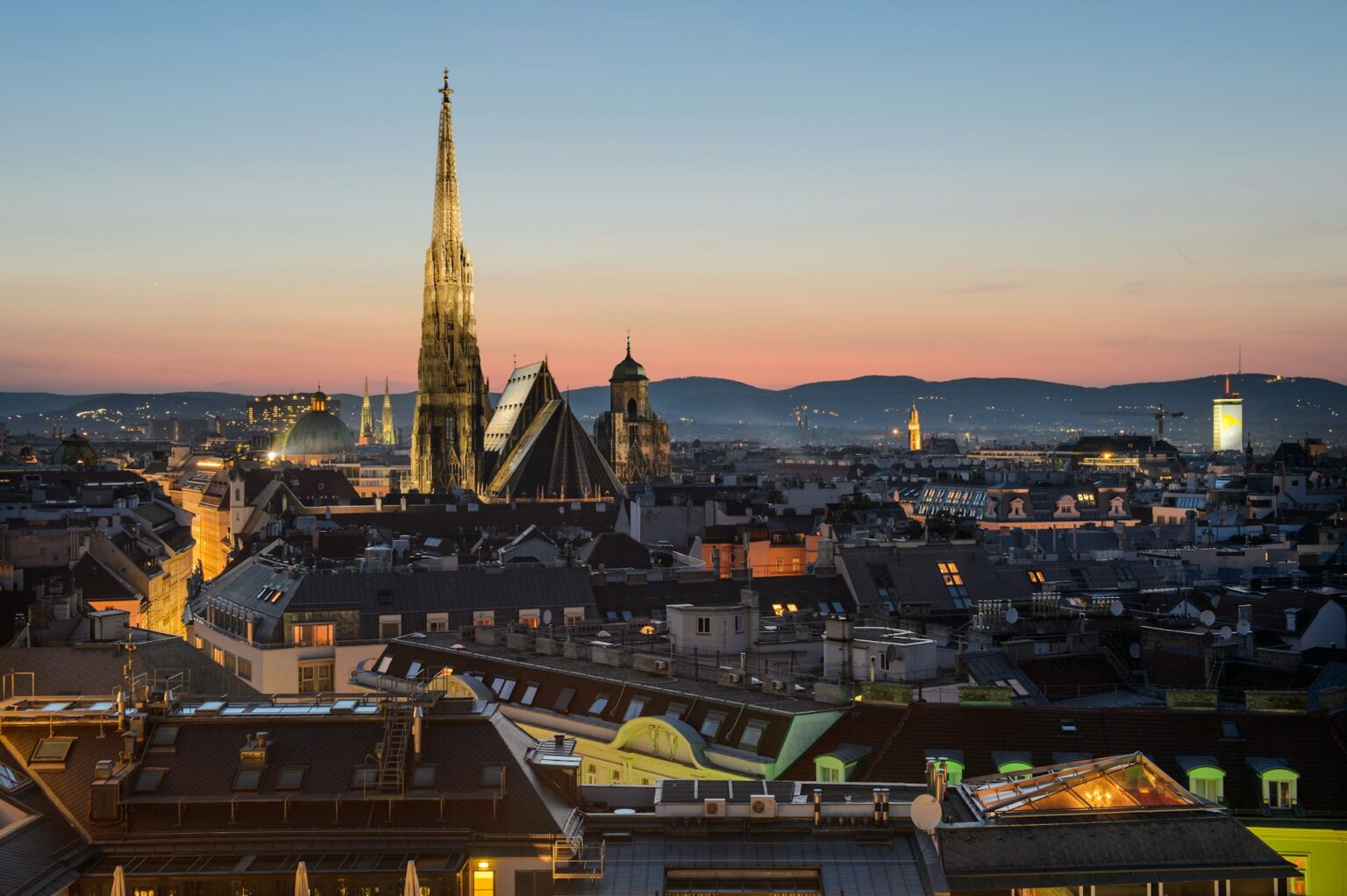

Vienna remains much the same despite extensive damage from World War II, maintaining much of the same look from a century ago. Its unique Lebenskunst (“art of living”) has survived changeable rulers and times.
City residents enjoy universal health care, affordable pensions and an amazing public transit system, while restaurants, palaces and museums make for a cultural experience to cherish.
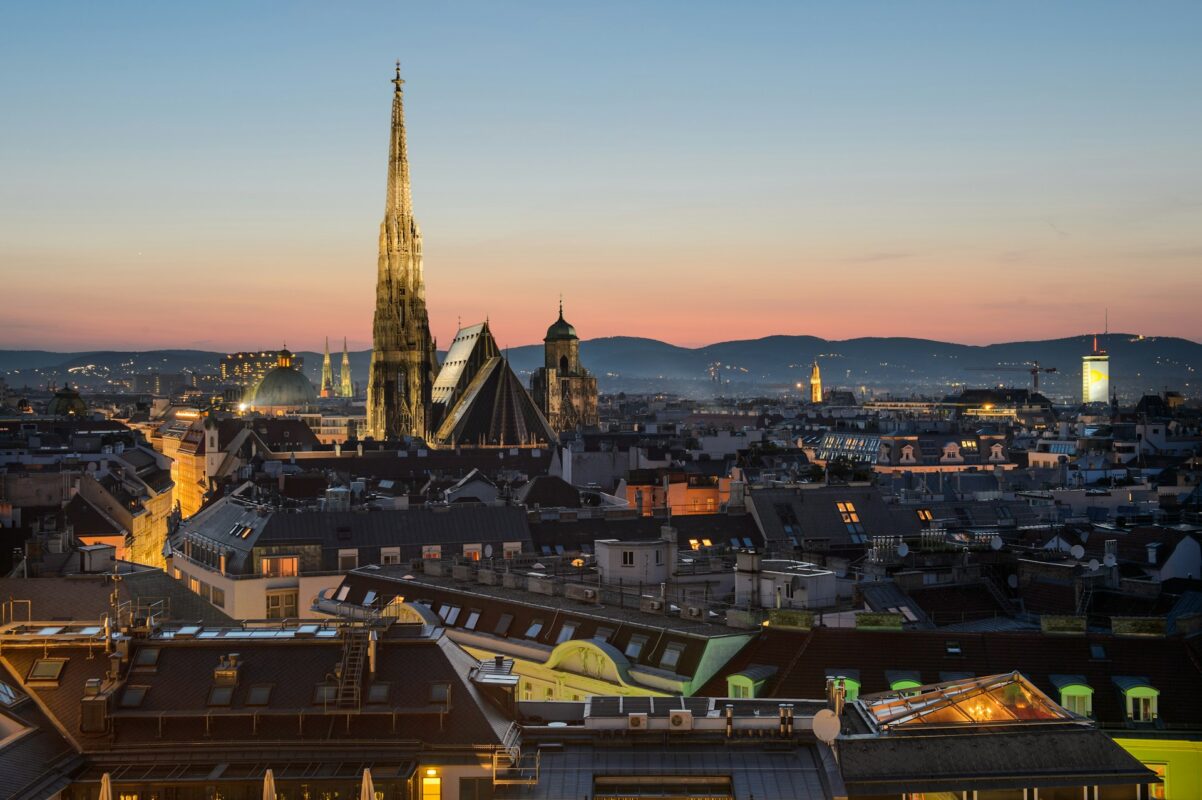
1. Rathaus
Vienna’s Municipal Government Headquarters, known as the Rathaus (City Hall), are one of its most iconic landmarks and represent not only an important part of Vienna’s past but also serve as an active part of everyday city life today.
City Hall stands out as an impressive sight from all directions with its striking central tower resembling that of a cathedral bell tower, built between 1872 and 1883 to Friedrich von Schmidt’s neo-Gothic design. Mayor and council meet here regularly as it acts as the epicenter of civic activity in the area.
The Rathaus’s main entrance on Vienna’s western side features two grand staircases lined with delicate columns. Its richly decorated facade draws influence from Gothic architecture of Flemish and Brabant secular buildings such as Brussels Town Hall. At just under 98 meters tall, its central tower features the iconic iron “Rathausmann” statue that has become an emblematic symbol for Vienna.
Inside, the city hall boasts several rooms used for municipal administration and ceremonial events, most notably its Festsaal ballroom which can host up to 1,500 guests and features breathtaking views of both Ringstrasse and Burgtheater.
The Vienna City Hall is open to visitors during regular office hours and offers guided tours; please check event schedule for times and events hosted in this building as public tours and events may occur here as well. Most areas allow photography while flash photography may not be permitted during certain events; additionally, the Viennaer Stadtbibliothek contains many books and documents on local history that visitors may access here.
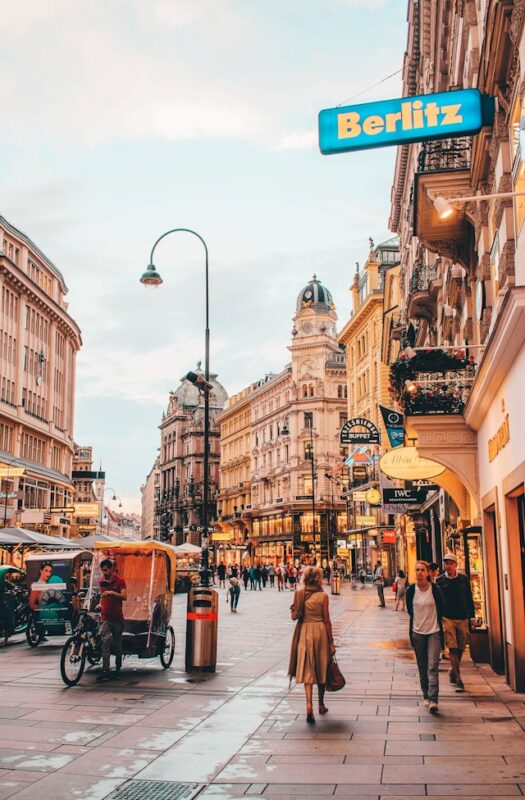
2. Albertina
Just steps from Vienna’s State Opera and Albertina museum is a unique residential palace with an unparalleled apartment interior design that provides the ideal spot to experience Austrian culture.
This complex of museums and apartments was once the largest residential palace under Empress Maria Theresa; later one of her daughters resided there. Now it boasts one of the world’s premier art collections with more than one million prints from all around the globe and thousands of paintings from different periods and cultures.
Albertina’s permanent collection has long been celebrated among art enthusiasts. Boasting works spanning Impressionism to Post-Impressionism, Modernism and Fauvism – it provides art lovers with an invaluable collection.
Many of the buildings that make up Vienna’s Historic Center remain as they were during Emperor Franz Joseph’s rule, testifying to his reign and to that of Leopold I and Charles VI who brought cultural vitality through Baroque architecture and flourishing music into Vienna during their respective rule.
Cultural activities have thrived throughout Vienna’s history, evident today in theaters, coffeehouses, concert halls and palaces. These unique features form the cornerstone of its Outstanding Universal Value; thus new high-rise construction outside its Historic Centre must take an appropriate approach in terms of protecting them.
3. Hundertwasserhaus
One of the most iconic buildings in Vienna is Friedensreich Hundertwasser’s Hundertwasserhaus on Kegelgasse. This organic housing complex stands out with its curving walls and eccentric palette, not to mention trees growing on its rooftop and terraces – truly an eye-catcher among Vienna’s imperial aesthetic and an architectural gem worth seeing on any visit to Austria’s capital city.
Hundertwasser designed the Hundertwasserhaus to be a dialogue with nature, where people and the environment were equal partners – not one overpowering the other. Over 200 trees and bushes now grow within its walls – something which draws many visitors to visit it.
The distinctive style of this building can be distinguished by a number of methods used to break away from straight lines and uniform architecture, making this house impossible to classify and unlike anything built during that era. Furthermore, its unconventional features make it a favorite photo spot.
Visitors who wish to explore the interior of the Hundertwasserhaus may do so by renting an apartment within its building, which offers guided tours. A significant proportion of its flats remain inhabited daily; fifty apartments can be found here as well as four restaurants and a medical practice – making for a very exciting tour experience!
If you want to gain further insight into architect Friedensreich Hundertwasser’s artistic and design philosophy and vision, his works at Kunst Haus Wien are an excellent alternative. There is even an engaging film showing him discussing his creation. Plus it is easily reachable from Hundertwasserhaus on foot!

4. Museumsquartier
Museumsquartier is one of the world’s largest cultural complexes and was constructed as an Imperial forum. Here historic architecture meets contemporary art and high culture meets subculture. Here can be found world-famous collections like those held by Leopold Museum, Mumok Museum of Modern Art and Kunsthalle Vienna which bring people in from across Vienna.
MQ offers more than just museums: theaters, restaurants and other facilities allow guests to experience Viennese Lebenskunst (“art of living”). People still take pleasure in listening to concerts in newly renovated concert halls; strolling past cafes while dressed in traditional dirndl dresses or enjoying mountainous quantities of whipped cream are just some of the activities enjoyed at MQ – making it the ideal venue to immerse yourself in this vibrant culture and an important meeting point for Viennese public, international guests, and artists from across all corners.
The MQ has an important impact on the urban fabric of Vienna and its adjacent buffer zones, helping preserve their outstanding universal value while providing opportunities for artistic creation and dialogue between various cultural traditions and values.
The MQ is open 24/7 and admission is always free, offering comfortable courtyards complete with its signature MQ furniture for relaxation and enjoyment. In summertime, its courts become abuzz with people enjoying both its culinary offerings and sunbathing spots. Open to all, MQ provides an inclusive cultural space where all can feel welcome to contribute and create memories at every age – tourists, artists, students and locals all flock here every year! MQ also is Austria’s most-visited district, drawing in tourists, artists, students and locals.
5. University of Vienna
The University of Vienna (Universitat Wien) is one of Germany’s oldest and most esteemed academic institutions, established by Duke Rudolph IV in 1365 as a public university and one of Austria’s major public institutions, offering 186 degree programs and providing shelter to numerous scholars of historical and academic significance.
The university boasts an illustrious history of reform. After the 1848 Revolution, important changes were implemented such as greater freedom for both teachers and students as well as seminar methods of instruction. Women were granted limited permission to study philosophy beginning in 1878 with expanded participation 11 years later; during Empress Maria Theresa (1740-80)’s reign the university underwent extensive reconstruction.
She expanded the curriculum, increased enrollment, and endowed generously. Through reorganization of faculties, this university became the first of its kind in German-speaking nations and top tier among European universities with special distinction in medicine, law and theology.
Today, the University of Vienna is the top choice of many international students. It ranks highly in world rankings, has a diverse student body and is well-known for its research excellence. Furthermore, Vienna boasts an esteemed tradition of exchange programs with universities worldwide.
As a result, the University of Vienna now has over 70 partner universities worldwide and approximately 370 ERASMUS partner universities, providing students an international experience and benefitting from its global network. I was particularly able to utilize this experience for personal and professional growth by learning about other cultures’ ways of life that I was then able to integrate into both my professional and personal life.