



Barcelona attracts 12 million annual visitors who flock to its world-famous tree-lined pedestrian Las Ramblas and the markets in La Boqueria.
The architects of Eixample designed their city around what was then an innovative understanding of urban quality, ensuring every citizen could access sunlight, fresh air and space. Furthermore, they included large parks and public squares.
Park Guell
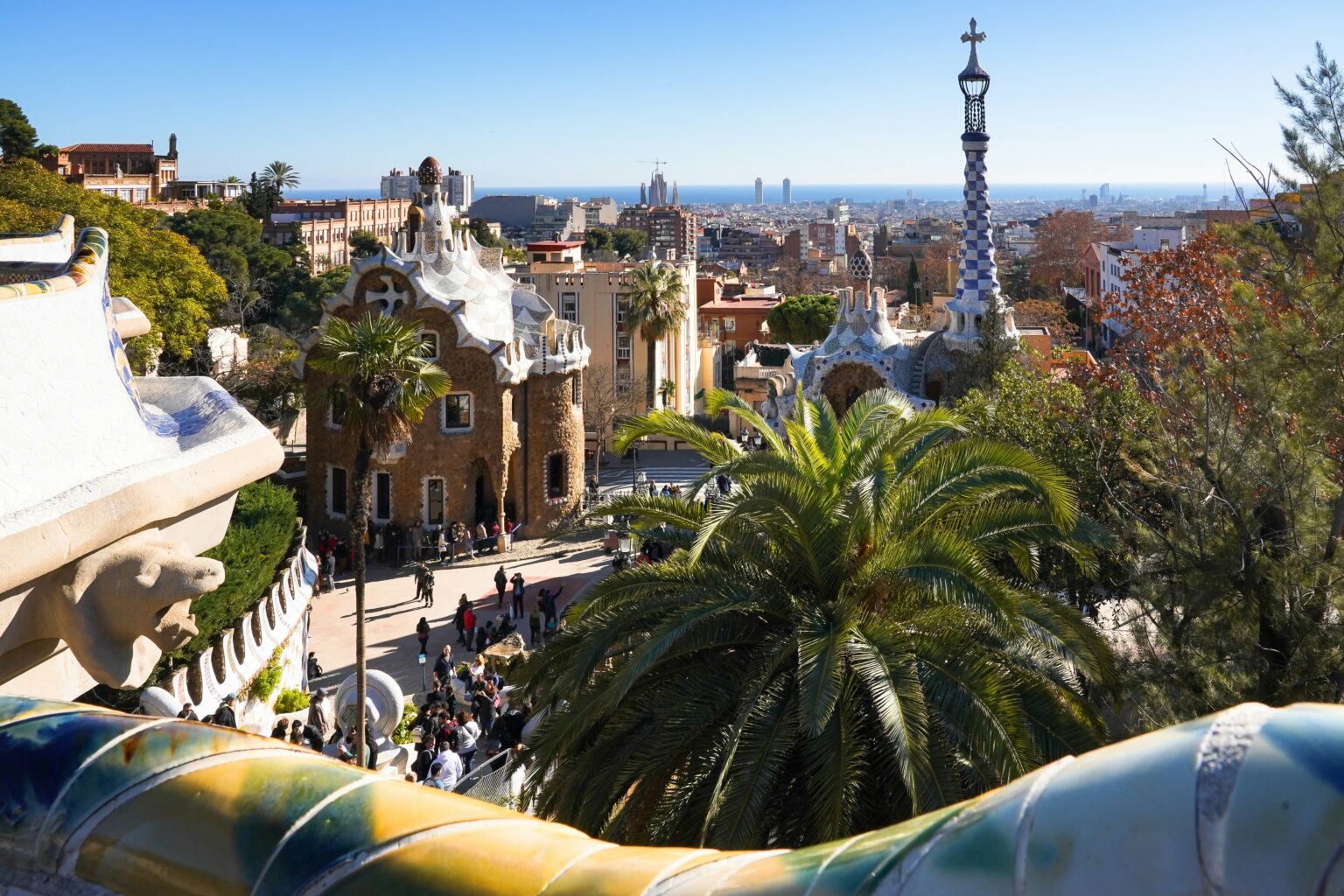
Park Guell, one of Barcelona’s iconic landmarks, should not be missed by visitors to the city. Featuring seven buildings designed by world-renowned architect Antoni Gaudi – each unique in their own way from candy-colored mosaics to undulating curves of architectural mastery – visiting Park Guell is like walking into the mind of an extraordinary creative genius!
The Dragon Stairway, one of the park’s signature features, leads to a square with two dragon heads and a central fountain, decorated by mosaic dragons that recall those found on medieval cathedral lintels. Surrounding this square lies Hypostyle Hall which features impressive circular decorations inspired by Delphi and meant to represent natural and cultural elements including seasons and lunar phases.
There are also benches positioned throughout the park where visitors can sit and relax – these include some of the first ergonomically-designed benches ever produced! It is an idyllic and peaceful space to visit; however, during peak seasons it can become very crowded; thus arriving early should help to avoid rush hour congestion and maximize enjoyment.
Park Guell is situated in Barcelona’s Gracia neighborhood and within walking distance from many of its top restaurants and tapa bars, such as La Pubilla and Bar Bodega Quimet for traditional Catalan fare, Vermuteria Puigmarti for more modern gourmet tapas, Cafe Guell offering light snacks or refreshments, La Pubilla offering traditional Catalan food as well as Vermuteria Puigmarti offering gourmet tapas – just some examples of where Park Guell guests may find what they need!
Park Guell is open daily from 9:30 am to 5:00 pm and tickets are required to enter its Monumental Zone, featuring its most iconic parts. For best results and to save time when visiting this attraction, it is advisable to prebook tickets either online through GetYourGuide or Tiqets; doing this also avoids long lines during summer months!
Guided tours of Park Guell are highly recommended to gain an in-depth knowledge of its history and significance of its structures. There are tours offered in different languages that last roughly one hour; details about booking these can be found on Park Guell website.
Fundacio Joan Miro
The Fundacio Joan Miro is one of Barcelona’s iconic landmarks and home to some of the Catalan artist’s most significant works. This museum displays over 217 paintings, 178 sculptures, 9 textile works, an almost complete print collection and over 8,000 drawings created by Miro himself – offering visitors a complete view into his creative process. In his early period he experimented with Impressionism, Fauvism and Cubism while during later stages he took inspiration from witnessing events of both World Wars II for his art – leading him into even more expressive surreal styles of creation – offering visitors a complete view into his creative process and creative process.
Josep Lluis Sert is widely recognized for designing this groundbreaking work of Rationalist architecture. Using elements found throughout Mediterranean construction techniques as inspiration for its design, Sert has created an open and airy building which serves as an inspirational landmark in Barcelona.
In addition to Joan Miro’s works on permanent display, this museum also hosts temporary exhibits by other contemporary artists and their works. As Spain’s inaugural museum dedicated to modern art, its opening marked an international benchmark in this field; since then it has hosted multiple prestigious expositions as well as supported and promoted various projects like Espai 13 which serves emerging Catalan artists.
The museum boasts an outstanding and eclectic collection, with works that explore themes such as fantasy, realism, and surrealism. A must-visit for anyone interested in contemporary arts as well as discovering Catalan culture and identity history.
Las Ramblas
La Rambla, known simply as La Rambla by many visitors to Barcelona, is often the first thing people think of when thinking of this city. Packed full of attractions and nightlife activities, La Rambla remains the epicenter of life in Barcelona and never sleeps!
The street boasts several distinct sections, each one boasting its own character. At its heart lies some of the city’s best shopping, including luxury brands like Louis Vuitton and Armani.
Nearby you will find La Boqueria market, offering seafood and produce. This historic center of commerce in Barcelona warrants a visit.
At the end of the road is Placa Reial, a square with a statue of Christopher Columbus and 130-foot Corinthian column representing Spain’s colonial past. Built for 1888 World’s Fair, this monument makes a perfect photo op and may become quite busy during visits.
Las Ramblas boasts many bars and restaurants, some more tourist-oriented than others; such as Louro Restaurant which specializes in traditional Galician dishes with modern influences; you can also try your luck at sampling Sangria or local beers at one of its numerous pubs.
For something a bit more cultural, why not visit a 19th century opera house? At its opening it was Europe’s largest opera house and should not be missed by fans of opera or theater alike.
This area boasts several museums, such as the Wax Museum and main theater, and features several parks such as Botanical Garden and Magic Fountain of Montjuic.
La Sagrada Familia
La Sagrada Familia stands as a stunning unfinished church located at the heart of Barcelona, making for an iconic symbol for Catholicism in Spain and drawing millions of visitors every year. A UNESCO World Heritage Site, La Sagrada Familia draws in millions of tourists each year who visit this breathtaking structure. Antoni Gaudi’s masterpiece stands as an outstanding testament to his talent and innovative approach to architecture. The structure itself comprises three main facades – Nativity Facade, Passion Facade and Glory Facade – for optimal viewing experience. Each facade depicts different aspects of Jesus Christ’s life, while inside, the church features stunning interior design features including tree-like pillars and an eye-catching forest canopy ceiling. Gaudi was an innovator who used unique construction techniques to give life to his innovative concepts; taking inspiration from both nature and biblical texts, using organic forms in combination with geometric lines to construct stunning structures that awe visitors today.
Gaudi transformed a traditional gothic cathedral into an astonishing piece of architecture, drawing upon influences such as those by Goethe and Ruskin to recreate natural forms in his designs, using fractal geometry – repeated elements creating patterns or designs – for added visual interest and dynamic flair. His distinctive style allowed him to achieve striking dynamism within his designs that was completely unconventional for architectural structures at that time.
Gaudi personally oversaw this project until his death in 1926, insisting on its completion according to his plans and regularly visiting its construction site to ensure his vision was being carried out successfully. His dedication and commitment were unrivaled and millions of visitors still visit his beautiful temple today.
Today, the church employs modern technologies to speed up construction and meet its completion deadline of 2026, as planned. Alongside traditional methods, 3D printing and other advanced digital technologies are utilized to visualize complex geometries and understand how they fit together; additionally a library of plaster models helps architects and craftsmen recreate each element of its building design.
Trip-ready gear from Amazon
As an Amazon Associate, grandgo.com earns from qualifying purchases. Links below are affiliate links — clicking them may earn us a small commission at no extra cost to you. Prices and availability are shown on Amazon.co.uk.
- Spanish phrasebook Berlitz — Essential Spanish for travel.
- Lonely Planet Spain guidebook — Best overall Spain guide.
- Reef-safe sunscreen SPF 50 — Costa del Sol + Ibiza.