


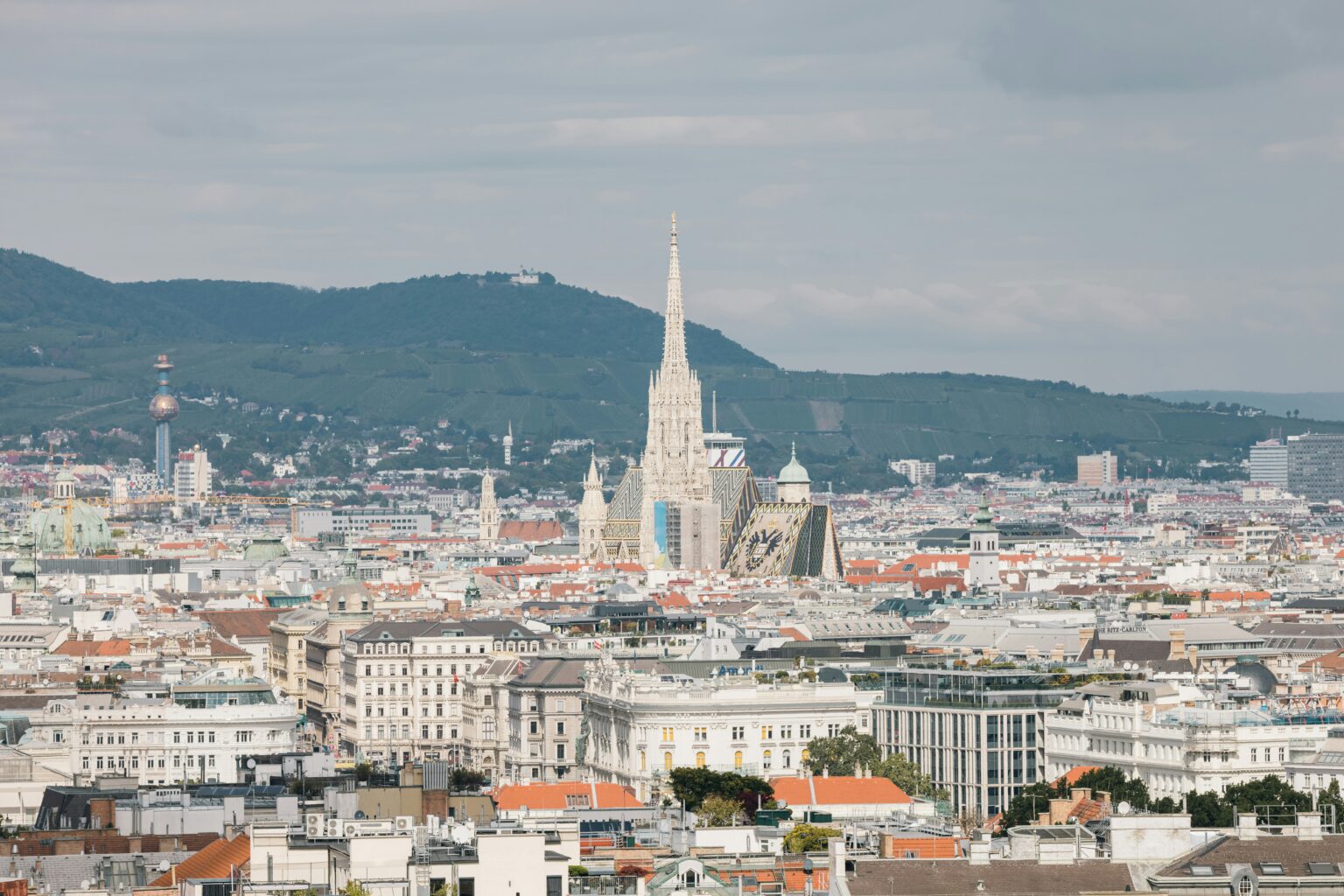

Viennese Lebenskunst (“art of living”) has outlasted various rulers and times. People still enjoy eating Tafelspitz, drinking local wines that feature tart flavors like Pinot Grigio or Muscat, listening to music performed in renovated concert halls – and eating Tafelspitz!
Whereas other European cities consider living in social housing to be an unfortunate condition, Vienna considers it to be an indicator of vibrant urban living.
1. Albertina Museum
One of the world’s largest print rooms resides inside a grand palace that once belonged to one of Maria Theresa’s daughters – now it serves as a must-visit museum and houses over 65,000 drawings and over one million old master prints! The Albertina is truly an exceptional treasure trove.
This building dates back to 1776, originally intended as a residential palace but later extended to house the Albertina’s impressive graphic art collection. Additionally, 20 authentic state rooms offer visitors a glimpse into how Habsburgs once lived their ceremonial and private lives.
Its impressive collections span nearly the entirety of Western art history and feature nearly one million drawings and prints which are among the world’s most valuable assets. You’ll be able to witness works by Old Masters such as Leonardo da Vinci, Michelangelo, Raphael as well as modern masterworks such as Durer, Picasso, Monet.
Albertina Museum stands out with its unparalleled collection of Albrecht Durer drawings. Boasting one of the world’s most impressive groups of the artist’s sketches, its 14 pieces offer an insight into Durer’s early-humanist artistic philosophy.
The Albertina boasts an outstanding collection of drawings by Austrian artist Gustav Klimt. Their over 400 works by him feature many studies of women as well as birds, landscapes and self-portraits that made his name.
This museum boasts not only famous drawings but also boasts an expansive collection of Old Masters’ paintings and other works by old masters from across Europe, as well as being home to Albrecht Durer prints which are considered world-renowned; also found here is an exceptional 19th-century paintings collection.
As one of the world’s premier graphic collections, the Albertina isn’t shy to add new exhibitions that keep visitors coming back again and again. In 2021 alone it presented a major show featuring works from international lenders; among these was Uffizi’s Adoration of Magi, Weimar’s self-portrait by Durer and Thyssen-Bornemisza’s Christ among Doctors (from Madrid).
2. Hundertwasserhaus
The Hundertwasserhaus stands out as an iconic building in Vienna, designed by Friedensreich Hundertwasser in 1985 and boasting unique colors and shapes that make an unforgettable visit. Showcasing his beliefs through its sculptural features and design features, this house echoes his ideologies on architecture that does not conform to strict standards but instead focuses on nature and human form – ideals that this unique structure perfectly demonstrates with its flowing lines, organic shapes, and use of color.
At its opening, this building caused widespread controversy for its unconventional aesthetic and designs. While some of Hundertwasser’s ideas were adopted into its construction – like forested roofs and “tree tenants” on balconies – many others were rejected outright.
Today, the Hundertwasserhaus is widely considered an architectural and artistic masterpiece. One of Austria’s most visited buildings, this landmark offers visitors an opportunity to discover its stunning design while experiencing free entry. Furthermore, its colors change throughout the year to reflect its surrounding environment and serve as a visual reflection.
Hundertwasserhaus also features a cafe that makes for the ideal spot to unwind and admire the views of both river and cityscape. Visitors can stroll from city center or take taxi/tram/bus.
If you want to gain more insight into Hundertwasser’s work, Kunst Haus Wien is an excellent starting point. Situated just four blocks away from his House at Weissbergerstrasse 13, this building was once used as a Thonet factory and now hosts an exhibit dedicated to his works.
Visit this gorgeous place and witness how the Hundertwasser philosophy can be implemented into modern architecture. Additionally, the gallery hosts exhibitions that cover many topics – sure to provide all who visit with an enjoyable experience.
3. MuseumsQuartier
MuseumsQuartier draws visitors with its many museums and cultural facilities for art and dance. Of particular note is Leopold Museum, housed in a large white cube covered in limestone cladding that houses one of Egon Schiele’s world-class collections; also noteworthy are mumok (Museum Moderner Kunst Stiftung Ludwig Wien), Kunsthalle Wien and Architekturzentrum Vienna as well as cultural facilities dedicated specifically to children such as ZOOM Kindermuseum and wienXtra-kinderinfo.
Complex offers an abundance of exhibitions and events throughout the year, from modern art galleries to state of the art dance studios and even a children’s museum. Additionally, there are music/dance events as well as cafe scenes – make sure your visit coincides with what most interests you! Easily accessible via metro line U2 stop MuseumsQuartier as well as tram stops Volkstheater/Getriedemarkt.
MuseumsQuartier boasts not only museums and galleries, but also restaurants, cafes, bookstores and gift shops – not to mention an idyllic inner courtyard ideal for relaxing or people watching! In winter it offers curling as an activity – making this the ideal escape from busy shopping streets!
One of the best ways to experience MuseumsQuartier is with a tour, which can help make sure that you make the most of your visit. From visiting Libelle observation deck or learning more about mumok museum – there’s sure to be one tailored specifically towards your interests!
Engaging in a tour will not only allow you to discover more of Vienna, but it will also make your travel easier and less stressful. A guided tour allows you to skip lines at popular attractions and avoid long queues so you can truly make the most of your visit.
After receiving several negative media reports, several MQ buildings were widely criticized for lacking barrier-free wheelchair accessibility. Unfortunately, despite commitment from interest groups and organizations that advocate for inclusivity, not all public buildings within MQ are fully barrier-free.
4. Ringstrasse
The Ringstrasse encloses Vienna’s historic inner city and is recognized as a UNESCO World Heritage Site. Comprised of 22 buildings that once formed part of an inner city wall or open defensive fields known as “Glacis”, its path encases Vienna’s inner city history and serves as a living testament.
In 1860, Emperor Franz Joseph ordered that medieval walls be demolished and dry moat filled in order to provide enough space for its rapidly increasing population. A grand boulevard was created which featured palaces and stately buildings constructed along it; public and cultural institutions also flourished here; symbolic of late Monarchy life when citizens would gather around its coffee houses for socializing and cultural encounters. The Ringstrasse represented this cultural and social world of its day – as an emblematic site where seeing and being seen could take place!
The impressive buildings lining Austria’s Ringstrasse showcase its many historical influences through architecture and art. Notable contributions were made by master builders Theophil Freiherr von Hansen, Carl Freiherr von Hasenauer and Gottfried Semper; their works displayed elements from Renaissance, Baroque and Gothic styles into new monumental architecture known as Historicism.
Ringstrasse isn’t only important culturally; it is also an attractive gathering spot for Viennese both daytime and evening, drawing crowds for drinks or nibbles along its length. Locals enjoy lounging around courtyard cafes during warm weather months while sharing conversations over wine or beer!
One of the best ways to explore the Ringstrasse is on foot; for an easier yet more relaxed tour experience, however, tram tours may also be a worthwhile option. These trips are especially useful for visitors seeking to see many examples in a short amount of time; simply start your tour from Oper-Karlsplatz stop on tram 2 (“Friedrich-Engels-Platz” and travel counterclockwise around its circumference.
The Ringstrasse provides many opportunities for an exciting cultural walk, with something for everyone – from museums of Fine Arts and Natural History, State Opera and Vienna Philharmonic Orchestra to Johann Strauss monument in Stadtpark – available here.
Trip-ready gear from Amazon
As an Amazon Associate, grandgo.com earns from qualifying purchases. Links below are affiliate links — clicking them may earn us a small commission at no extra cost to you. Prices and availability are shown on Amazon.co.uk.
- Compact daypack travel — For city sightseeing.
- Lonely Planet destination travel guide — Trip planning essential.
- Anker portable charger 20000mAh — All-day phone battery.