


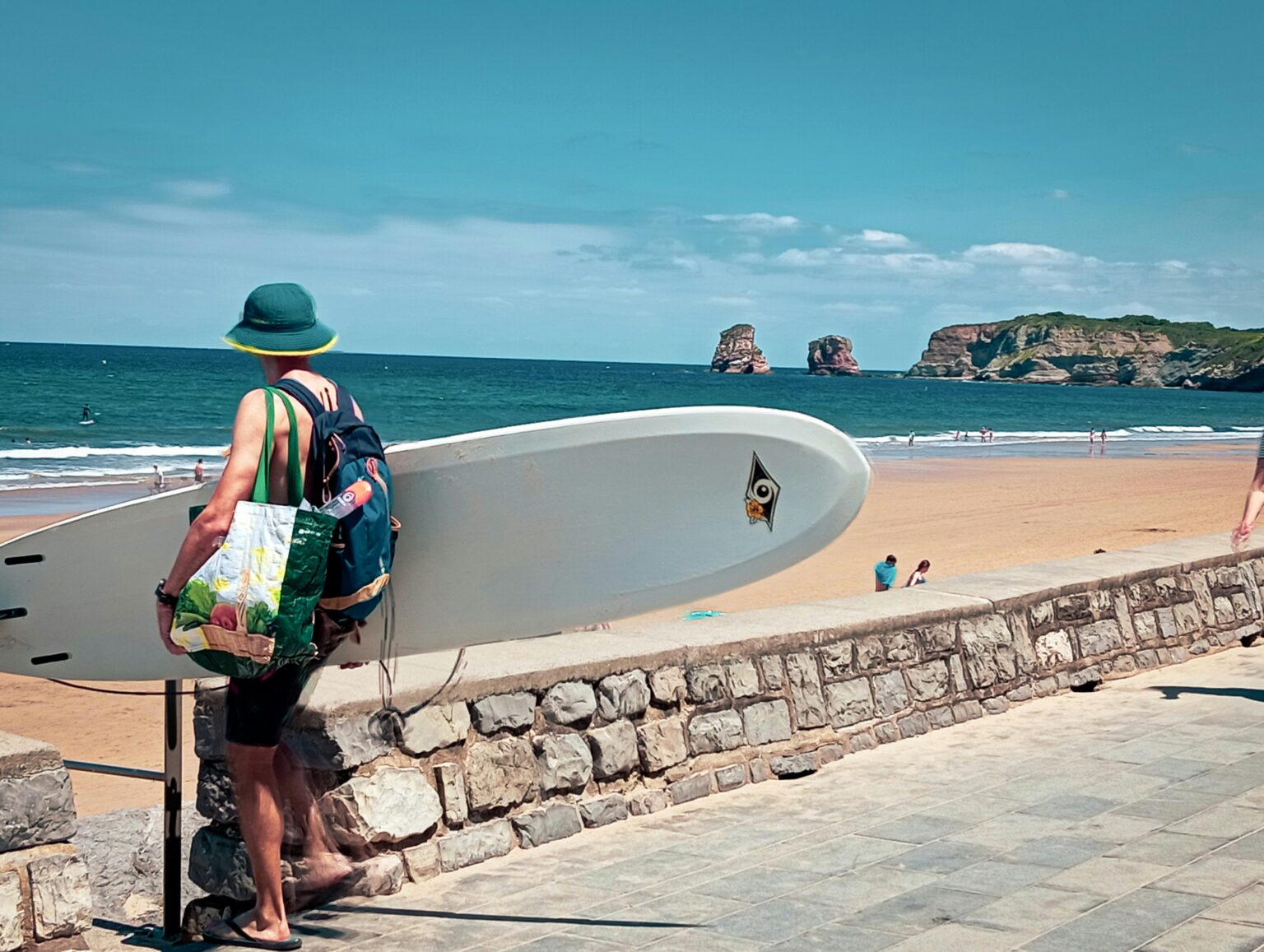

Basque people possess a distinct culture unlike any other in Europe. Euskal Herria lies between France and Spain but can often be missed on maps.
Their ancestors may share genetic ties with populations who pioneered agriculture in Central Europe; however, other evidence points toward them having more in common with hunter-gatherers than farmers.
Origins
Basques are an influential people with a strong national identity who have also integrated aspects from other cultures to form their own distinctive culture based on Euskara as their language of communication.
Basque remains one of the world’s most mysterious languages, but new research is beginning to unlock its mysteries. Considered an “isolate” because it lacks connections with any living languages, Basque is spoken in northern Spain and southern France’s Basque Country region.
Some scholars have attempted to explain its roots by noting similarities to Iberian and Celtic languages, or suggesting it developed out of those spoken after the Tower of Babel collapsed; but these theories rest upon dubious etymologies and assumptions.
Archaeological and genetic studies have also demonstrated that Basques are more closely related to pioneer farmers of central Europe than hunter-gatherers from the Near East; hence these explanations proved unsatisfying.
Genetic approaches offer a way of studying population origins without needing to know its history or etymology, such as Flores-Bello’s approach of analyzing genomic-wide single nucleotide polymorphism data from Basques living near each other in very fine geographic scale areas.
Results indicate that Basques can be clearly distinguished from the rest of Franco-Cantabrian region by a high degree of internal heterogeneity (regional variations within population due to geography). Notably, this internal heterogeneity corresponds to traditional linguistic province boundaries; therefore it could suggest that their formation as a distinct language and culture might have been relatively recent due to isolation due to agricultural transition.
Language
Basque (Euskara to native speakers) is an exceptionally adaptable language, having successfully adjusted to numerous cultural and technological influences throughout its long history. Absorbing new words and concepts without altering its basic grammar structure, it has the ability to fill onomatopoeia gaps in technical and scientific domains with borrowed neologisms from other languages.
Furthermore, Basque boasts an expansive vocabulary of grammatical forms including inflections and the full complement of auxiliary verbs. Although widely considered an isolated language today, Basque remains widely spoken among those who emigrated from Spain or France earlier due to economic or political reasons; millions of Basques people live throughout North America (especially Newfoundland and Quebec in Canada) Latin America as well as Australia and South Africa.
Basque people have always held a close affinity to the sea due to its geographical position along Spain and France’s coastal regions, evidenced by traditional music, dance, and cuisine which reflect this relationship – including traditional Mediterranean cooking with its variety of seafood offerings.
Basques are well known for their active civic participation, both political and civil. Additionally, the region is an emerging leader in alternative energy production, environmental research, high technology industries and tourism. Cities and towns throughout this area feature world-class attractions like Bilbao’s Guggenheim Museum as well as some of Europe’s liveliest restaurants and bars.
Even with all its setbacks in the 20th century, such as ETA violence and heavy industry’s decline, Basque knowledge continues to spread among its speakers thanks to effective official language policies and public support. Now Basques society remains modern yet progressive while upholding centuries-old traditions both domestically and overseas.
Culture
The Basque people enjoy an innovative culture grounded in their language of Euskara. For decades they have looked beyond their borders for inspiration, leading them to be leaders of global economic and sustainability movements. Their cultural legacy can be found everywhere from Bilbao’s Guggenheim Museum and surfing beaches of Donosti/San Sebastian to Gipuzkoa’s cider houses (sagardotegiak).
The Basque nation is well known for their musical instruments – txistu is an unusual flute/drum combo played simultaneously by one person called “Txistu,” while BERTSOLARIAK versifiers, who spontaneously compose rhymes on any subject matter, play an integral part in village festivals. Composers such as Arrizaga, Guridi and Ravel were key to these festivities while other works by famous writers Baroja and Unamuno as well as internationally-recognized painters/sculptors such as Eduardo Chillida were among these contributions from Basque peoples!
Family is at the core of Basque culture. While nuclear families predominate in towns and villages of Basque Country, rural districts rely heavily on their larger AUZOA (neighborhood) for social intimacy; Lenbizikoatia activates only through marriage or death; neighbors provide aid and support.
Basque peoples possess a rich tradition of folk medicine, and still hold to beliefs in certain herbal treatments that claim efficacy. Fear of misfortune is widespread. Yet Basques remain proud of their heritage and possess strong senses of identity that vary depending on where they reside; some consider Spain part of Basque Country while others are strongly committed to self-determination and independence; throughout history this tension between their attitudes has only intensified further.
Religion
Basques people are predominantly Catholic Christians, though their beliefs and traditions stem from pagan religious practices practiced by their ancestors. They possess an expansive folklore encompassing traditional music, dancing and food – such as their rich folklore that incorporates traditional instruments like the txistu and xirula being played at festivals and events – such as Katcha-Ranka dance performed in fishing villages by carrying St. Peter through town to be hit as an act of good luck before heading out fishing trips.
Basque mythology recognizes Mari as the supreme deity of the universe. She takes various animalistic forms when in her underground dwelling (bull, ram, billy goat, horse or snake), but when outside she assumes human form and holds an lauburu solar disc on her hand.
One of the primary themes in Basque mythology is its portrayal of duality between life and death. According to ancient Basques beliefs, day was for living while night belonged to spirits – maintaining equilibrium was done so with Gaueko as guardian of the dead spirit.
Past perceptions of Basque society tended to suggest it was matriarchal; this belief, however, stands in stark contrast to modern patrilineal kinship and inheritance structures which characterize modern Basque culture. Amanda Scott’s archival research recovers the pervasive presence of seroras (saroa) within early modern Basque religious life, showing how timeless concerns coexist alongside vast institutional change; her study thus challenges how we think about women in religious practice and devotion.
Giants
Giants are an integral part of many mythologies, often embodying elements of chaos or primordialism as well as great strength. Basque mythology features giants with these same traits: from Jentilak the Mighty to Galtzagorri the Small but no less impressive who represent mountains, forests and nature itself, these iconic figures hold great fascination for local residents even today.
At one time, romantic travellers to Palestine were entranced by tales of massive structures and ancient giant tombs, like Josiah Porter who reported seeing “primeval giants’ monuments and city architecture”. According to legend, jentilak were legendary beings credited with throwing huge rocks over long distances leaving behind old stone ruins and Neolithic structures like menhirs, cromlechs, dolmens. Additionally they introduced iron technology, agriculture techniques, as well as creating Basque ball game called pelota; eventually all but one survived as Santa Clause.
Basque Country legends feature numerous legendary creatures, from Sugulna – a three-headed hydra; to Gaueko, who punishes travelers who venture into the mountains at night; to Mairuak giants who constructed dolmens, menhirs and cromlechs of Euskal Herria; Olentzero is an example of one such mairuak giants; they built dolmens, menhirs and cromlechs within its borders whereas Olentzero became known for appearing during Christmas time to distribute gifts among children in Euskal Herria after being abandoned by fairies; today he serves as symbolism for Basque Country holidays!
Trip-ready gear from Amazon
As an Amazon Associate, grandgo.com earns from qualifying purchases. Links below are affiliate links — clicking them may earn us a small commission at no extra cost to you. Prices and availability are shown on Amazon.co.uk.
- Lonely Planet destination travel guide — Trip planning essential.
- Compact daypack travel — For city sightseeing.
- Universal travel adapter — 150+ countries covered.