


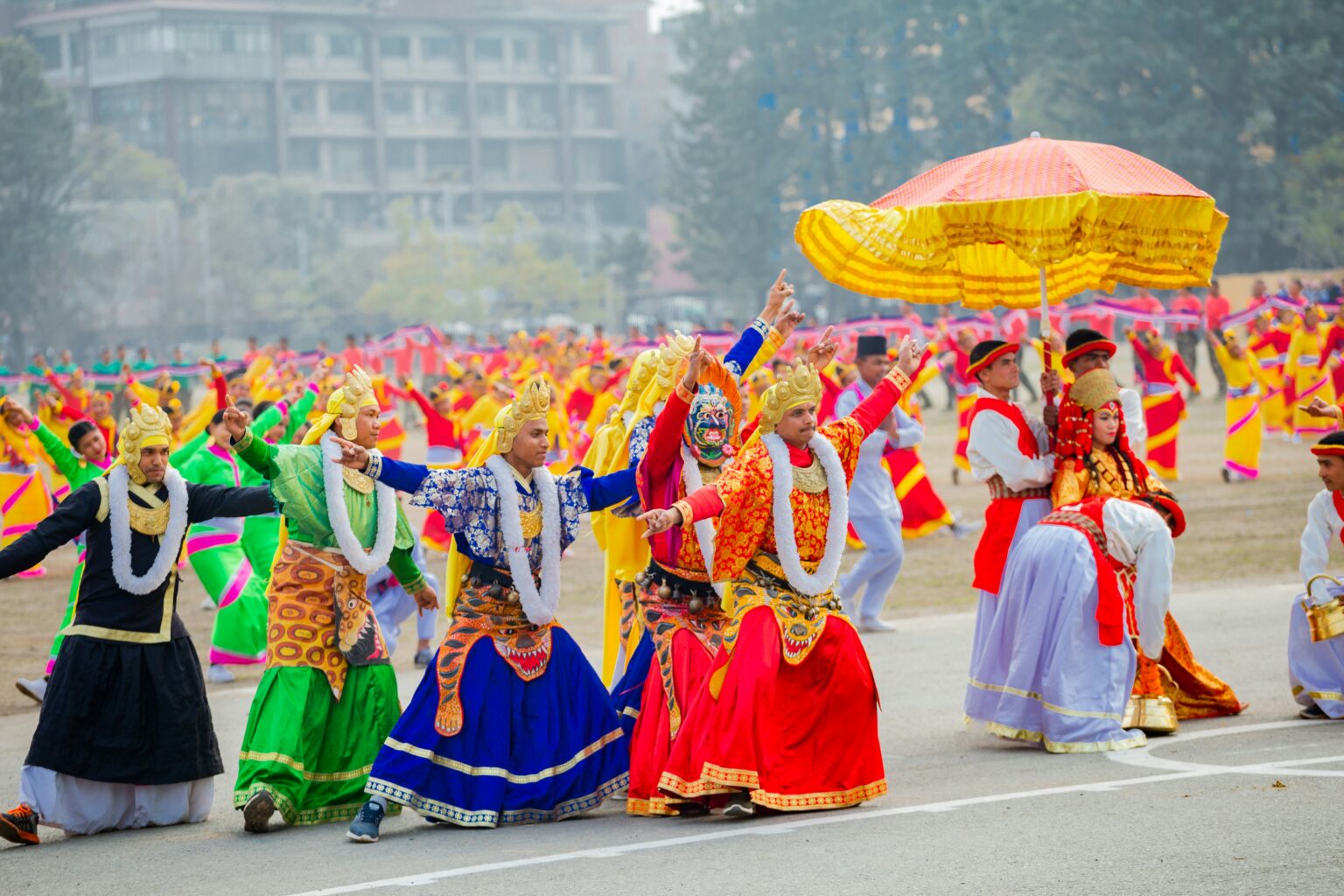

Festivals celebrate art, tradition, and culture, bringing people from all walks of life together for celebrations of every size — from intimate local gatherings to massive public spectacles. The Harbin Ice Festival draws millions with its towering ice sculptures, while Rio’s Carnival turns social conventions upside down and has earned a legendary reputation for revelry.
Chinese New Year
Chinese New Year is one of the world’s largest and longest-running festivals, steeped in centuries-old traditions. It marks a time for family reunions, honouring ancestors, welcoming good fortune, and embracing new beginnings. The celebrations typically last 15 days, culminating in the vibrant Lantern Festival.
In the lead-up to the new year, homes are thoroughly cleaned to sweep away bad luck and invite good fortune. Families shop for new clothes and decorate their homes with red and gold ornaments. The streets come alive with Lion and Dragon dances, temple visits, and bustling flower markets.
On the first day of the new year, families gather for a Reunion Dinner — the most important meal of the season. Traditional foods like tangyuan (sticky rice balls filled with peanuts and sesame paste) are enjoyed as symbols of prosperity. Some families make offerings to the God of Wealth in hopes of a fortunate year ahead, while parents present newly married daughters with gifts of cash or fruit to strengthen family bonds.
Diwali
Diwali, the Festival of Lights, is a Hindu celebration that commemorates the victory of good over evil, knowledge over ignorance, and light over darkness. Celebrated by billions of people around the globe — including followers of Hinduism, Sikhism, and Jainism — it is one of the most widely observed festivals in the world.
The festivities unfold over five days. Dhanteras marks the opening day, when families purchase new utensils and jewellery to welcome wealth into their homes. The second day, Naraka Chaturdashi (also known as Choti Diwali), honours Lord Krishna’s defeat of the demon Narakasura. Homes are cleansed, oil lamps are lit, and intricate rangoli designs adorn doorsteps.
The third and most significant day is devoted to worshipping Lakshmi, the goddess of wealth. It is believed that Lakshmi visits homes on this night to bestow her blessings, so doors and windows are left open to welcome her. Clay lamps, or diyas, are placed outside homes to guide her way.
Mardi Gras
Mardi Gras is a dazzling celebration marked by parades, beads, and elaborate masks in shades of purple, gold, and green. It falls on the day before Ash Wednesday, marking the final celebration before the Christian penitential season of Lent.
While the exact origins of Mardi Gras remain debated, New Orleans has long been synonymous with this exuberant tradition. Depending on the liturgical calendar, the carnival season can last anywhere from four to eight weeks, building to a crescendo on Shrove Tuesday — commonly known as Fat Tuesday.
The tradition traces its roots to the celebration of Epiphany on January 6 and the Roman Catholic customs that preceded Lent. When French colonisers settled in New Orleans, they brought many of these customs with them, weaving them into what became the city’s signature celebration.
Comus, New Orleans’ oldest parade krewe, established many beloved Carnival traditions, including selecting a King, Queen, and Maids of Honour from its membership — keeping their identities secret until the grand after-parade ball. Despite interruptions during the Civil War era, Carnival endured and grew. By 1916, Zulu became the city’s first Black parade krewe, adding a new and vital chapter to the tradition.
Rio Carnival
Rio Carnival — often dubbed “The Greatest Show on Earth” — is a bucket-list event for travellers worldwide. Rooted in Brazil’s rich Afro-European heritage, the festival typically takes place in February or March, just before Lent begins.
At the heart of the celebration, thirteen samba schools perform elaborate dances with dazzling floats and live bands inside the Sambódromo Marquês de Sapucaí — a purpose-built stadium designed by legendary architect Oscar Niemeyer that seats up to 90,000 spectators.
Beyond the main parade, the city erupts with street parties known as blocos. Thousands of revellers don colourful costumes, dance to infectious drumbeats, and enjoy generous helpings of feijoada (a hearty black bean and meat stew) and caipirinha cocktails. Rio Carnival is a joyful collision of European, Indigenous, and African cultures — an experience unlike any other.
Oktoberfest
Oktoberfest is practically synonymous with Munich and Bavaria. Every year, millions of revellers descend on the Bavarian capital to enjoy lively brass bands, breathtaking Alpine scenery, and the sight of lederhosen-clad crowds raising steins of beer in sprawling tent-covered meadows.
The festival dates back to 1810, when it was first held to celebrate the marriage of Crown Prince Ludwig and Princess Therese. The inaugural festivities featured a grand feast and horse races, and the event was so popular that it became an annual tradition.
In 1896, local Munich breweries joined the celebration, transforming it into the legendary beer festival we know today. Horse races were discontinued in 1960, and the festival has since become renowned for its vast beer tents and carnival rides.
Oktoberfest also has an enormous economic impact on Munich and Germany as a whole, attracting investment, boosting tourism, and fostering international partnerships. However, as the festival continues to grow, organisers face the challenge of managing its environmental footprint and ensuring fair labour practices for temporary workers.
Gion Matsuri
The Gion Matsuri in Kyoto, Japan, is a spectacular month-long event steeped in over 1,000 years of history. Recognised by UNESCO, the festival showcases Kyoto’s rich cultural heritage through stunning pageants, ceremonial processions, street parties, and food stalls.
Highlights include the Mikoshi Procession, which welcomes and bids farewell to divine spirits; the Yamahoko Junko Parade, featuring towering ornamental floats; and the atmospheric Yoiyama Evening Procession.
The festival traces its origins to 869, when a devastating plague swept through Japan. Emperor Seiwa ordered religious ceremonies to appease the gods, including a ritual involving 66 tall spears — one for each province of Japan. Over time, these spears evolved into the 33 elaborate Yama and Hoko floats seen in the festival today.
Gion Matsuri has also incorporated unique traditions over the centuries, such as a ceremony in which a young boy is chosen as a divine messenger. From July 13 until the main parade on July 17, the chosen messenger rides atop the floats without touching the ground.
Burning Man
Burning Man is a renowned counterculture gathering held each year in Nevada’s Black Rock Desert around Labour Day. Named after the ritual burning of a towering wooden effigy on the event’s penultimate night, the festival attracts tens of thousands of attendees — known as “Burners” — from around the world to celebrate art, community, and self-expression.
The event is guided by ten core principles, including radical inclusion, gifting, decommodification, civic responsibility, leaving no trace, and communal effort. Participants are encouraged to create art, experiment freely, and contribute to a temporary city built entirely by its inhabitants.
Black Rock City, as the festival site is known, has grown so large that it functions like a small town, complete with elaborate sculptures, art cars blasting music, and structures decorated with lights and pyrotechnics. The festival’s influence extends well beyond the desert — projects like Google’s campus design and companies like SolarCity have drawn inspiration from its ethos of creativity and community.
Related Guides
- How to Get from Munich Airport (MUC) to City Centre — Airport guide
Trip-ready gear from Amazon
As an Amazon Associate, grandgo.com earns from qualifying purchases. Links below are affiliate links — clicking them may earn us a small commission at no extra cost to you. Prices and availability are shown on Amazon.co.uk.
- Compact daypack travel — For city sightseeing.
- Reef-safe sunscreen SPF 50 — Beach + outdoor.
- Lonely Planet destination travel guide — Trip planning essential.