



Quick Answer
Florence is the cradle of the Renaissance — the city where Michelangelo, Da Vinci, Brunelleschi, and Botticelli transformed Western art. Population: 380,000. Tourist flow: 16 million/year — more visitors than residents, leading to overcrowding tensions. Top sights: Uffizi Gallery (Botticelli’s Birth of Venus), Duomo (Brunelleschi’s dome 1436), Ponte Vecchio (medieval bridge with goldsmiths), Accademia (Michelangelo’s David), Pitti Palace + Boboli Gardens, Santa Croce (Galileo’s tomb), San Lorenzo (Medici tombs). Best time: April-May, September-October — warm but not crushed by crowds. Avoid July-August (40°C, tourist peak). Days needed: minimum 3 for highlights, ideal 5-7 for deep dive. Budget: €100-200/day mid-range. UNESCO World Heritage 1982.

Florence highlights
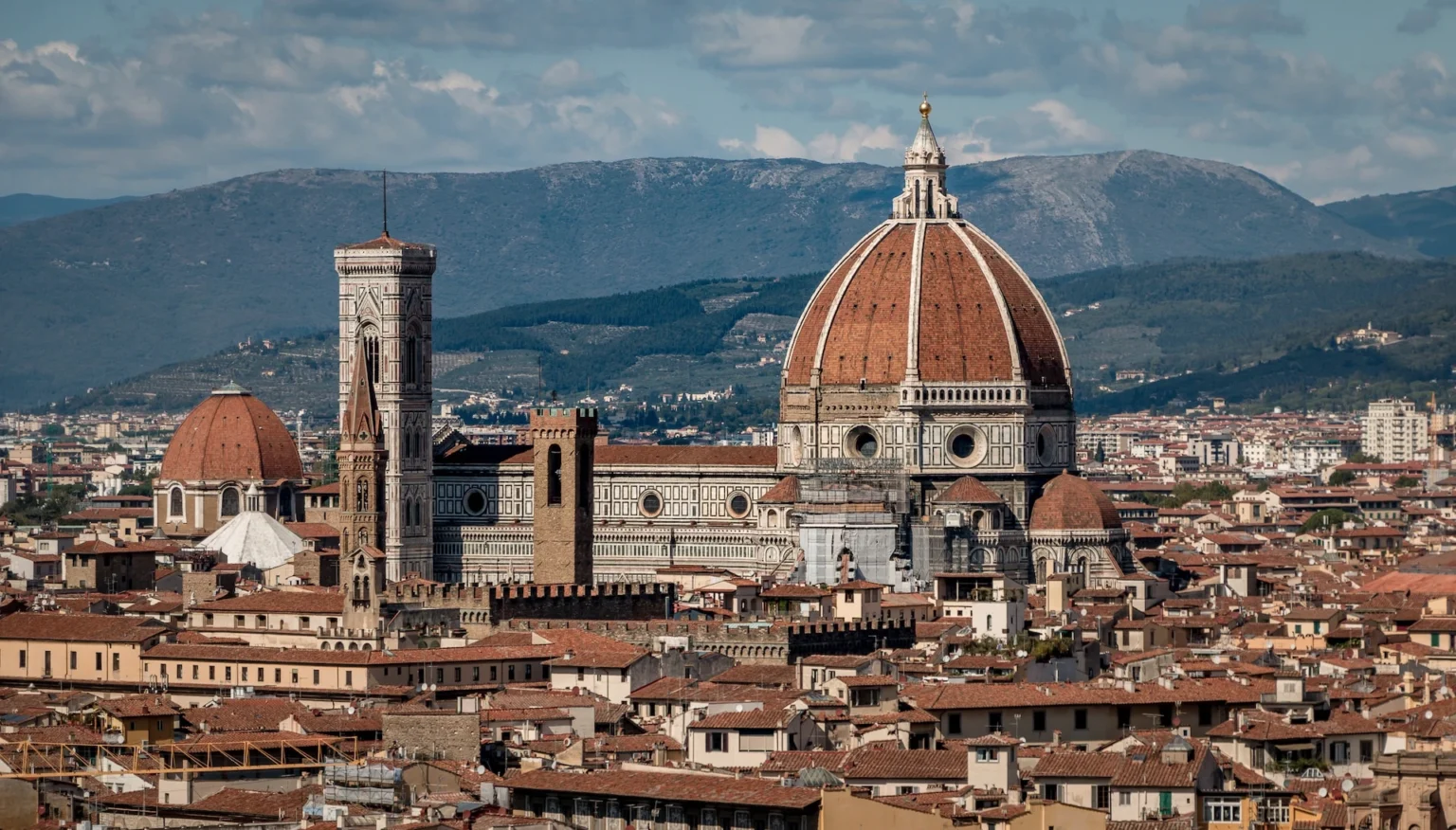
- Duomo (Cathedral of Santa Maria del Fiore): Brunelleschi’s dome 1436 (largest masonry dome ever). Climb 463 steps for views (€20). Free to enter cathedral. Baptistery doors by Ghiberti.
- Uffizi Gallery: world’s greatest Renaissance art collection. Birth of Venus, Primavera (Botticelli), Annunciation (Leonardo), Doni Tondo (Michelangelo). Reserve €25 + €4 booking fee.
- Ponte Vecchio: medieval bridge (1345) with goldsmiths since 1593. Medici corridor crosses above. Sunset photos.
- Galleria dell’Accademia: Michelangelo’s David (1504). Reserve €16. 2 hours adequate.
- Pitti Palace + Boboli Gardens: former Medici residence + 11-hectare park. Combo ticket €16.
- Santa Croce Basilica: Galileo, Michelangelo, Machiavelli tombs. €8.
- San Lorenzo + Medici Chapels: Medici dynasty tombs. €9.
- Piazzale Michelangelo: sunset panorama of city. Free. 30-min uphill walk.
Renaissance heritage
Florence birthed the Italian Renaissance (14th-17th centuries). Medici family (1397-1737) ruled as bankers and patrons — funding Brunelleschi, Donatello, Michelangelo, Botticelli, Da Vinci. Lorenzo the Magnificent (1449-1492) was the great patron. Architectural milestones: Brunelleschi’s Duomo dome (1436) — first masonry dome since ancient Rome. Sculptural revolutions: Donatello’s David (first nude since antiquity), Michelangelo’s David (1504). Painting innovations: linear perspective by Brunelleschi, Botticelli’s mythologies, Da Vinci’s sfumato. Literary achievements: Dante’s Divine Comedy (1320), Petrarch’s sonnets, Machiavelli’s Prince. Scientific revolution: Galileo (1564-1642) born nearby. Banking innovation: double-entry bookkeeping invented here. Modern Florence preserves this heritage — UNESCO World Heritage status 1982.
Tuscan cuisine
- Bistecca alla fiorentina: T-bone steak, rare. Min 1 kg, €40-80 for two.
- Ribollita: Tuscan bread soup with vegetables and beans.
- Pappardelle al cinghiale: wide pasta with wild boar ragu.
- Crostini neri: chicken liver pâté on toast — Tuscan starter.
- Lampredotto: traditional sandwich with tripe (4-5€). Try at street vendors.
- Cantucci + Vin Santo: almond cookies dipped in dessert wine.
- Wine: Chianti Classico (Sangiovese), Brunello di Montalcino, Vino Nobile di Montepulciano.
- Restaurants: Trattoria Sostanza, Il Latini, Da Burde (locals’ choice).
Crowds and timing
- Tourist mass: 16 million/year. Florence is 380,000 residents. Day-trippers from cruise ships at Livorno overwhelm centro storico.
- Worst times: July-August (40°C + cruise day-trippers), Easter, Christmas/New Year.
- Best times: April-May, September-October. November-March less crowded but cold and museum-focused.
- Reserve major sights: Uffizi, Accademia, Duomo dome — 1-2 weeks ahead minimum.
- Early/late strategy: Uffizi opens 8:15am, Accademia 8:15am. Most museums close 6:30pm — go 5pm onwards for fewer crowds.
- Walking ban centro storico: being implemented 2024-2026 to reduce traffic.
Practical tips
- Getting there: Florence Peretola airport (FLR) for European flights. Pisa airport (PSA) for budget carriers + 1h train. Rome FCO + Frecciarossa 1h35.
- Walking city: Florence’s centro storico is small (1 km²). Walking is best. No need for taxi/bus.
- Accommodation areas: Centro Storico (touristy, expensive), Oltrarno (south river, more local), San Niccolò (charming).
- Free WiFi: Firenze WiFi public network in piazzas.
- Tipping: service charge often included; round up bill.
- Day trips: Pisa (1h), Siena (1h15), San Gimignano (1h30), Chianti wineries (full day tours €100).
Frequently Asked Questions
How many days should I spend in Florence?
Minimum 3 days for highlights (Duomo, Uffizi, Accademia, Ponte Vecchio). Ideal 5-7 days for museums, day trips to Tuscany, Pisa, Siena, San Gimignano.
When is the best time to visit Florence?
April-May and September-October. Warm but not extreme heat (35-40°C July-August). Lower crowd levels than peak summer. Better restaurant availability.
Do I need to reserve museum tickets?
Yes, especially Uffizi (€25 + €4 booking), Accademia (€16), and Duomo dome climb (€20). Book 1-2 weeks ahead. Walk-in lines can be 2-3 hours.
Where should I eat in Florence?
Trattoria Sostanza (traditional Tuscan), Il Latini (boisterous classic), Da Burde (locals’ choice), All’Antico Vinaio (legendary sandwiches). Avoid restaurants with photos in menus.
Is Florence walkable?
Yes, the centro storico is only 1 km². Most attractions within 10-15 min walk. Best to base hotel within historic center.
What’s the difference between Florence and Rome?
Florence: Renaissance art capital, smaller (380K vs 4M), walkable, Tuscan food. Rome: ancient + Renaissance + Baroque, capital city, larger scale, Roman cuisine. Most visit both.
Recommended on Amazon
As an Amazon Associate, grandgo.com earns from qualifying purchases. Links below are affiliate links — clicking them may earn us a small commission at no extra cost to you. Prices and availability are shown on Amazon.co.uk.
- Lonely Planet Florence — comprehensive city guide.
- Florence audio tour app — self-guided museums.
- Tuscany cookbook — recipes from Florence region.