


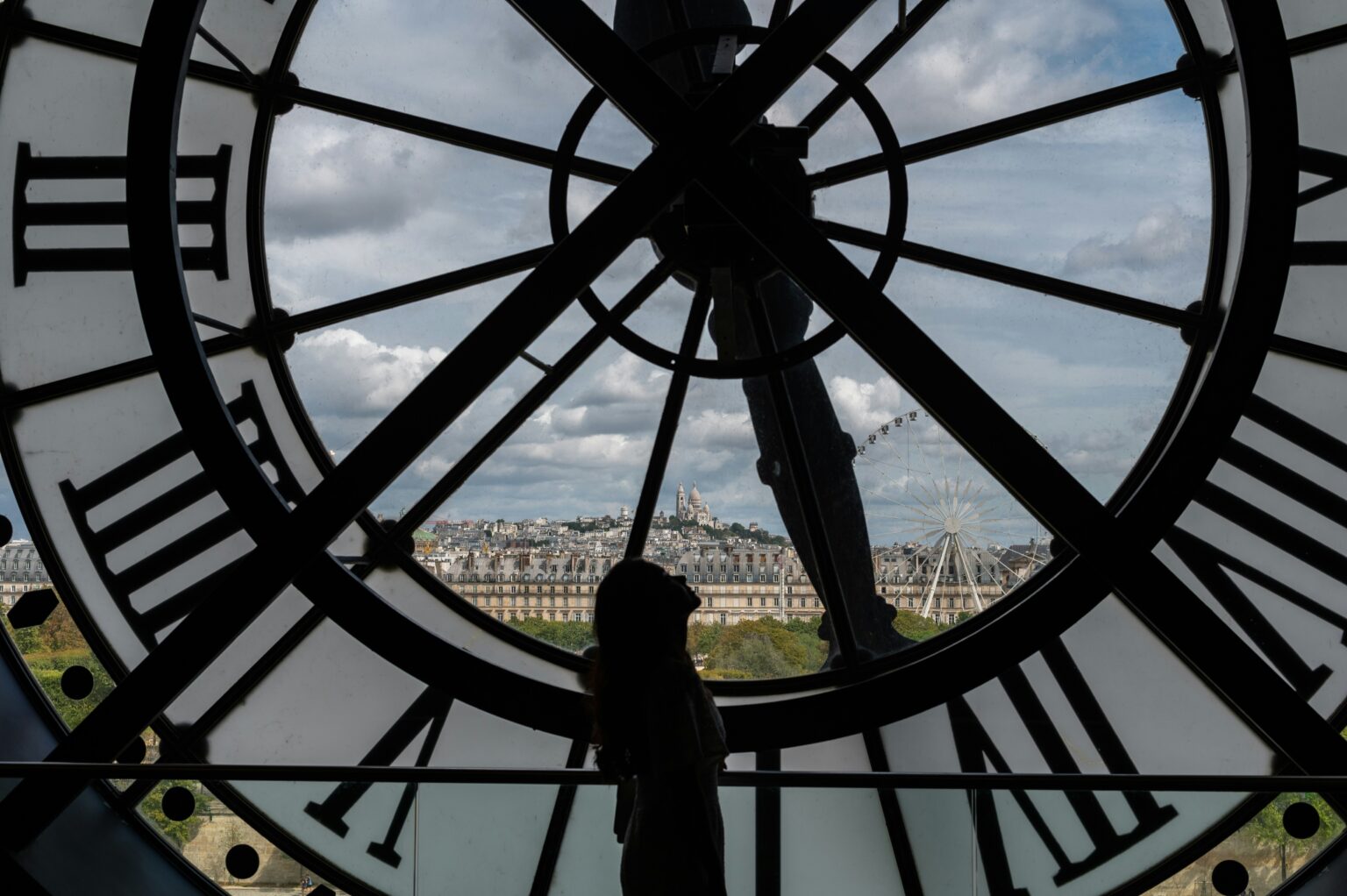

Time can be confusing in France. They use a different system than most countries and have some unique ways of expressing time.
Understanding these differences when communicating with French-speakers is essential, so this article will discuss how time is told in France.
Daylight Saving Time
France follows most European nations by switching its clocks twice each year, shifting between winter (standard) time and summer (daylight saving) time, before changing back again at 01:00 Greenwich Mean Time (GMT) on the last Sunday in March and October respectively. If traveling elsewhere in Europe or further afield, ensure you check local clocks too as not all regions observe daylight savings time at the same time.
Daylight saving time (DST) allows people to take advantage of natural daylight during both evenings in summertime, and earlier morning hours in winter. First implemented in Metropolitan France following the oil crisis of 1976, European Central Summer Time (CEST) now applies across Europe with clock changes at 01:00 GMT on the last Sundays in March and October respectively.
Reducing or abolishing twice-annual clock changes has gained steam over recent years, with critics noting limited energy savings and negative impacts on health, sleep quality, road safety, and productivity. Following that debate in 2018, European Parliament decided to ask Commission to reevaluate it further with an online consultation polling 4.6 million EU citizens with 84% wanting an end to seasonal clock changes being taken as a measure.
If the plan goes forward, either the EU could opt to keep CEST as its winter time standard across all 27 member states or each individual country could decide to remain on CEST during winter or change back to standard time based on local needs; any decision must be approved by all 27 EU states; some southern countries like Spain or Portugal do not want this system changed voluntarily and an end decision on changing times will likely come by 2023 at the latest.
Time Zones
France stands out among European nations by not being divided into multiple time zones; rather, its main part (France metropolitaine) falls within Central European Time or CET during daylight saving time; most other overseas territories also use local timezones that make sense in their climate zones.
Time Zone Converters such as Travelmath make comparing times in France with those around the world and even within its borders more straightforward, offering airport, city or country local times while automatically adjusting for daylight savings time. To calculate any differences between two locations in time, an online time zone converter like Travelmath offers an easy solution: It will give local times for any airport, city or country and also automatically convert for daylight savings time if applicable.
French time zones were first unified in 1891 to avoid complications with railway timetables. At that time, clocks based on solar time had Paris civil time being 9 minutes and 21 seconds ahead of Greenwich Mean Time (GMT), before this became GMT+0 in 1911 and eventually Central European Time or CET in 1918.
Today, France boasts 12 time zones worldwide – more than any other nation, including its claimed territory in Antarctica. Most of these timezones are used by French Overseas departments and regions.
Some are far away in the Pacific Ocean, like French Polynesia and Wallis and Futuna; others lie closer to home, like French Guiana or the Southern Islands of the South Pacific; Samoa and Tokelau lie 13 hours ahead, while Line Islands can take more than 24 hours more for transit between them and mainland USA.
France, like much of Europe, follows suit and switches to daylight saving time on the same dates as other nations – on the last Sunday in March and October respectively – thus expanding their 13 time zones further than any other nation except for Russia which boasts 14 time zones.
Time Differences
If you live in the US and you need to set up a phone call or meeting with someone in France, converting EST (Eastern Standard Time) to CET (Central European Time) can be tricky and can often result in confusion over time differences between hours and minutes. This website helps make life simpler by automatically converting between them so you can see exactly when everything takes place!
The site also features information on various time zones and DST usage, in addition to helpful tidbits like this time zone converter which will take into account DST for you and convert from UTC time into local time automatically.
Notable here is that France follows most European nations in changing from standard time to daylight saving time at different times during the year compared to North America, but still during spring. Clocks advance at 2.00 on March’s last Sunday and return backward at 1.00 on October’s final Sunday.
Most of the country is covered by Central European Time or CET – a time zone based on solar time at 15 degrees east longitude near Germany and Poland – however during summer it becomes known as Central European Summer Time or CEST.
Whenever traveling to France, it is essential that you know what time it is there in advance so you can plan meetings and flights efficiently. To do this, use the time zone converter above to discover current date and time in Paris as well as other cities worldwide.
This site also outlines France’s different time systems used across its overseas territories and Antarctic presence, making it an invaluable resource. Furthermore, being free makes this tool all the more user-friendly than many other time zone conversion websites available today.
French Expressions
You know if you have been studying French that the key to successfully speaking it fluently and naturally is incorporating its various expressions and words into your conversations, making your expressions seem more natural while creating an impression that you speak it like an native. Adding these typical French expressions will allow for natural conversational flows while giving the illusion that you speak it like a native speaker would do.
These examples range from being humorous to having deeper meaning, so here are a few you should add to your vocabulary:
Tout de suite means “right away or immediately”. It is often used in English as a filler word in similar fashion to how English speakers use “anyway” and “basically.”
C’est dingue! (pronounced ‘shuh tay-nee) is a French expression to express surprise, amusement or surprise and can often be found in movies and TV shows. Additionally, it can help break the ice in conversations and get others talking more openly.
The French term, a la peau de chat (cat’s skin), refers to someone with a rough personality. If you see someone with this trait, say they are a la peau de chat and ask what may be bothering them.
Similar to the term, “l’esprit du staircase” describes someone with a poor reputation but believes their actions are justified; this expression originated with 17th-century playwright Moliere.
“Each one voit its midday” is a French way of emphasizing that every individual’s experiences and perspectives on the world differ greatly. This phrase serves as a good reminder to not judge others or act as though your experiences are universal.
“Quel heure est-il?” is the French version of “what time is it?” This phrase can come in handy while traveling and need to keep track of time; plus it works great as an easy way of getting directions! Likewise if you are in a rush or waiting for someone, just uttering these three words will suffice!
Trip-ready gear from Amazon
As an Amazon Associate, grandgo.com earns from qualifying purchases. Links below are affiliate links — clicking them may earn us a small commission at no extra cost to you. Prices and availability are shown on Amazon.co.uk.
- French phrasebook Berlitz — Essential French for travel.
- Lonely Planet France guidebook — Best overall France guide.
- Waiters friend corkscrew Laguiole — For every French wine picnic.