



Quick Answer
The Ionian Sea is the part of the Mediterranean between western Greece and southern Italy. In ancient times its main islands — Corfu (Kerkyra), Paxos, Lefkada, Ithaca, Cephalonia, Zakynthos and Kythira — were important Greek territories, while the western shores became Magna Graecia, home to colonies like Tarentum (Taranto), Sybaris and Croton. Homer set much of the Odyssey here, especially the kingdom of Odysseus on Ithaca. Today these islands are among the most visited in Greece for their clear water, Venetian heritage, and accessible beaches.
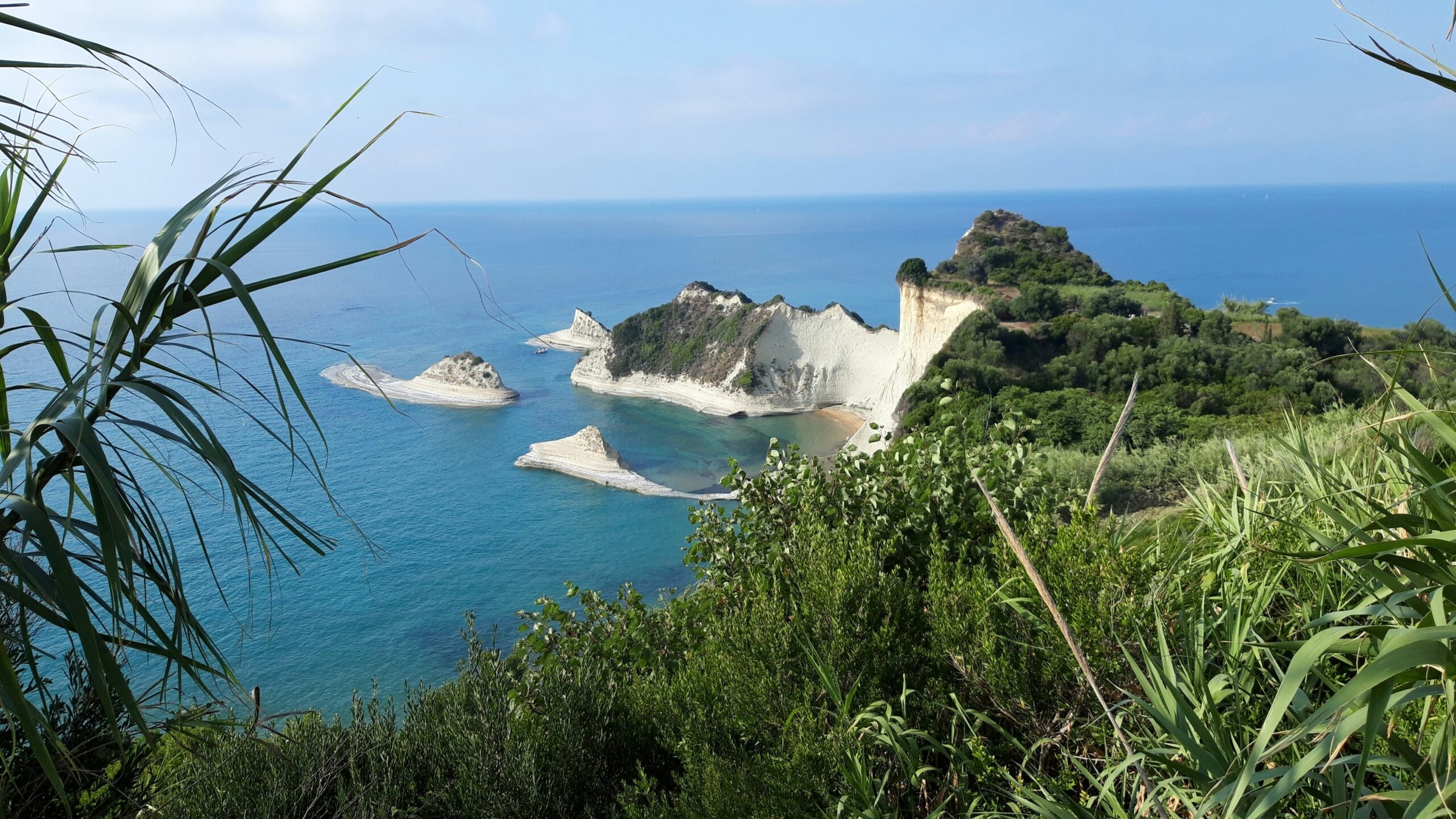
Geography of the ancient Ionian Sea
The Ionian Sea sits between the western coast of Greece (Epirus, Acarnania, the Peloponnese) and the southern coast of Italy (Apulia, Calabria, Sicily). It opens north into the Adriatic Sea (separated by the Strait of Otranto) and south into the Mediterranean proper. Its deepest point — the Calypso Deep at 5,267 m — remains the deepest spot in the entire Mediterranean.
The name "Ionian" predates the Ionian Greeks of Asia Minor. According to ancient mythology, it was named after Io, a priestess loved by Zeus, who in one version of the myth crossed the sea fleeing Hera’s jealousy. By the Classical era, the sea was a major trade and cultural artery linking mainland Greece to the colonies of Italy.
The Ionian Islands in antiquity
- Corcyra (modern Corfu): founded as a Corinthian colony around 730 BCE, Corcyra became one of the wealthiest Greek city-states. A naval clash between Corcyra and its mother city Corinth was one of the immediate causes of the Peloponnesian War.
- Lefkada: attached to the mainland by a narrow channel, dug deeper by Corinthian colonists. The site of the legendary "Lover’s Leap" cliff — where the poet Sappho was said to have jumped.
- Ithaca (Ithaki): kingdom of Odysseus in the Odyssey. Modern archaeology continues to debate whether Homer’s Ithaca matches today’s island, with some scholars proposing Cephalonia or even nearby Lefkada as alternates.
- Cephalonia (Kefalonia): the largest of the Ionian Islands. In antiquity it was divided into four city-states: Same, Pale, Krane and Pronnoi.
- Zakynthos (Zante): mentioned in both the Iliad and Odyssey. Famous in modern times for the wreck of the Panagiotis on Navagio Beach.
- Kythira: the southernmost Ionian Island, though geographically closer to the Peloponnese. Mythology placed Aphrodite’s birth here — she rose from the sea foam off Kythira.
Magna Graecia: the Italian colonies
The western Ionian shore was the heart of Magna Graecia ("Greater Greece"), a band of Greek colonies founded between roughly 800 and 500 BCE. The most influential included:
- Tarentum (modern Taranto): the only Spartan colony, founded around 706 BCE. Became the dominant power of southern Italy.
- Croton: home to the philosopher and mathematician Pythagoras, who established his school there around 530 BCE.
- Sybaris: proverbially wealthy and luxurious — the source of the modern English word "sybarite." Destroyed by Croton in 510 BCE.
- Locri Epizephyrii: known for its unusual law code drafted by Zaleucus, one of the earliest written codes in the Greek world.
- Rhegium (modern Reggio Calabria): guarded the Italian side of the Strait of Messina, opposite the Sicilian coast.
- Syracuse (Sicily): founded by Corinth in 734 BCE. Became one of the largest and wealthiest cities of the ancient world, rivaling Athens at its peak.
Mythological geography
The Ionian Sea is the setting of many of the most famous Greek myths. Homer’s Odyssey takes Odysseus through these waters as he tries to return to Ithaca after the Trojan War. The encounter with the Cyclops Polyphemus is traditionally placed near Sicily; Scylla and Charybdis sit in the Strait of Messina; the lotus eaters are sometimes placed on the Tunisian coast or western Sicily; and Calypso’s island of Ogygia is unidentified — but the deepest point of the Ionian still bears her name.
Visiting the Ionian Islands today
- Best time: May–early July or September. Summer (mid-July to August) is peak season with high prices and crowded beaches.
- How to arrive: Direct flights to Corfu (CFU), Cephalonia (EFL), Zakynthos (ZTH), and Preveza-Aktion (PVK) for Lefkada. Ferries from Patras, Piraeus, and Italy (Bari, Brindisi, Ancona).
- Island-hopping: ferries connect Corfu–Paxos–Lefkada–Ithaca–Cephalonia–Zakynthos in season. Travel between Kythira and the others is less convenient.
- UNESCO sites: the Old Town of Corfu (Venetian fortifications) is a UNESCO World Heritage site since 2007.
Quick facts
- Total area: approximately 169,000 sq km.
- Maximum depth: 5,267 m (Calypso Deep).
- Length: about 800 km north-south.
- Salinity: approximately 38 psu — slightly higher than the Aegean.
- Major ports: Patras (Greece), Igoumenitsa (Greece), Brindisi (Italy), Bari (Italy).
Frequently Asked Questions
What is the Ionian Sea in ancient Greece?
The Ionian Sea is the body of water between western Greece and southern Italy. In antiquity it linked mainland Greek city-states to the colonies of Magna Graecia, including Tarentum, Croton, Sybaris and Syracuse.
Which islands belong to the Ionian Sea?
The seven main Ionian Islands are Corfu (Kerkyra), Paxos, Lefkada, Ithaca, Cephalonia, Zakynthos and Kythira. Together they form the Greek administrative region of the Ionian Islands.
Was Ithaca in the Ionian Sea?
Yes. Modern Ithaca lies in the Ionian Sea, west of mainland Greece. Whether it matches Homers Ithaca exactly is debated by scholars, with some proposing nearby Cephalonia or Lefkada as alternates.
What is Magna Graecia?
Magna Graecia (“Greater Greece”) is the name for the Greek colonies founded along the southern coast of Italy and Sicily between roughly 800 and 500 BCE. Tarentum, Croton, Sybaris, Locri, Rhegium and Syracuse were among the most important.
How deep is the Ionian Sea?
The deepest point of the Ionian Sea — and of the entire Mediterranean — is the Calypso Deep at 5,267 metres, located in the Hellenic Trench southwest of Pylos.
How was the Ionian Sea named?
According to one ancient tradition, the sea was named after Io, a priestess of Hera who, in some myth versions, fled across these waters after being loved by Zeus. The name predates the Ionian Greeks of Asia Minor.
Recommended on Amazon
As an Amazon Associate, grandgo.com earns from qualifying purchases. Links below are affiliate links — clicking them may earn us a small commission at no extra cost to you. Prices and availability are shown on Amazon.co.uk.
- The Odyssey (Emily Wilson translation) — modern verse translation of Homers epic — the founding text of Ionian geography.
- Lonely Planet Greek Islands — standard guide for island-hopping the Ionian and other Greek archipelagos.
- The Histories (Herodotus, Penguin Classics) — context for Magna Graecia and the wider ancient Greek world.