



Quick Answer
KL Auschwitz (Konzentrationslager Auschwitz) is humanity’s most infamous concentration camp + extermination memorial. UNESCO World Heritage 1979. 1.1 million murdered by Nazi Germany 1940-1945 (90% Jewish). Located: Oświęcim, southern Poland, 70 km west of Krakow. Two main camps: Auschwitz I (Stammlager — original prisoner camp, now museum), Auschwitz II Birkenau (extermination camp, gas chambers, train tracks). Visit FREE but reservations essential at visit.auschwitz.org. Best as guided tour — €15-70 depending on group size. Time needed: 4-6 hours minimum. From Krakow: 1.5 hours each way. Visitor advice: respectful, no laughter, no flash photography, minimum age 14 recommended. Liberation: January 27, 1945 by Soviet Red Army (now International Holocaust Remembrance Day).
Historical overview
- Operation: 1940-1945. Originally Polish military barracks (1916), Nazi prison camp from 1940.
- Auschwitz I (Stammlager): May 1940. Polish political prisoners + later Jews + others.
- Auschwitz II Birkenau: ordered by Heinrich Himmler 1941. Extermination camp opened 1942 for “Final Solution”.
- Auschwitz III (Monowitz): labor camp + IG Farben factory. Less visited.
- Victims: 1.1 million murdered total. 90% Jews (Hungarian, Polish, Slovak especially), plus Roma, Soviet POWs, Polish political prisoners, homosexuals, disabled.
- Methods: Zyklon B gas, starvation, disease, medical experiments (Mengele), forced labor.
- Liberation: Soviet Red Army 27 January 1945. Now International Holocaust Remembrance Day.
- UNESCO 1979: “outstanding example of human atrocity, must be preserved as warning to humanity”.
Auschwitz I (Stammlager)
- Original camp: originally Polish military barracks (1916), Nazis took over 1940.
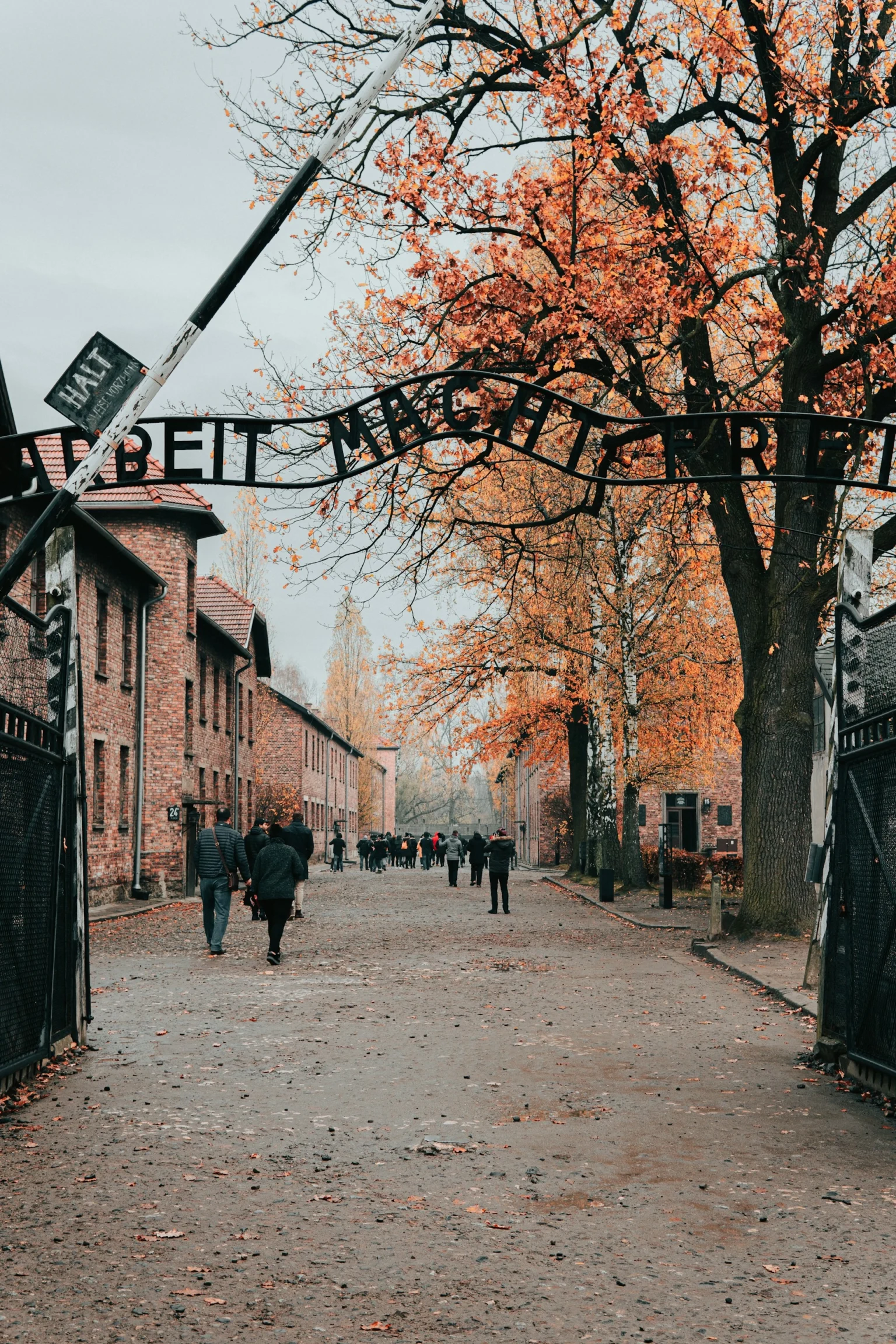
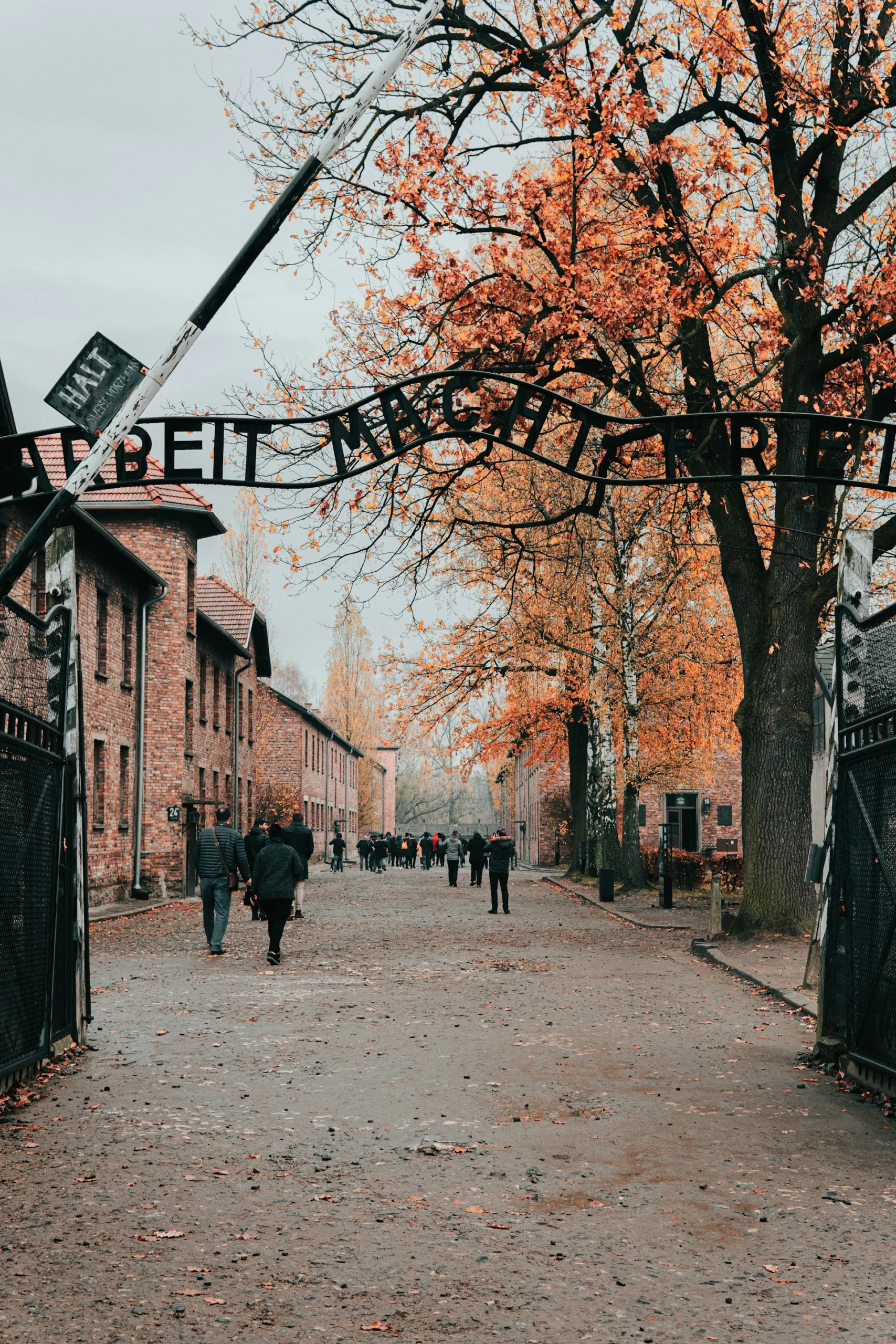
- “Arbeit Macht Frei” gate: “Work sets you free” — Nazi propaganda. Original stolen 2009, replica in place.
- Block 4-5: extermination evidence — shoes, eyeglasses, suitcases (with names), hair, prosthetics.
- Block 11: “Hell of Auschwitz” — punishment cells. Father Maximilian Kolbe sacrificed himself here (1941).
- Standing cells: 4 prisoners stood crammed for 10 days.
- Wall of Death: execution wall outside Block 11.
- Gas chamber + crematorium 1: reconstructed example.
- Block 27: Israeli national pavilion — Holocaust education center.
Auschwitz II Birkenau (extermination)
- 175 hectares: massive scale.
- Train tracks: where transports arrived. Selection process at platform.
- Wooden barracks: most destroyed. Some restored for visit.
- Gas chambers + crematoria 2-5: destroyed by Nazis 1944-1945 to hide evidence. Ruins visible.
- “International Memorial”: at end of train tracks. Plaques in 23 languages.
- Sauna: processing building. Now exhibit on lives lost.
- Pond: ashes from crematoria. Memorial.
- Distance from Auschwitz I: 3 km. Free shuttle bus 5 min, or walk 30 min.
Body casts
- 1,150+ casts: Giuseppe Fiorelli technique 1863 (used at Pompeii, applied to Auschwitz). Pour plaster into voids left by decomposed bodies in ash.
- Garden of the Fugitives (in Pompeii): wait, that’s wrong. Auschwitz body casts are different — preserved bodies of victims.
- Auschwitz Antiquarium Museum: displays preserved evidence including pregnant woman, dog, victims clutching valuables.
- Recent finds: 2020 discovery of 2 wealthy male victims at Civita Giuliana villa (this is Pompeii again — confused). Auschwitz: ongoing identification of unknown victims.
How to visit
- Reservation REQUIRED: visit.auschwitz.org. Book 2-3 weeks ahead. 6,000 visitors/day limit.
- Entry: FREE (donations welcome).
- Guided tours: €70 individual (3.5 hours), or €15-20 join group. Multilingual guides (English, Polish, German, French, Italian, Spanish, Hebrew, Russian).
- Self-guided: after 4pm peak season, or any time off-season. Audio guide €15.
- Times: 7:30am-4pm summer, shorter winter. Closed January 1, December 25.
- From Krakow: 1.5h by train (€5) or bus (€5). Organized tours from Krakow €40-60 round-trip + entry + guide.
- Time needed: 4 hours total minimum (1h Auschwitz I + 1h transfer + 2h Birkenau).
Visitor etiquette
- Respectful demeanor: no laughing, no joking. This is a memorial.
- Dress respectfully: modest. Discourage shorts + beach attire.
- Photography: no flash. Some indoor exhibits prohibit photos (clearly marked). Outside generally OK.
- Children: minimum age 14 recommended. Younger may be too disturbed.
- No food/drinks: no eating/drinking inside camp grounds.
- Quiet voice: in indoor exhibits.
- Phone calls: off or silent.
- Allow time for emotion: processing visit takes mental space.
Practical info
- Best time: spring (April-May), autumn (September-October). Mild weather, fewer crowds.
- Worst times: summer (crowded, hot, no shade), winter (cold, slippery, shorter daylight).
- From Krakow: 70 km, 1.5h drive each way. Train cheaper but slower.
- Where to stay: Krakow Old Town. Don’t stay in Oświęcim (small town).
- Currency: Polish złoty.
- Combined day: Auschwitz + Wieliczka Salt Mine €70-90. Both UNESCO. Long day.
Frequently Asked Questions
How do I visit KL Auschwitz?
Reservations essential at visit.auschwitz.org (2-3 weeks ahead). Free entry (donations welcome). Guided tours €15-70. Day trip from Krakow 1.5h each way.
Auschwitz I vs Auschwitz II Birkenau?
Auschwitz I (Stammlager): original prisoner camp, now museum with personal items + barracks. Auschwitz II Birkenau: extermination camp with gas chamber ruins + train tracks + International Memorial. Visit both — 3 km apart.
How long for Auschwitz visit?
Minimum 4 hours total. Auschwitz I: 1h. Transfer to Birkenau: 5 min shuttle. Auschwitz II Birkenau: 2h. Add transport from Krakow: 3 hours each way. Full day required.
Should I take guided tour?
Strongly recommended for context. Auschwitz Museum guides are exceptional. €15-70 depending on size. Audio guide alternative €15. Self-guided possible but loses meaning.
Visit Auschwitz with children?
Minimum age 14 recommended officially. Content extremely difficult. Most parents wait until teens can process. No specific age ban.
What’s appropriate to take photos of?
Outside generally OK with discretion. No flash. Some indoor exhibits prohibit photos (clearly marked). Document respectfully — share carefully.
Recommended on Amazon
As an Amazon Associate, grandgo.com earns from qualifying purchases. Links below are affiliate links — clicking them may earn us a small commission at no extra cost to you. Prices and availability are shown on Amazon.co.uk.
- Auschwitz history book — preparation reading.
- Lonely Planet Poland — comprehensive country guide.
- Holocaust education book — context for visit.