


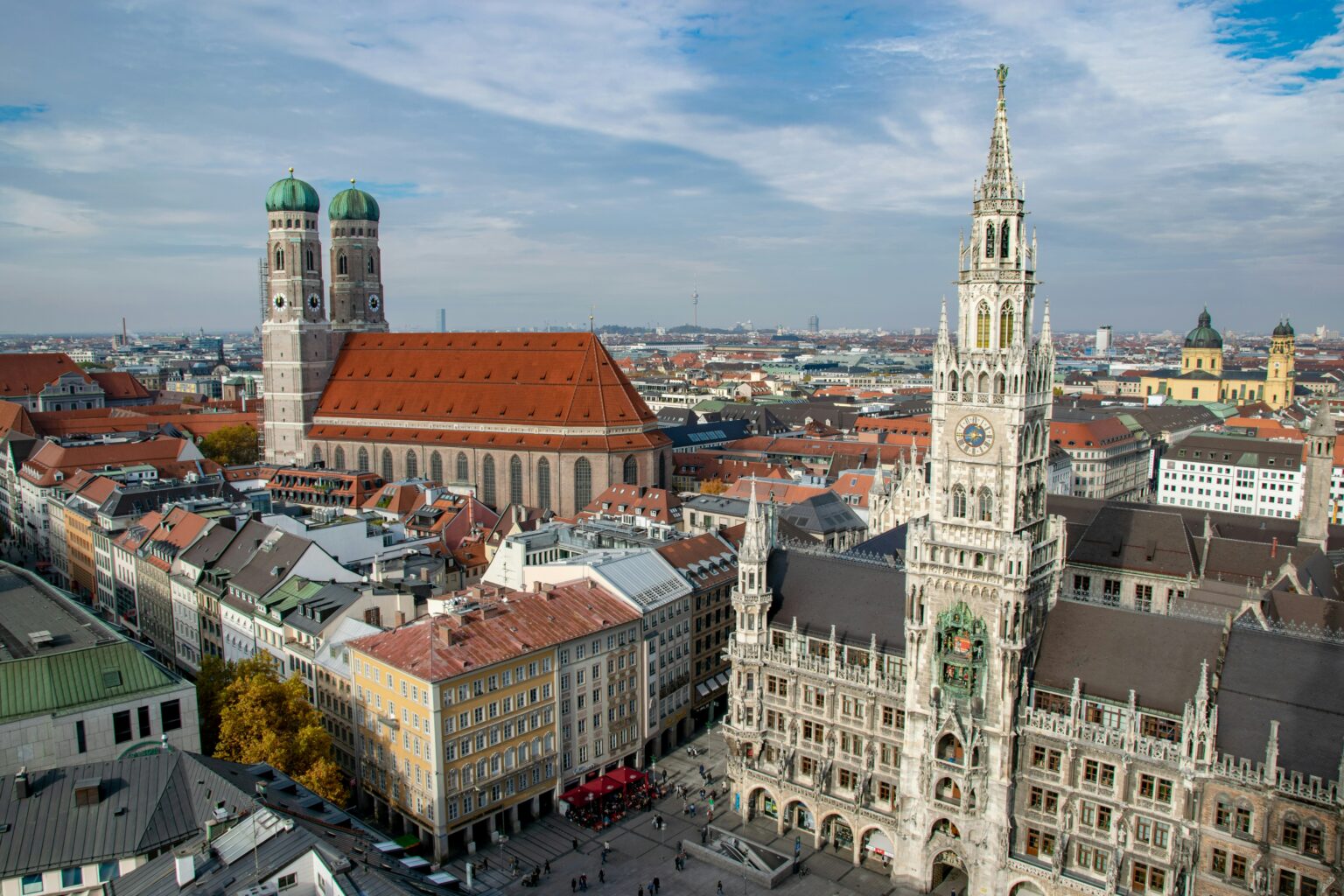

Munich is an energetic city boasting an active cultural scene and low crime rates, as well as centuries-old buildings and numerous museums.
Local chefs excel at reinventing classic dishes rooted in regional identity while working closely with small producers. You will find an array of upscale restaurants here, but some of the best dining can be found at classic pubs with wood paneling and staff dressed in traditional clothing.
Public transport
Munich boasts an extensive public transport system including subway (U-Bahn), suburban trains (S-Bahn) and trams, clean buses, trains and trams with disability access facilities at most stations and an efficient subway that will transport you quickly around town during daytime hours. You may also opt to take public transit directly to Munich International Airport instead of needing to hire a taxi – saving both time and hassle along the way!
Subway station signs feature a white “U” on a blue background, while S-Bahn suburban lines are marked with a white “S” against green backgrounds. Both systems offer convenient connections to city centers and offer both short trips as well as longer excursions.
Trains and buses typically offer special seating arrangements to accommodate handicapped passengers, elderly individuals, strollers and ramped bus stops with elevators; additionally some trains and buses feature audiovisual announcements in multiple languages. With the MVV app you can plan and buy tickets for journeys; plus download the map of Munich’s subway network free.
Before riding the subway, be sure to validate your ticket in a stamp machine. Subway routes are divided into four rings; their price varies according to which one you plan on travelling through. Furthermore, weekly and monthly subscription plans offer great ways to save money!
Munchen’s S-Bahn lines criss-cross through its city center and connect to outlying attractions like Lake Starnberg, Dachau and Andechs Monastery – making it an excellent choice for day trips or transfers from Munich Airport into central Munich.
Munich offers 13 tram lines covering over 80km in total and features nightlines as well. Trams provide a great alternative for medium to long trips and can easily be combined with subway, S-Bahn or bus routes for hassle-free travel.
Munich’s public transit operates under an honor system; although there are no turnstiles, ticket inspections do occur and infractions can lead to fines – be sure to always carry an valid ticket in sight at all times!
Taxi
Munich may be best known for beer and sausages, but the Bavarian capital offers much more. From rich history and stunning architecture to numerous museums and easy public transit routes covering every metropolitan area – getting around Munich couldn’t be simpler or more enjoyable! If you prefer travelling in comfort without crowds consider booking a taxi service instead.
No matter if it’s business travel or weekend getaway, Taxi Munchen makes your experience all the more pleasant. Their fleet consists of only immaculate vehicles driven by talented drivers; service is available around the clock; payment methods accepted include credit/debit card options as well as VAT separation to accommodate company accounting departments.
Taxi Munich is the go-to taxi service in Munich, providing an extensive array of services tailored specifically to meet your individual needs. Their drivers possess expert knowledge of local roads and traffic patterns for an enjoyable and safe experience; plus their fares are both transparent and competitive compared with Uber or similar ride-hailing services as they only charge per distance traveled and not time spent sitting in traffic jams.
Taxi Munich provides outstanding customer service as well as fixed prices on all routes, making budgeting simpler and saving money easier. Their app makes booking taxis in advance even simpler to help travelers avoid incurring excessive fees.
As well as booking from the airport, taxis are also readily available from hotels or any location throughout the city. Taxi ranks can easily be found near train stations or major squares such as Marienplatz and Asamkirche; although hailing one may also work. Booking ahead can save both money and time.
Car
City transit systems in Berlin are remarkable, offering ample operating hours at cost-effective fares. A key reason is Germany Ticket, which allows commuters to access all local transportation offerings for one fixed price.
Within the city limits are four primary public transportation options for access: subway, S-Bahn, tram and bus. Each has an orderly schedule and clear timetables that can easily be accessed with mobile phone apps; additionally Munich Transportation Company MVV also provides online maps and timetables of their service offerings in Munich.
Munich has a speed limit of 50 km/h, making it difficult to exceed this even during heavy traffic conditions. It is essential that drivers obey this law and drive safely; police in Munich have little tolerance for anyone breaking it and tickets may even be issued for going 5 km/h over.
Munich’s rich automotive heritage is part of what makes it such an enjoyable place to drive. BMW and MAN both call Munich Metropolitan Region home, along with numerous suppliers, specialists, developers, and service providers who form part of an expanding competency cluster that continues driving forward and growing.
As such, Munich is on its way to becoming a model region for electric mobility. Municipal energy supplier SWM and municipal transport services have already installed new charging stations; while BMW Group plans an extension of its research and development site “FIZ Future” that would make it Europe’s premier electric mobility location.
Apart from these measures, Munich also supports the development of innovative mobility concepts by offering support programs. For instance, Munich Automotive Cluster boasts over 600 companies and institutes from industry. It provides various cooperation options ranging from future topic analysis and partner identification through to support programs.
SIXT offers car rental in Munich to fit every budget and need, with small cars designed to be easy to maneuver that are perfect for getting around town. Longer trips should consider adding additional coverage like liability protection or winter tires to enhance their rental experience.
Accommodation
If you plan to study at one of Munich’s universities, it’s essential that you secure housing early. Student apartments tend to become available quickly and can only be advertised around one or two months before classes start. Some universities provide housing guides which give an idea of rental prices and types of apartments available – download one from their websites to gain this valuable insight!
There are also various private providers of student accommodation, including halls of residence operated by the Munich Student Union (Studierendenwerk Munchen). Student apartments offer rooms furnished with furniture and shared bathroom facilities; meals may also be included as services provided during rent periods that run from September to February or March to July; others require all-inclusive monthly deposits plus rent payments.
Students living in Munich have several districts available to them as a choice of residence. Among the most desirable is Munich’s Altstadt district, including Lehel and its historic centre. Here you can get the full experience of Munich life and traditions. Maxvorstadt boasts numerous art and cultural institutions while Neuhausen-Nymphenburg provides quieter environments with large parks and luxury new builds – additional options include Schwanthalerhohe nearby the grounds of Theresienwiese as well as housing the Augustiner brewery.
City attractions in Munich include the Bavarian National Museum, Ludwigstrasse with its grand gate resembling that at Athens’ Propylaea and Old Pinakothek. Meanwhile, BMW Museum showcases Munich’s rich automotive history while Bayern Munich fans can watch their team perform at Allianz Arena.
Munich may be expensive compared to other German cities, but still relatively affordable when considering all expenses including transport costs and living expenses. When selecting an apartment it’s wise to pick one near public transport links and supermarkets/shops if possible.
Sprzęt podróżny — polecane na Amazon
Jako uczestnik programu Amazon Associates, grandgo.com uzyskuje dochody z kwalifikujących się zakupów. Poniższe linki to linki afiliacyjne — kliknięcie w nie może dać nam małą prowizję bez dodatkowych kosztów dla Ciebie. Ceny i dostępność są widoczne na Amazon.co.uk.