



Nuremberg’s castle still towers over its skyline. Nuremberg was known for being an incubator of innovation and growth during medieval times.
The city walls provide an enjoyable walk and boast gorgeous views. Riefenstahl’s film brought audiences into his spectacle of propaganda.
This church, dedicated to Nuremberg’s patron saint Saint Sebaldus, stands as an incredible testament to both structure and design.
The Old Town
Nuremberg’s Old Town is its historical heart, featuring medieval city walls with narrow streets and half-timbered houses. Perhaps its best known landmark is Our Lady Church at Hauptmarkt square; however, there are numerous other noteworthy highlights within its walls.
Economic stagnation prior to the industrial revolution of the 19th century had an important protective effect on its architecture, helping protect it against being de-fortified due to fears of social unrest or Prussian occupation. Only in 1945 were remaining buildings cleared away and street plans rebuilt to what they are today; luckily the castle and churches survived as a result of this effort.
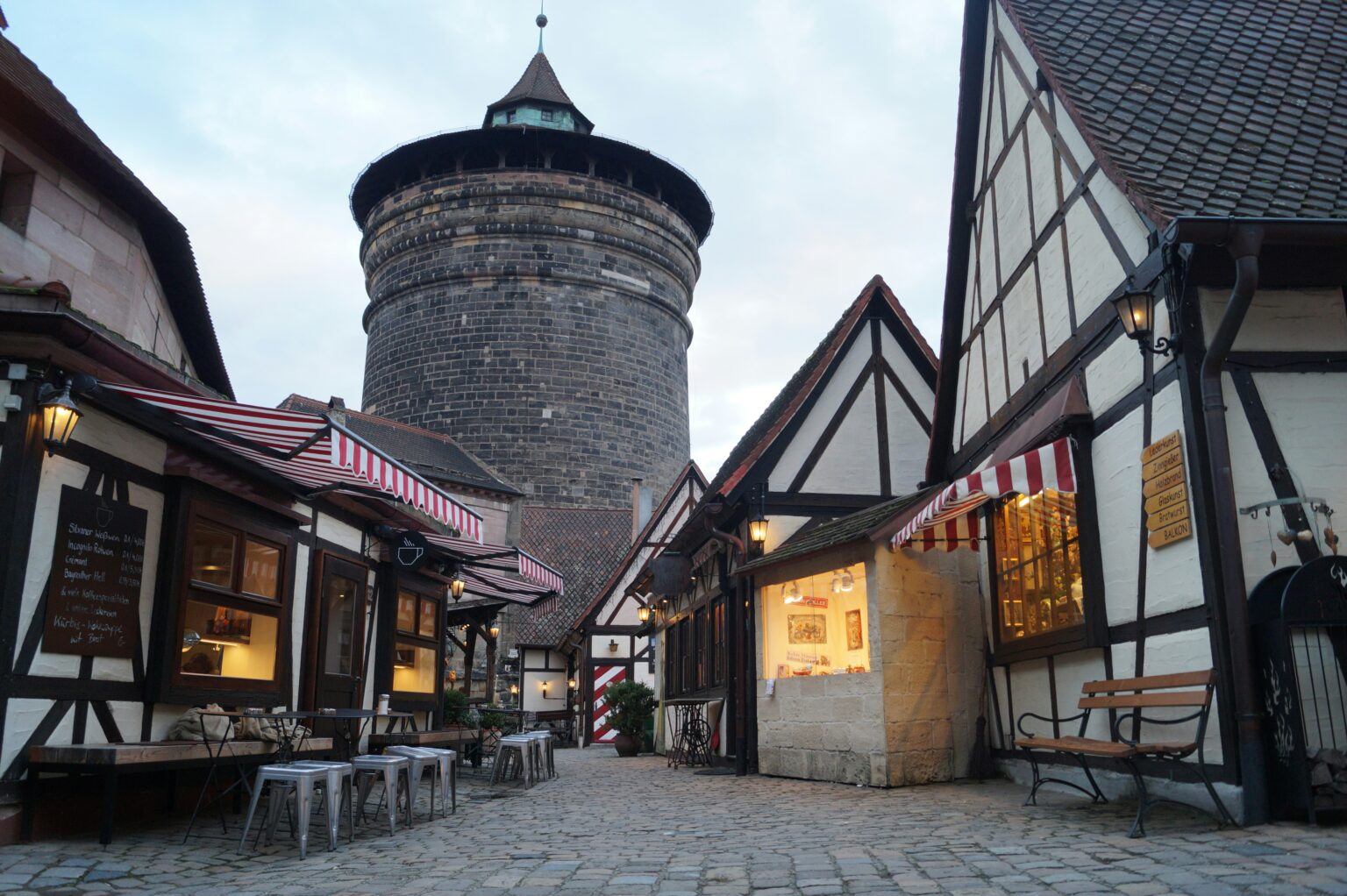
As you explore the city walls, start your walk at Weisser Turm (White Tower). Built as part of defensive fortifications in 13th-century Germany, today it serves as an outdoor walkway with shops, cafes and green space. Head south along Koenigstrasse until you come upon Mauthalle – once an occupied customs house that was renovated postwar; today home to various important collections and exhibitions.
At this point, walk towards the Royal Craftsmen Courtyard – a small irregular-shaped square created in 1971 as part of an old armory gun yard to mark Albrecht Durer’s birthday and to honor 500 years since his birth. Here you’ll find numerous tiny shophouses housing goldsmiths, glass cutters, leather workers and doll makers producing souvenirs which you can purchase – giving it the feel of a year-round Christmas market; worth visiting just to witness such incredible craftsmanship!
Continue your walk and you will come upon two Gothic churches – Lorenzkirche and Sebalduskirche. Both serve as prime examples of medieval architecture with their main bodies featuring charterhouses and Neo-Gothic extensions.
Once you pass Lorenzkirche, you’ll come upon a bridge crossing River Pegnitz formerly used as a toll bridge but later replaced by the much more beautiful Maxbrucke (Max Bridge) in 1852. Crossing this bridge will lead you directly to one of my favorite museums in Germany: Germanic National Museum devoted to German culture and history with one of the best collections of medieval art; plus it houses one of Nuremberg’s only original Albrecht Durer paintings!
The Christmas Market
Christkindlesmarkt (Christmas Market), with nearly 400 years of tradition, is one of the oldest and best markets in Germany. Situated on Hauptmarkt square just in front of Frauenkirche church, you could spend an entire day here! Over 200 stalls offering handmade ornaments, spices and sweets as well as local favorites like Lebkuchen (cookies filled with different flavours) and grilled sausages await visitors here – don’t forget the warm Gluhwein, made by simmering wine infused with spices to keep warm during your stay!
The main attraction here, however, is the stunning tower of golden lights with an accompanying giant tree adorning it. Every evening at approximately 6pm there is a ceremonial lighting that promises to get everyone in festive spirits!
Nuremberg Christmas Market provides entertainment for both children and adults alike, from jugglers and fire blowers to musicians. Cozy fire pits and Middle Eastern style chill-out tents create an enjoyable ambiance while you can even sample traditional beverages such as mead.
Nuremberg is known for its centuries-old traditions, yet also boasts an eclectic atmosphere. One such way in which this city shows off its diversity is at the Sister Cities Market near its main marketplace – featuring stands from many of its partner cities and regions all around the globe. Here you’ll be sure to find unique souvenirs reminiscent of your trip – making this market truly worthwhile to visit.
Arriving at the Christmas Market is straightforward – there is even an underground station located beneath its central square! For those wanting an easier trip around, a bright yellow stage coach provides tours of both the market and city center; an especially great idea if traveling with young children who may struggle to walk.
The Nuremberg Trials
From November 20, 1945 until October 1, 1945, the Nuremberg trials were one of the most pivotal moments in human history. For the first time ever, an international coalition held high-ranking representatives of an defeated enemy accountable for war crimes; setting this precedent further established international law principles.
The International Military Tribunal brought before its court seven major Nazi officials and organizations: SS (Schutzstaffel), SD (Sturmabteilung) or Storm Troopers, the Gestapo Secret State Police; Reich Cabinet and Luftwaffe (German Air Force). All defendants faced accusations of crimes against peace and war including: murdering civilian populations, exterminating, deporting or otherwise depriving them of liberty, pillaging property for pillaging purposes, persecuting political, racial or religious persecution and conspiracy to carry out these acts against peace or wartime actions against these crimes against peacetime acts.
Justice Robert H. Jackson delivered an impactful opening statement that became widely-known. He asserted that any act by a government which violated international treaties or agreements constituted “crimes against peace”, with killing millions of civilians being treated as crimes against humanity – it became one of the hallmark moments in legal history known as Nuremberg Trials.
The prosecution presented evidence of mass killings and other atrocities committed by Nazis during their trials, as well as graphic testimonies from survivors. Some defendants tried to argue they were only following orders from their superiors; however, this argument did not convince the judges.
At its conclusion, the Tribunal finds the defendants guilty of crimes against peace and war crimes, with twelve being sentenced to death among seven major indictments. Although Allied Control Council had the power to reduce or commute these sentences, they chose not to exercise it and all twelve sentenced to die were hanged on October 16 – Hermann Goering committed suicide by swallowing a cyanide capsule shortly before his execution on October 16.
The other 10 major war criminals were sentenced to prison. Most of the remaining defendants, however, had more tenuous cases and were eventually cleared. But these trials nonetheless became a milestone in Germany’s postwar reconsideration of World War II and led to widespread commemorations we see today.
The Nuremberg Museums
Nuremberg’s museums provide an interesting look into its rich and tragic past. The Germanic National Museum features one of Germany’s largest collections with more than one million objects spanning across various time periods – featuring works by Albrecht Durer, historical instruments and more! For those more interested in technology history, don’t miss the Museum of Industrial Culture which traces how everyday work and living standards have developed over time.
Documentation Center Nazi Party Rally Grounds and Memorium Nuremberg Trials offer more sober views of Nuremberg’s past. The former, housed within buildings used to prosecute Nazi war criminals during World War II, provides an in-depth understanding of those trials as well as their aftermath; while Memorium Nuremberg Trials can be found within Palace of Justice where many trials took place; here it shows postwar society grappling with their fascist heritage.
If traveling with kids, the Nuremberg Toy Museum should be on your itinerary. This world-famous institution gives new life to Nuremberg’s rich toymaking history across 1,400 square meters – from ancient doll-making techniques through modern day toys like Lego, Playmobil and Matchbox cars.
Nuremberg offers two museums tailored specifically to younger visitors: the Toy Museum offers a fantastic collection of wooden and tin toys as well as model trains; while its counterpart, the Museum of Industrial Culture, is more of an educational stop focusing on technical, cultural and social history of daily work lives.
Alongside all these museums, don’t forget to stop at the city’s oldest castle and the sprawling medieval church at St. Lorenz. Cathedral stained glass windows are truly captivating while its museum provides an informative explanation of their construction process; plus there’s the massive nativity scene for both children and adults!
Trip-ready gear from Amazon
As an Amazon Associate, grandgo.com earns from qualifying purchases. Links below are affiliate links — clicking them may earn us a small commission at no extra cost to you. Prices and availability are shown on Amazon.co.uk.
- Universal travel adapter — 150+ countries covered.
- Reef-safe sunscreen SPF 50 — Beach + outdoor.
- Anker portable charger 20000mAh — All-day phone battery.