



Nuremberg boasts an extensive history of printing and publishing, where printers collaborated with well-known artists of their day to produce books that were also works of art.
The Nuremberg Trials were military tribunals convened by the victorious Allied Forces to prosecute members of Hitler’s Nazi regime for initiating World War II and committing war crimes across Europe. They remain one of the most famous series of trials ever held for international law and ethics purposes.
Bratwurst
Nuremberg sausage has become one of the city’s signature culinary specialties and an emblem of its culinary character. World renowned Christmas market Christkindlesmarkt hosts original Nurnberger Rostbratwurst that visitors must try upon visiting Germany. These delicate sausages only measure as long as a finger and come seasoned with marjoram before being grilled over beech wood fires to perfection!
Bratwurst can trace its history back centuries; written recipes can be found as far back as 1313 in Nuremberg city council documents requiring only premium pork loin for roastbratwurst and casing made with intestines as casing are recorded for the first time during this era.
In the Middle Ages, sausage was an immensely popular food due to its ability to last in storage without spoiling and its balance of vitamins, minerals and calories. People enjoyed snacking on it all day long during carnival celebrations as a special treat!
Today, Nuremberg sausage remains immensely popular and can be enjoyed in various ways. Most often served in a bun with mustard and sauerkraut, however it can also be enjoyed as a snack or hearty breakfast dish. Furthermore, during Advent season many stands offer Nuremberg sausage as they grill it at city Christmas markets.
Traditional sausage lovers will savor a “Bratwurst Glocklein”, consisting of three small bratwursts that have been grilled before being placed onto bread, decorated with mustard, fried onions and the sausage’s own cooking oil. A delight for all those who appreciate delicious food!
Visits to a “Bratwurst Glocklein” are unforgettable experiences. The old taverns with their wooden tables, bull’s-eye windows, and post-and-beam walls create the ideal environment for experiencing this essential part of Nuremberg culture.
Lebkuchen
Lebkuchen is an aromatic honey-dough cake and one of the cornerstones of German baking, known for its intense honey flavor and exotic spice mix. A holiday favorite and year-round delight, its recipe has its origins in medieval Europe where monks first created this special treat using honey as its base ingredient and adding aromatic spices like ginger or cinnamon for both aromatic allure and perceived healing properties – these early monastic cakes often resemble communion wafers.
Lebkuchen honey-dough is soft and malleable, easily moulding itself into various shapes by hand or cookie cutters. Once baked, its honey glaze covers it completely; some varieties contain dried fruits, nuts, chocolate or icing sugar as ingredients while other are decorated by skilled decorators with intricate royal icing designs piped onto cooled, baked Lebkuchens by their creators.
Lebkuchen uses a honey-dough recipe with sugar and butter as its foundation, creating a dense cake-like texture. A variety of spices such as cinnamon, allspice and nutmeg enhance its taste further; green cardamom extract and vanilla extract may also be added for further complexity – these all should be finely ground to release their full potential flavors in your bite!
These ingredients give Lebkuchen its distinct, sweet-and-spicy taste, making it both satisfyingly sweet and spicy at the same time. Enjoy it plain or with a chocolate coating for maximum enjoyment. Adding chopped nuts or fillings such as cherries to the dough before shaping cookies or other shapes is also popular.
Today, Lebkuchen can be found both at supermarkets and family bakeries; many families also make batches themselves at home using an easy recipe that involves refrigerating and then kneading before shaping and glazing. For best results, opt for either an airtight metal Lebkuchen pan or store your Lebkuchens with an apple slice to keep them fresh while preventing mold growth.
Street Food
Nuremberg’s food traditions run deep and are an integral part of its culture. The city is famed for its sausages, which can be found across the region on stands grilled on stands before being served on buns with mustard or ketchup sauces – one especially beloved sausage is known as Nuremberg Rostbratwurst that you must try while in town; additionally they make up part of its Christmas markets known as Weihnachtsmarkte.
Nuremberg beer has long been considered an integral part of its heritage and culture, dating back over 700 years. Made using barley malt and slow fermentation temperatures, producing dark-hued full-bodied beers with distinct tastes and aromas.
Visitors to the city can tour its breweries as a major tourist attraction, learning more about their rich history. There are even rock tunnels carved into sandstone that were used for beer storage during medieval times; today these same breweries produce world-renowned red beer!
Pretzels are another specialty dish found throughout the city and can be found at most restaurants, with the Ludwig Walk butchery offering one of their own special varieties known as leberkasweggla, liver cheese bread roll.
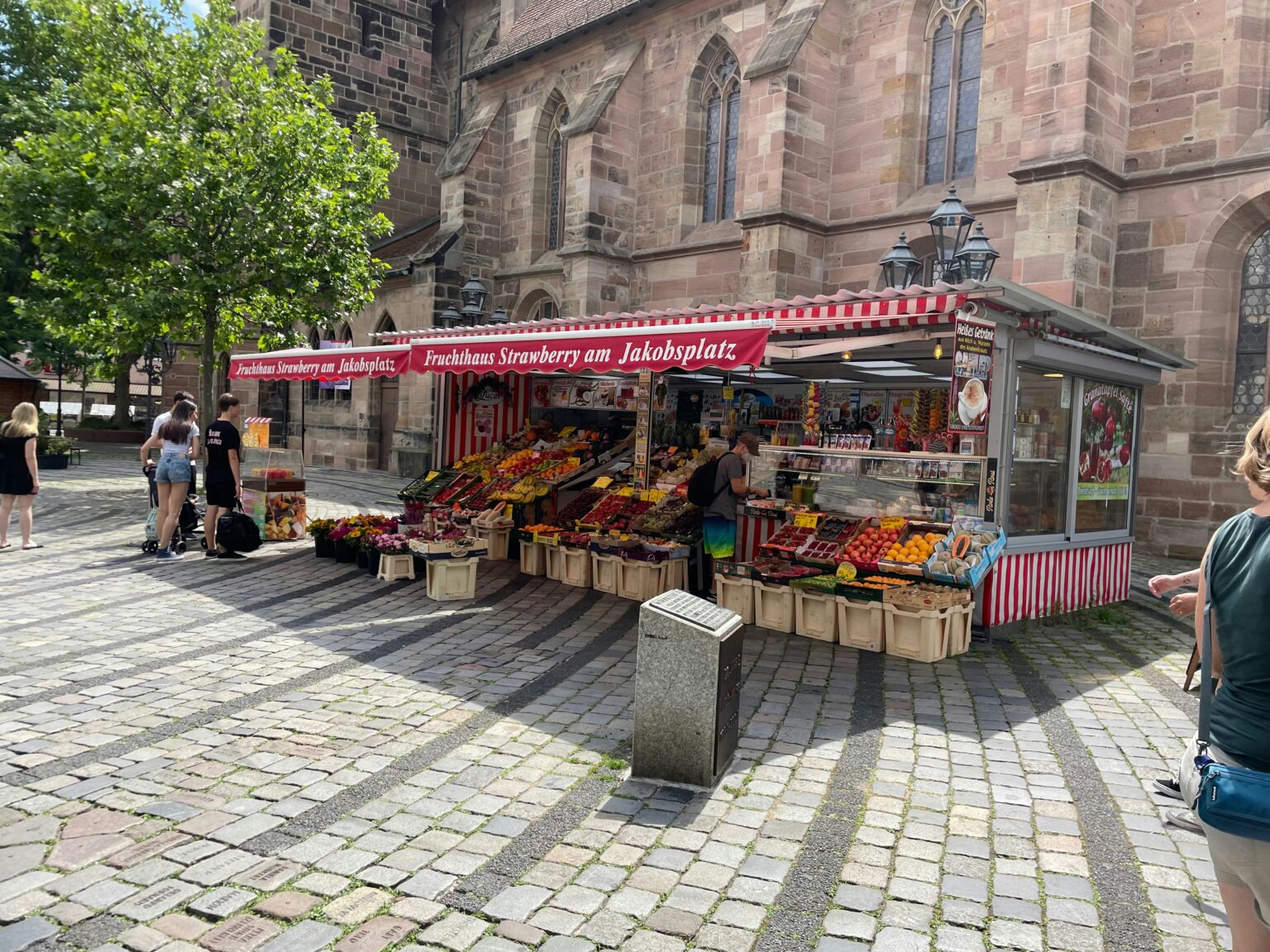
As well as traditional dishes found throughout the city, street food stands are another convenient source for quick meals in Berlin. They often lie near museums or historic sites and offer various dishes like schnitzel (breaded cutlet), bratwurst and braten (pork shin roast).
One of the most iconic street foods in Nuremberg is Lebkuchen, or gingerbread-style cookies that have long been baked for the Christmas season and made available year-round by many shops and cafes. Some versions feature cinnamon, cloves and nutmeg while others are covered with chocolate – some from Gebr. Fraunholz Lebkuchnerei has been around since 1907 and their cookies have earned Protected Geographical Indication status due to their quality.
Trip-ready gear from Amazon
As an Amazon Associate, grandgo.com earns from qualifying purchases. Links below are affiliate links — clicking them may earn us a small commission at no extra cost to you. Prices and availability are shown on Amazon.co.uk.
- Universal EU travel adapter — Bring back home appliances.
- Insulated coffee travel mug — Enjoy local coffee properly.
- Country cookbook cultural cuisine — Culinary travel companion.