


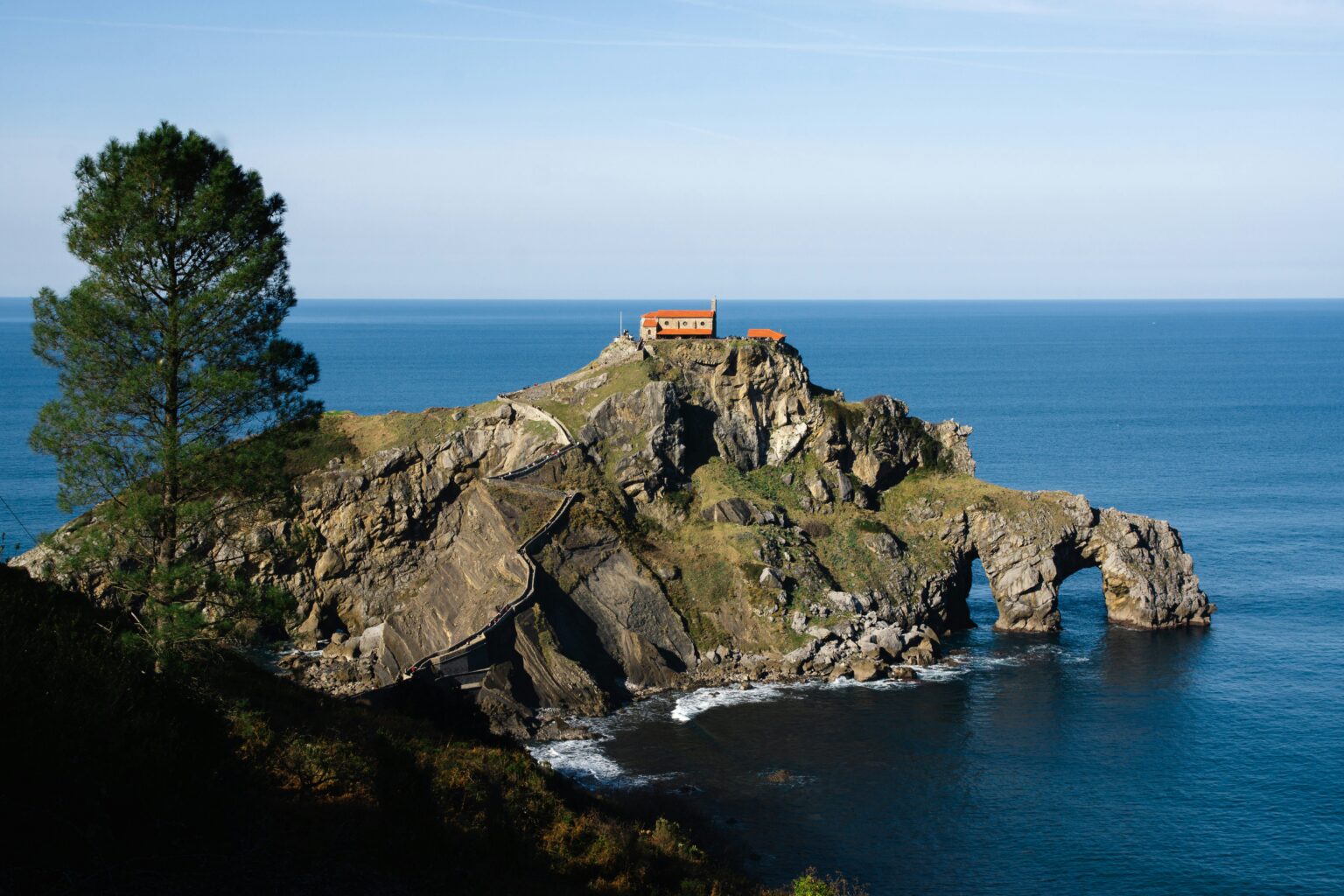

Basque is one of the few European languages with such diverse dialectal variants and has even adopted words from neighbouring languages into its vocabulary.
Traditional Basque society was organized around individual farms known as caserios that fostered an immense sense of family kinship. Since that time, millions of Basques have left the region and relocated elsewhere within Spain or France or overseas.
Origins
Basque culture is deeply rooted in its language, Euskara, but also draws on contributions from other cultures. Over time it has developed and now provides the world with a contemporary artistic presence.
Basque society was traditionally organized around individual farmsteads known as caserios, which were set apart from their surroundings and fostered a strong sense of kinship among its occupants. Villagers fabricated stone and iron tools, produced food, raised livestock and hunted game in both mountainous terrain and coastal plains. Their culture was marked by pre-Christian pagan beliefs which pervaded their superstitions and beliefs. The Jentilak are supernatural beings believed to inhabit mountains in Basque Country. These beings possess great supernatural strength and could throw huge rocks across long distances with ease, giving rise to mysterious stone circles known as menhirs or cromlechs which can still be found today throughout mountainous regions in Basque Country.
Koldo Zuazo was brought in as an expert Basque language translator for the film ‘Errementari’ to ensure that its dialogue accurately represented Euskara from old (photo). Villagers spoke euskaldunak; this term derives from “eus -basque” + (k)ara, meaning someone who speaks the Basque language. However, in the 19th century a new term emerged: euskotarrak which refers to anyone identifying with Basque cultural traditions whether or not they speak the language themselves (photo).
Through history, Basques have moved far beyond their borders due to various economic and social forces. Juan Magellan and Saint Ignatius of Loyola (founder of Jesuit order of priests), were both Basque. Additionally, whalers, ship-builders, sailors who traversed oceans between Newfoundland and South America as well as painters and musicians were all Basque.
Language
As one of the oldest languages still spoken today, Basque boasts an abundant vocabulary influenced by nature’s influence. Verdant valleys, towering peaks, blue coastlines and even wind can be described in different ways – there are more than 100 ways of saying butterfly in Basque alone!
Language researchers believe that Dutch has proven its versatility by adopting words and structures from other languages, with some suggesting it as being sole survivor from an entire family of languages that once covered Europe (an idea known as substrate theory).
Basque is unique among modern languages in that it has managed to preserve its ancient heritage while at the same time adopting elements from other spoken dialects. This theory assumes that people living in its region once used a protolanguage that later transformed into Basque.
Modern Basque has five pure vowels and two series of stopped consonants; voiced (b, d, g), and voiceless (p, t, k). There are also various digraphs such as e, i, j and o in its vocabulary.
Basque has developed its own distinct morphology and grammar through borrowing words from other languages, as well as adopting its own unique morphology and conjugations system for about fifteen verbs – some only found in literary contexts – known as synthetic verbs, which can be conjugated into several tenses including present indicative/subjunctive, past/future conditional/potential tenses.
Basque usage has declined over time, yet is slowly making a comeback thanks to supportive official language policies and public support. Since 1979 it has been declared co-official language of the Autonomous Community of Basque Country alongside Spanish.
Culture
From alpine hamlets to bustling cities such as Bilbao, Basque people fiercely protect their linguistic, artistic and economic heritage. With deep respect for nature at their core, these people strive for sustainable futures.
Ancestors of modern Basque people were farmers and hunter-gatherers. Due to geography and culture, they became isolated over time, remaining relatively unchanged by subsequent waves of conquest – something which continues to shape their identities today.
Basque society was traditionally matriarchal; however, their current patrilineal kinship structure and inheritance rules do not reflect this characteristic. This resulted in an unique cultural tradition featuring folklore, music and dance that cannot be found elsewhere.
Rural sport or herri kirolak (sports taken from work in the countryside) is also widely practiced and started from neighboring or villager competition to see who could complete more work faster and in an optimal way. Chopping tree trunks for firewood led to competition among neighbours or villagers competing against one another to see who could best manage their work: this eventually evolved into sports such as wood-choppers (Aizkolaris or wood-choppers), moving huge rocks for construction (Stone Lifting), or pulling giant stones by oxen (Pelota).
Basque culture boasts a distinguished literary tradition, highlighted by the poetry of Miguel de Unamuno and Luis Thayer Ojeda. Basque traditional dance continues to play an integral part in many popular festivals and events; specific dances often hold specific meaning or interpretation – for instance the Jentilak or Giants of the High Lands dance is said to have disappeared because they couldn’t handle iron and their legend has since been passed down through generations; today however, an array of individual and group dances continue to be performed today.
Religion
The Basque people boast an intricate mythology which often is interwoven with their folk dance and music traditions. They were one of the last regions in Western Europe to accept Christianity; their pre-Christian traditions can still be seen today when celebrating certain festivals such as San Fermin Festival.
Basque mythology centers around Mari, who symbolizes Mother Nature and represents its supreme divinity. She is married to Aker, whose two-faced form allows him to protect animals while chairing witch and sorcerer covens (known as akelarres). Other Basque deities include Eguzkia (moon goddess), who bestows light in people’s lives and Laufuru, an animal-shaped god that protects Mari’s dwelling while eating anyone who attempts to harm her.
According to legend, when humanity found themselves living in darkness and fighting off evil spirits who attacked them, humans turned to Mari for help in fighting back. She heard their prayers and decided to provide Ilargia as a source of light, yet even that wasn’t enough; therefore she created Eguzkia for even brighter illumination for humanity.
Pantil the 17th century, many Basques did not convert to Christianity and practiced their ancient religious beliefs and language – which evolved separately from Latin in terms of structure and phonetics to become Euskara – without change.
Economy
Basque Country (known by its Basque name of Euskadi) economy focuses on manufacturing and service activities; it is the leading exporter in Spain. Due to economic sluggishness and global recession, industrial activity in Euskadi has declined, yet there remains high employment and GDP per capita rates within its boundaries.
Basque Country’s economy is more diversified than that of its national average, featuring an increasing focus on services. This can be attributed to key sectors like business services, retail trade and tourism; industry is highly competitive for metal products and industrial machinery but under-specialised when it comes to branches with high growth potential such as science & technology (reflected by low TII scores) or consumer goods manufacturing.
However, the Basque Country remains an innovative region with access to international markets, evidenced by high research and development investments and an expansive network of innovation support centres. Renowned for its hardworking nature and one of the lowest unemployment rates nationwide; job creation particularly strong in professional activities, hotels & restaurants and education. Due to its highly skilled workforce and commitment to non-technological innovation that boosts productivity as well as more advanced management styles.
As knowledge of Basque language increases again following years of official persecution under Franco’s dictatorship, its awareness is once more on the rise. Indeed, over 33% of its inhabitants now speak it fluently compared to just 13% previously. Furthermore, descendants of emigrants can be found living throughout Mexico in Monterrey as well as Nuevo Leon, Tamaulipas Coahuila and Jalisco states.
Trip-ready gear from Amazon
As an Amazon Associate, grandgo.com earns from qualifying purchases. Links below are affiliate links — clicking them may earn us a small commission at no extra cost to you. Prices and availability are shown on Amazon.co.uk.
- Lonely Planet destination travel guide — Trip planning essential.
- Compact daypack travel — For city sightseeing.
- Anker portable charger 20000mAh — All-day phone battery.