


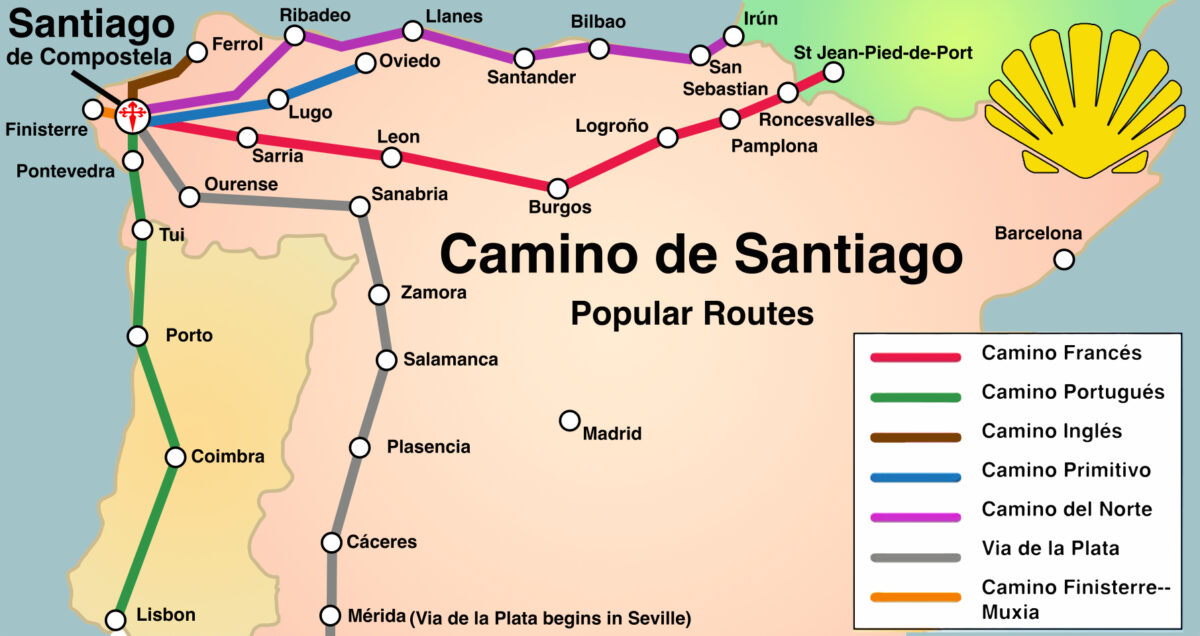

The Camino de Santiago, in Northwestern Spain, is an ancient pilgrimage route where traditions hold that Apostle James is interred. Every year thousands of people walk this historic route.
As this route can be completed at any time of year, but winter offers less accommodations and higher elevation sections may experience snow or closures. To make the journey as seamless as possible, opt for hiking shoes equipped with waterproof-breathable membranes and supportive footbeds.
The History of the Camino
During the Middle Ages, pilgrims traveled to Santiago de Compostela in Spain in order to visit Saint James’ tomb – believed to be one of Jesus’ apostles – at Santiago Cathedral de Santiago de Compostela and were granted plenary indulgence which absolved certain sins. By 12th Century this route had become extremely popular and attracted thousands of pilgrims annually from all across Europe who would travel by foot along its Camino trail; often leaving behind scallop shells as proof of their journey.
The Catholic Church and Spanish kingdoms made substantial infrastructure investments to accommodate this increase in pilgrim traffic, such as building bridges across rivers that blocked access for pilgrims, improving towns to entice pilgrims to visit, building hospitals and monasteries to care for pilgrims that passed through, encouraging groups of travelers who often wore scallop shell necklaces as a form of identification and encouraging them to travel together.
Today, the Camino de Santiago remains an extremely popular pilgrimage route with Catholics from all over the world traveling there for religious purposes. But hikers now also flock to Santiago as a spiritual and recreational journey; many hikers enjoy its challenging terrain and breathtaking Spanish landscape.
The four major Camino paths converge at Puente La Reina in northern Spain, where they all begin in France at medieval towns such as Vezelay, Tours, Le Puy and Arles before crossing the Pyrenees into Spain and reaching their destinations at Puente La Reina (The Royal Bridge). Pilgrims will experience an authentic pilgrimage journey as they walk in Charlemagne’s, Popes and Kings’ footsteps on this ancient and timeless trail.
The Symbolism of the Scallop Shell
The scallop shell has long been recognized as an integral symbol of the Camino de Santiago, representing both journey and destination, rebirth and baptism. Its ridges represent channels used in baptism while its shape represents pilgrims’ paths along their pilgrimage route. Pilgrims often carry this item as it’s thought to bring good luck.
For centuries, scallop shells have been an iconic feature on the Camino de Santiago. From pilgrim passports to cathedral decorations along the route and often serving as symbols of faith – scallop shells have long been used as one of the most recognisable symbols of faith on this pilgrimage route and remain popular discussion topics among pilgrims today.
One of the more widely known tales associated with scallop shells is associated with St. James. According to this legend, his disciples encountered an intense storm when traveling to bury St. James; miraculously their boat was saved when numerous scallop shells appeared as shelter on shore and saved their journey – so much so that this event is now an iconic symbol of Camino de Santiago and has come to symbolize good luck and fortune for many pilgrims traveling it.
Today, scallop shells remain an iconic symbol of the Camino de Santiago and can be found on souvenirs and mementos from pilgrims along their pilgrimage route. Yellow arrows and scallop shells mark its path; in Christian art and architecture they may even symbolize God’s light through their grooved surface.
The Symbolism of the Iron Cross
The Way of Saint James has long been an iconic pilgrimage route for Christians. In medieval Europe, only three pilgrimages could qualify for plenary indulgence – which would excuse all sinful actions committed during pilgrimage.
Pilgrims who travel to Santiago often take different paths on their pilgrimage journey; some complete it all at once while others choose a shorter trip annually. But all roads lead back to Santiago de Compostela cathedral.
History and legend have left this place with deep ties to history and legend; where the remains of Saint James may lie buried here as it serves as a major pilgrimage site in Spain.
In the Middle Ages, pilgrims traveled across Europe on foot to Santiago de Compostela. One popular route was the Camino Frances which started from Saint-Jean-Pied-de-Port on the French side of the Pyrenees and ended at Santiago de Compostela. Today there are many routes leading directly to Santiago from all across Europe, and some even travel by plane!
Pilgrims on the Way of Saint James traditionally adorned themselves with scallop shells as a mark of pilgrimage and carried around their credencial, which served as a passport that collected stamps at various accommodations along the trail such as albergues or rest stops, to prove they had completed their journey to Santiago and merited receiving their Compostela, or certificate of completion.
The Naked Pilgrim (2003), which follows British art critic Brian Sewell on his French pilgrimage route to Santiago de Compostela. The movie provides a poignant reflection of what one can experience along the Way of St. James.
The Symbolism of the Wine Fountain
Modern-day hikers find that the Camino de Santiago offers more than religious experience – for them it offers an opportunity to decompress from everyday stressors while immersing themselves in nature along its breathtaking routes in Galicia and Castilla y Leon in Spain. Furthermore, taking part in this epic pilgrimage provides opportunities to connect with like-minded individuals on this epic pilgrimage of self-discovery and spiritual renewal.
The Camino de Santiago is an extensive network of trails, but the best-known is probably the French Way (or Camino Frances). Beginning from Saint-Jean-Pied-de-Port and ending up at Santiago de Compostela in northwestern Spain, its impact can be profoundly transformative. Although different reasons drive people to walk the Camino, every pilgrim will find it rewarding experience.
At its height in the Middle Ages, pilgrims flocked to this European trail in large numbers each year – up to 250,000 pilgrims annually from across Europe alone! However, following catastrophic events such as Great Famine and Black Death that decimated Europe’s population. But recently the Camino has experienced an astounding revival!
As a result, the trail now draws hikers of all ages and backgrounds from across the world – many attracted by its sense of accomplishment upon completion, others simply fascinated with its amazing food and wine offerings along the route.
One of the trail’s most iconic landmarks is Ayegui’s Wine Fountain – a beloved symbol of hospitality on the Camino that gives away free wine to pilgrims passing by. This generous gesture captures the spirit of pilgrimage and helps make it such an extraordinary journey.
The Symbolism of the Templars
The Camino de Santiago (commonly referred to as the Way of Saint James) is an interconnected series of pilgrim routes leading from northern Spain’s Cathedral of Santiago de Compostela where legend has it that Apostle James lies buried. In medieval Europe, this pilgrimage was one of three main Christian pilgrimages, along with Jerusalem and Rome, that could earn participants a plenary indulgence that absolved them from certain sins.
Today, this route attracts pilgrims from all around the world for various reasons. Some choose it for spiritual or self-discovery experiences while others take up walking for physical challenge and exploring some of Europe’s most stunning landscapes.
Each pilgrim sets out from different points and completes their trek in different amounts of time, carrying with them a credencial which serves as their pilgrim passport and allows them to obtain a Compostela once they reach Santiago. Templars often play an integral part in protecting pilgrim routes while providing hospitality for travelers along the journey.
Symbols of the Templars can be seen throughout the trail, from crosses on Cathedral of Santiago’s pillars to carvings found in many castle dungeons where they were held captive. Most notable among these are their battle banner, known as Beauceant; its simple cloth canvas contains many clues that shed light on them and have been extensively studied by art historians and scientists to shed new light.
The Camino de Santiago is an incredible journey and attracts people of all backgrounds, making it a wonderful place for discovery and relaxation. If you decide to embark on the Way of St James yourself, pack plenty of snacks and bring along your camera – both will provide opportunities for stunning photographic memories along the way.