



Quick Answer
The Dolomites are a spectacular Italian Alps mountain range, UNESCO World Heritage since 2009 for unique limestone formations. Spanning Trentino-Alto Adige and Veneto, the 9 mountain groups include Tre Cime di Lavaredo (iconic three peaks), Marmolada (highest at 3,343m, has glacier), Sassolungo, Catinaccio. Best bases: Cortina d’Ampezzo (luxury, hosting 2026 Olympics), Val Gardena (Ortisei, Selva, Santa Cristina — 3 villages), Alta Badia (food-focused). Top experiences: Lago di Braies (instagram-famous lake), Tre Cime hike (10 km loop, 4-5 hours), Seceda ridge (cable car, dramatic views), Alta Via 1 (10-day trek). Best season: late June-September (hiking), December-April (skiing). Languages: Italian, German (62% in South Tyrol), Ladin (5,000 native speakers). UNESCO 2009.

Why Dolomites are unique
- Limestone formations: 250-million-year-old coral reefs, now Alpine peaks. Pale yellow-pink in sunset (alpenglow).
- UNESCO 2009: recognized for “exceptional natural beauty” and geological significance.
- 9 mountain groups: Pelmo-Croda da Lago, Marmolada, Pale di San Martino, Dolomiti Friulane, Dolomiti Bellunesi, Puez-Odle, Sciliar, Catinaccio, Tre Cime.
- Highest peak: Marmolada 3,343 m, “Queen of Dolomites”. Has glacier (receding).
- Most photographed: Tre Cime di Lavaredo (Drei Zinnen). Three towers seen from many points.
- Cultural mix: Italian, Austrian (Habsburg until 1918), Ladin (oldest Alpine language, Latin-derived).
Top destinations
- Cortina d’Ampezzo: “Pearl of the Dolomites”. Luxury resort, hosting Winter Olympics 2026 with Milan. Italian-speaking.
- Val Gardena (Ortisei, Selva, Santa Cristina): three German-speaking villages. Center of South Tyrol.
- Alta Badia: Ladin-speaking. Famous for cuisine — multiple Michelin-starred restaurants in mountain huts.
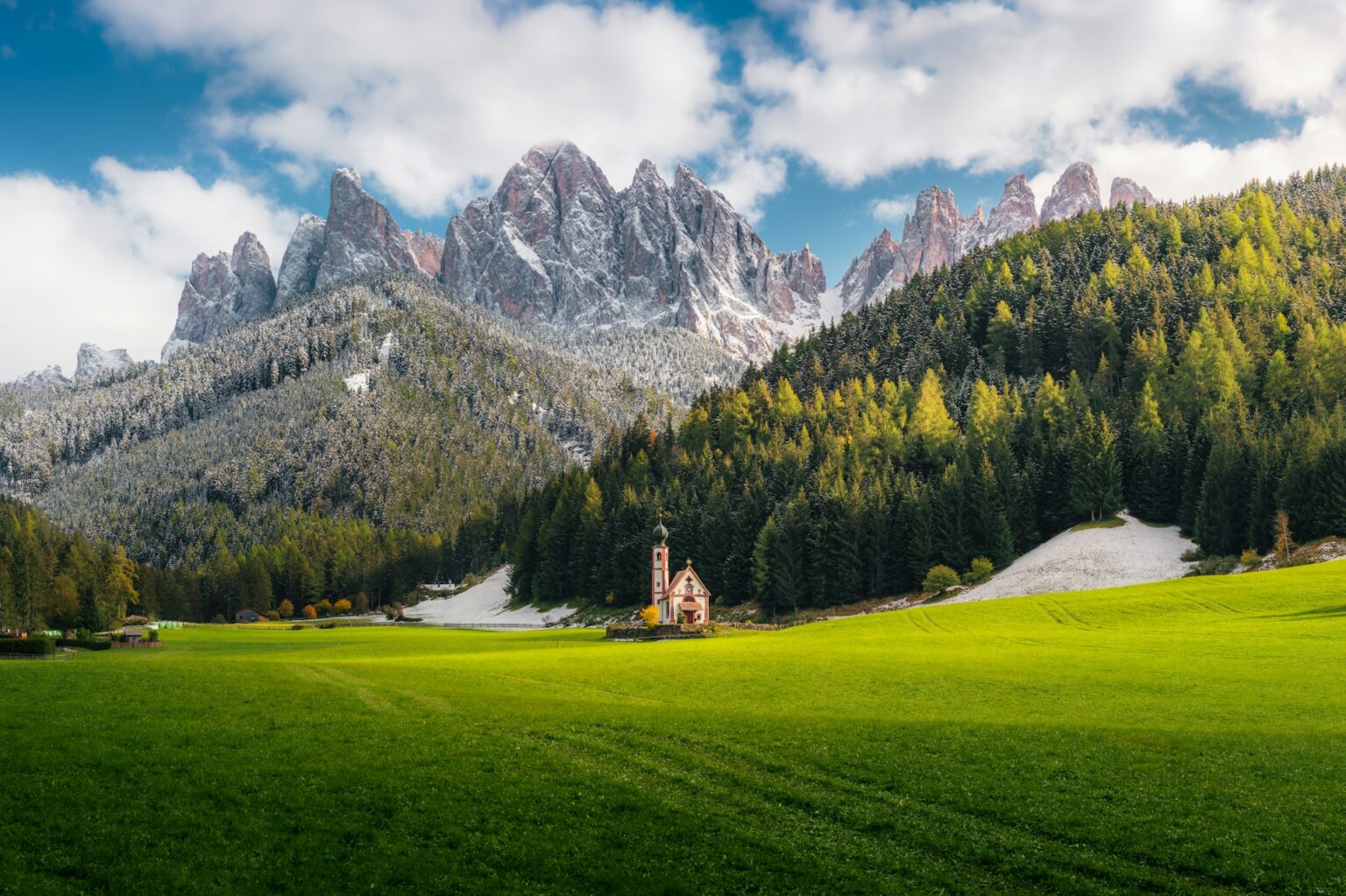
- Val di Funes (Santa Maddalena): postcard-perfect church + Odle peaks. Most photographed Alpine scene.
- Lago di Braies (Pragser Wildsee): emerald lake, instagram-famous. Crowded — go before 9am or after 5pm.
- Lago di Carezza (Karersee): small but beautiful, less crowded than Braies. Reflections of Latemar.
- Val di Fiemme: larger valley, family-friendly. Ski slopes Cermis.
Hiking the Dolomites
- Tre Cime di Lavaredo loop: 10 km, 350m gain, 4-5 hours. Most famous hike. Refuge Auronzo start (drive €30 toll).
- Seceda ridge: cable car from Ortisei (€40 round-trip), then walk along ridge for dramatic views. 2-3 hours.
- Sassolungo loop: 14 km, 700m gain, 7 hours. Around iconic Sassolungo group.
- Alpe di Siusi: Europe’s largest Alpine plateau (52 km²). Easy walks, family-friendly.
- Alta Via 1 (10 days): classic Dolomite trek. Lago di Braies to Belluno. 150 km, refugios overnight.
- Via Ferrata: “iron way” climbing routes. Need helmet, harness, lanyard. Many beginner-friendly options.
- Best season: mid-June to mid-September. Higher elevations open later.
Skiing the Dolomites
- Dolomiti Superski: 1,200 km of slopes, 12 ski areas, 1 ski pass. World’s largest connected ski area.
- Sellaronda: 26 km circuit around Sella massif. Skiable in one day. Iconic Italian ski experience.
- Top resorts: Cortina d’Ampezzo, Val Gardena, Alta Badia, Val di Fassa, Arabba.
- Sextner Dolomites: Tre Cime area skiing — quieter, with views.
- Glacier skiing: Marmolada year-round on glacier (limited but still operational).
- Olympics 2026: Milan-Cortina hosting February 2026. Most events in/near Cortina.
- Best season: mid-December to mid-April. January coldest, March best snow.
Cuisine and culture
- Speck: South Tyrolean cured ham. Smoky flavor. Try at Hofschank restaurants.
- Knödel (canederli): bread dumplings, Austrian heritage. With speck, spinach, or cheese.
- Strudel: apple strudel, Tyrolean pastry. With cinnamon ice cream.
- Polenta: Italian cornmeal, often with mushrooms or game.
- Tirtlan: Ladin specialty, fried dough with spinach/cheese.
- Wines: Lagrein, Vernatsch (Schiava), Müller-Thurgau, Gewürztraminer (white).
- Trentodoc sparkling: Trentino’s answer to champagne.
- Sauer mountain huts (Hofschank): traditional family-run, no menu — eat what’s served.
Practical info
- Getting there: Venice (VCE) airport closest. Verona (VRN), Innsbruck (INN) Austria, Munich (MUC). Drive or shuttle.
- Bolzano (Bozen): regional capital. Train station main hub.
- Distances: Cortina to Venice 130 km. Bolzano to Cortina 130 km. Mountain roads twisty.
- Cars: needed for flexibility. Rental cars from Bolzano €30-50/day.
- Cable cars: €25-50 round-trip. Many included with Dolomiti Card (€90/3 days summer).
- Languages: Italian, German, Ladin (Val Gardena, Alta Badia, Val di Fassa). English in tourism.
- Olympics 2026 impact: February 2026, Cortina hosts — rooms scarce, prices doubled.
Frequently Asked Questions
Why are the Dolomites UNESCO?
Designated UNESCO World Heritage in 2009 for exceptional natural beauty and geological significance. The pale limestone (250 million years old, ancient coral reefs) creates dramatic peaks rare globally.
When is best time to visit the Dolomites?
Summer hiking: late June to mid-September. Winter skiing: December-April. Avoid April-May (mud), November (rainy, unstable). Olympics 2026 February will be busy.
How do I get to the Dolomites?
Fly to Venice VCE (closest), Verona, Innsbruck, or Munich. Drive 2-3 hours from Venice to most bases. Bolzano is regional hub. Cars essential for flexibility.
What’s the most famous Dolomites hike?
Tre Cime di Lavaredo loop — 10 km, 4-5 hours, around the iconic three peaks. Start at Refuge Auronzo (€30 toll road). World’s most photographed mountain trio.
Cortina d’Ampezzo or Val Gardena?
Cortina: Italian-speaking, luxury resort, Olympics 2026 host. Val Gardena: German-speaking, three village complex (Ortisei, Selva, Santa Cristina). Both excellent — preference based on language and atmosphere.
Are the Dolomites expensive?
Mid-range. Hotels €120-300/night peak season. Cortina more expensive than Val Gardena. Restaurants €40-70 dinner. Cable cars €25-50. Dolomiti Card saves money for active travelers.
Recommended on Amazon
As an Amazon Associate, grandgo.com earns from qualifying purchases. Links below are affiliate links — clicking them may earn us a small commission at no extra cost to you. Prices and availability are shown on Amazon.co.uk.
- Lonely Planet Italian Alps — Dolomites focus.
- Dolomites hiking guidebook — detailed trails.
- South Tyrol food guide — Tyrolean cuisine.