


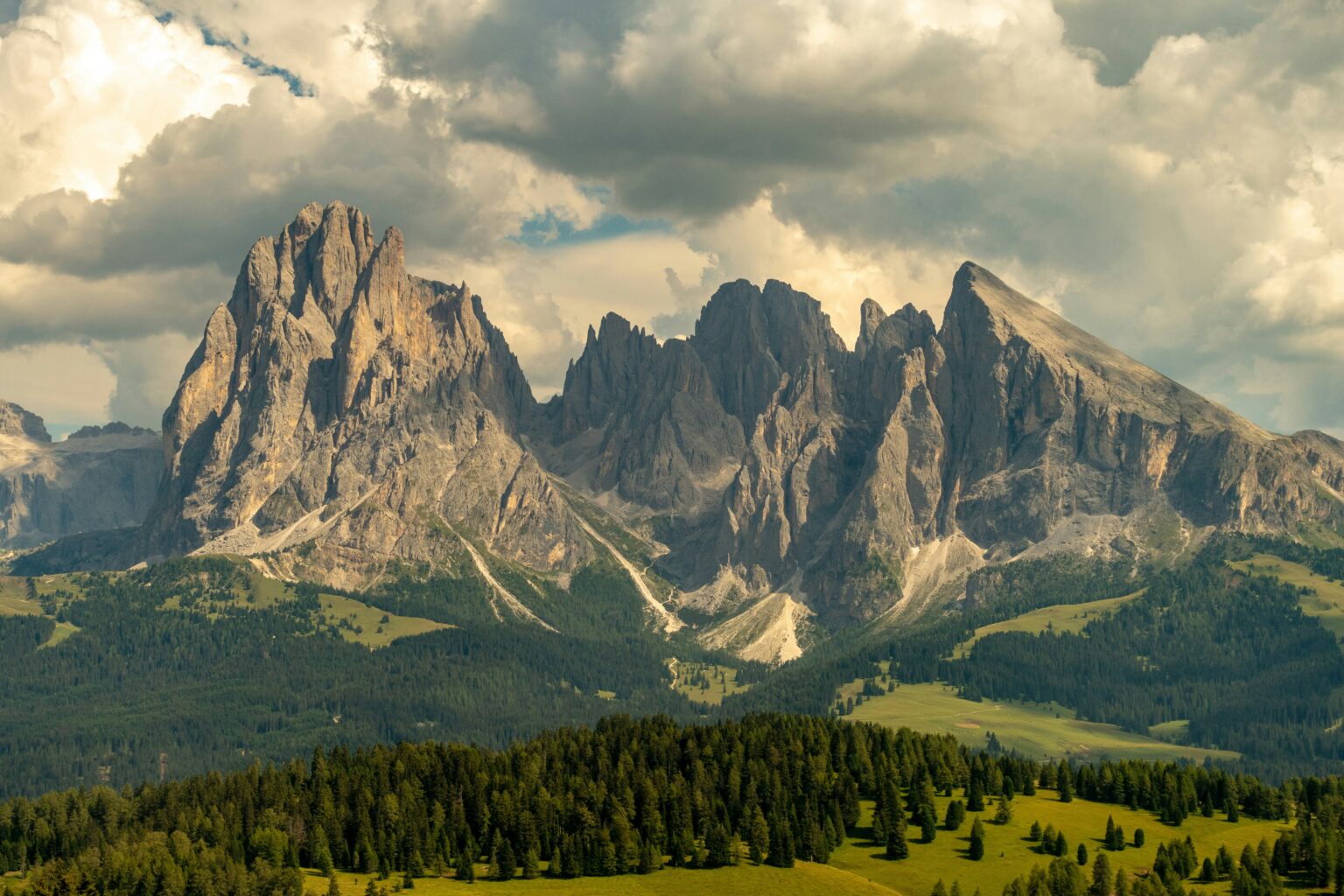

Dolomites offer many natural wonders. In addition, their cultural landscape features numerous alpine traditions that celebrate nature with local products.
Venice and Innsbruck airports in Austria are approximately 2.5-hour drives away, offering access to the Dolomites by rental car or public transit respectively.
Symbolism
In 2009, UNESCO named the Dolomites a World Heritage Site not only due to their unparalleled landscape and beauty but also due to their rich geological history. Rock formations reveal evidence of living organisms being turned into stone over millions of years, while glaciers with massive strength also left behind their imprint on this region.
Flora and fauna have flourished in an astounding landscape. The vibrant rock walls create an exquisite colour combination, enhanced by ground-covering moss, blooming alpine flowers, healthy mountain pine forests and wild animals like squirrels, hares, marmots and chamois; crystal-clear alpine lakes reflect their beautiful Dolomite peaks.
Dolomites are so captivating because of the way they inspire awe and longing in people, while at the same time embodying myths and legends inspired both by religious sentiments and nature observations.
Many mountain faces in the Dolomites are steep and sharp with jagged faults and fissures, creating an intriguing pattern formed from vertical lines of sheer rock walls contrasting with softer horizontal ones (the stratification of rocks). Furthermore, many Dolomite meadows boast picturesque meadows which come alive during spring.
Summer brings lush Alpine meadows filled with colourful Alpine flowers. Tre Cime di Lavaredo stands as an emblematic image of Italy’s Alps for over 800 years; postcards, calendars and posters feature it prominently.
The Dolomites are one of a-kind. Their unique charm has had an immense effect on many poets and writers who have immortalized them through their works. Additionally, the beauty of the Dolomites inspires all those who visit this spectacular mountain range; thus making them one of the most visited tourist spots in Italy.
Geology
Dolomite is an important rock type with high concentrations of calcium and magnesium, with an unusual double layer of carbonates crystal structure. Dolomite’s geological heritage is unparalleled – nine sites that make up its UNESCO World Heritage Site represent it perfectly!
The Dolomites are a mountain range formed from marine sediments and formed by three processes: lithogenesis (the transformation of terrestrial and marine sediments into rock); orogenesis – related to Alpine chain rise; and morphogenesis – caused by glaciers and atmospheric agents shaping the mountains into their current form. Over time this complex geological history has given way to an evocative landscape consisting of barren rocks, jagged peaks and towering cliffs that defines them.
Permian period was characterized by vast plains. During Triassic time period it changed into tropical sea with numerous atolls, islands, and high coral reefs which now remain fossilized. After Africa detached itself from supercontinent Pangaea and compressed against Europe it underwent further changes as enormous rock masses collided together creating mountains which gave their distinct appearances.
Dolomite massifs form striking, breathtaking walls of rocky cliffs on the surface; below them lie caves and galleries filled with white, pink, grey and red-hued crystals of various hues; all this while hosting various forms of karstic phenomena and formations at both superficial and subterranean levels; these include corrosion forms, ridged fields (Karrenfelds), sink-holes, springs and wells.
Over two centuries of scientific effort has gone into replicating the natural conditions that scientists believe are necessary for dolomite formation, with teams from the University of Michigan and Hokkaido University in Japan now successfully doing so using an approach based on atomic simulations.
This method makes it possible to grow dolomite at a rate similar to what’s seen in nature, while simultaneously solving geological mysteries and providing an alternative approach for mineral growth. Dolomite is an extremely useful material with many environmental applications including neutralizing acid mine drainage or purifying industrial emissions.
Weather
The Dolomites boast a relatively warm climate for alpine regions, and receive less precipitation than most alpine areas. Summer (mid-July to September) is considered the prime trekking season as all huts and roads are clear of snow and temperatures don’t become unbearably hot; however rain could happen any time of year in these mountains.
Meteorology basics can assist hikers in recognizing signs that an approaching thunderstorm is approaching, including lightning being visible from many kilometers away and thunder being audible from mere kilometers. Hikers should react swiftly when lightning is detected as it gives them ample warning to seek shelter before it arrives.
As summer gives way to autumn, the Dolomites become resplendent with beautiful autumnal colors while their peaks remain shrouded in mist. This magical landscape, where peaks appear as islands in an ocean of clouds, becomes even more breathtaking once sunlight breaks through and dissipates fog, revealing vivid shades that characterize this region of Italy.
Snowfall in the Dolomites during the first two weeks of October is fairly frequent, though not usually above 2000 meters, providing trekkers an ideal opportunity to admire its stunning mountain scenery without being distracted by snowy terrain.
Winter in the Dolomites is an absolute skier’s delight, offering endless opportunities for skiing, snowboarding and snowshoeing in this pristine mountain environment. Hiking, climbing and snowshoeing provide memorable experiences among its majestic peaks; and skiing across its snow-covered alpine landscapes is simply unforgettable.
As weather in the Dolomites can change rapidly, staying informed is vital to enjoying this region. To do this, we suggest visiting ARPAV Veneto regularly for updates regarding avalanche warnings and forecasts for each region of the Dolomites; these forecasts come directly from weather stations located within them or nearby regions.
Activities
The Dolomites provide endless outdoor recreational opportunities. Take in stunning natural landscapes as you trek along idyllic green fields dotted with blooming wild flowers or bike or drive up to mountain huts, passing stunning turquoise lakes along the way and passing charming wooden barns and huts that add charm.
Geologically speaking, the Dolomites are of immense significance as they reveal and depict an integral portion of Earth history. During the Permian-Triassic period they were covered by marine sediments; then later submarine and sub-aerial eruptions produced tufa rock which later surfaced due to tectonic plate movement which created European Alps.
Due to their unique geographic position, scientists and researchers from around the globe have come here to study them intensively – this has contributed to fundamental principles in earth science being developed here.
Are You into Winter Sports in the Dolomites? The Dolomites provide the ideal setting for enthusiasts of winter sports! This region features over 80 km of carefully prepared walking areas that provide ideal Nordic Walking, Trekking and Snow Shoeing routes. Winter walking in the Dolomites offers a tranquil experience that transports you into a winter wonderland of snowcapped mountains, lush forests and magical valleys – where peace reigns supreme!
The Dolomites offer luxurious hotels and spas that provide an incredible opportunity for guests to unwind and experience its majestic landscape, all while relaxing into luxurious vacation accommodations. Some of the top spa hotels boast amazing amenities such as saunas overlooking stunning valleys, infinity pools with breathtaking mountain views, massage services, saunas offering spectacular valley views, infinity pools with stunning mountain vistas and even massage services!
Noting the Dolomites sits at over 3,000 m (9,800 ft), so if hiking at such high altitudes is unfamiliar to you it’s wise to pace yourself and take regular breaks, as well as drinking enough fluids and eating regularly in order to prevent dehydration and altitude sickness. Also be sure to dress warmly, as conditions in this mountainous region can quickly shift between sunny warmth and cool winds.
Trip-ready gear from Amazon
As an Amazon Associate, grandgo.com earns from qualifying purchases. Links below are affiliate links — clicking them may earn us a small commission at no extra cost to you. Prices and availability are shown on Amazon.co.uk.
- Universal travel adapter — 150+ countries covered.
- Anker portable charger 20000mAh — All-day phone battery.
- Compact daypack travel — For city sightseeing.