


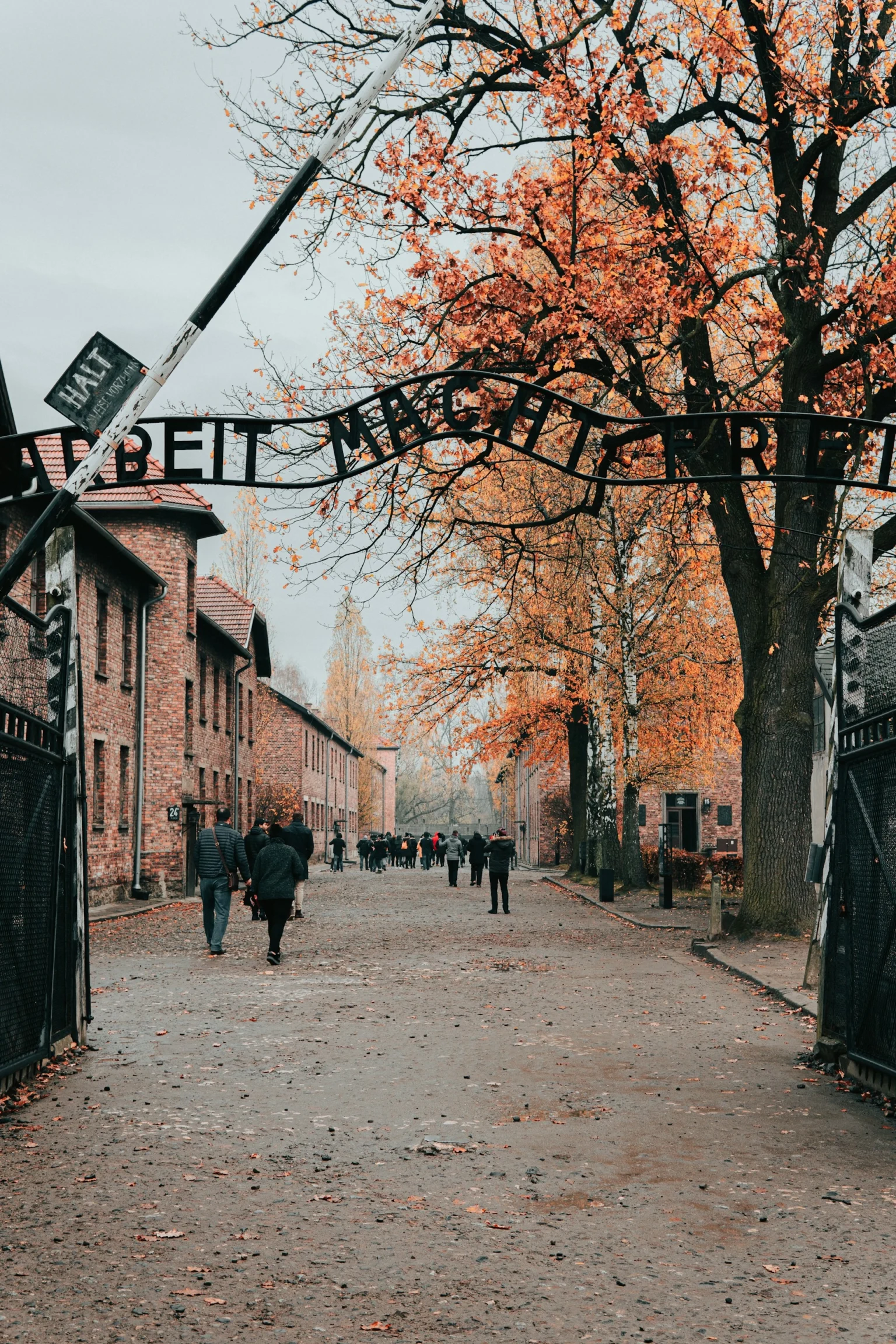

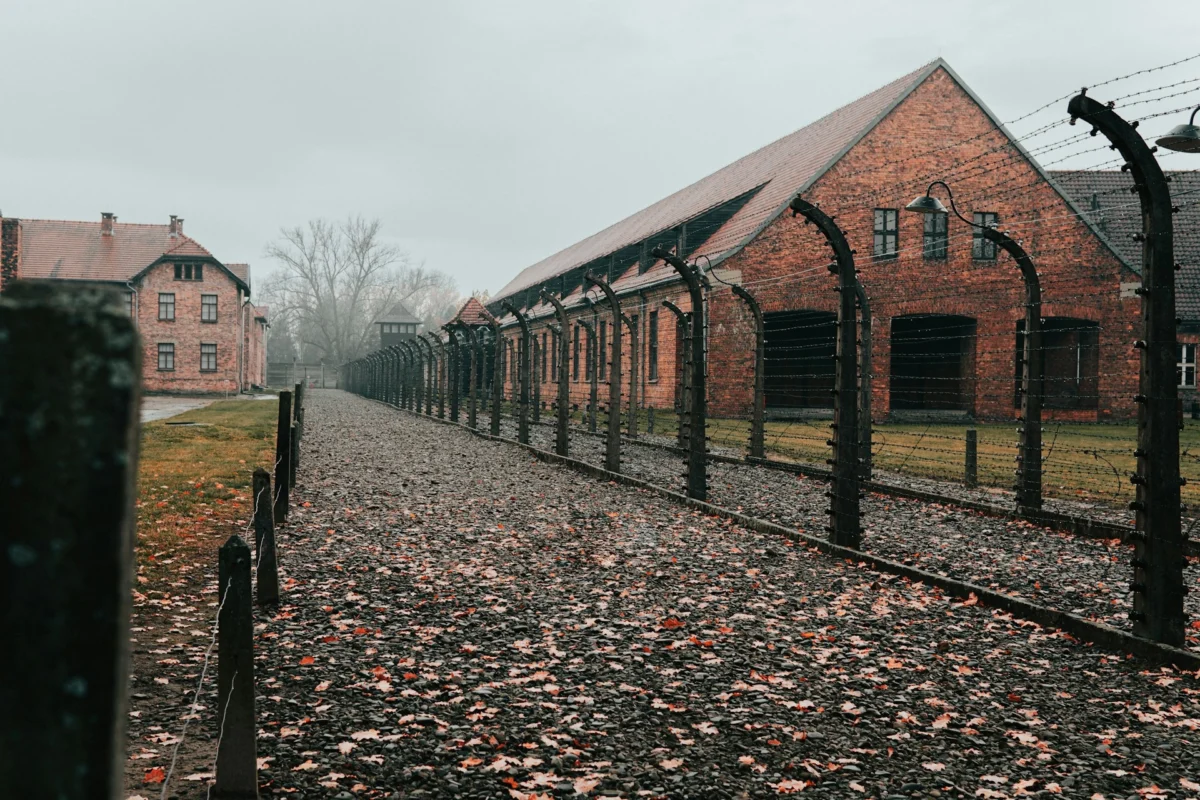
Auschwitz holds many original landscape features and objects from its former gas chambers and crematoria; as well as testimony from former prisoners and survivors who survived it all.
Groening arrived at Auschwitz as the Nazi extermination machine began its relentless rampage of destruction. He witnessed prisoners die due to selection, starvation, exhaustion, pseudoscientific experiments, torture and disease.
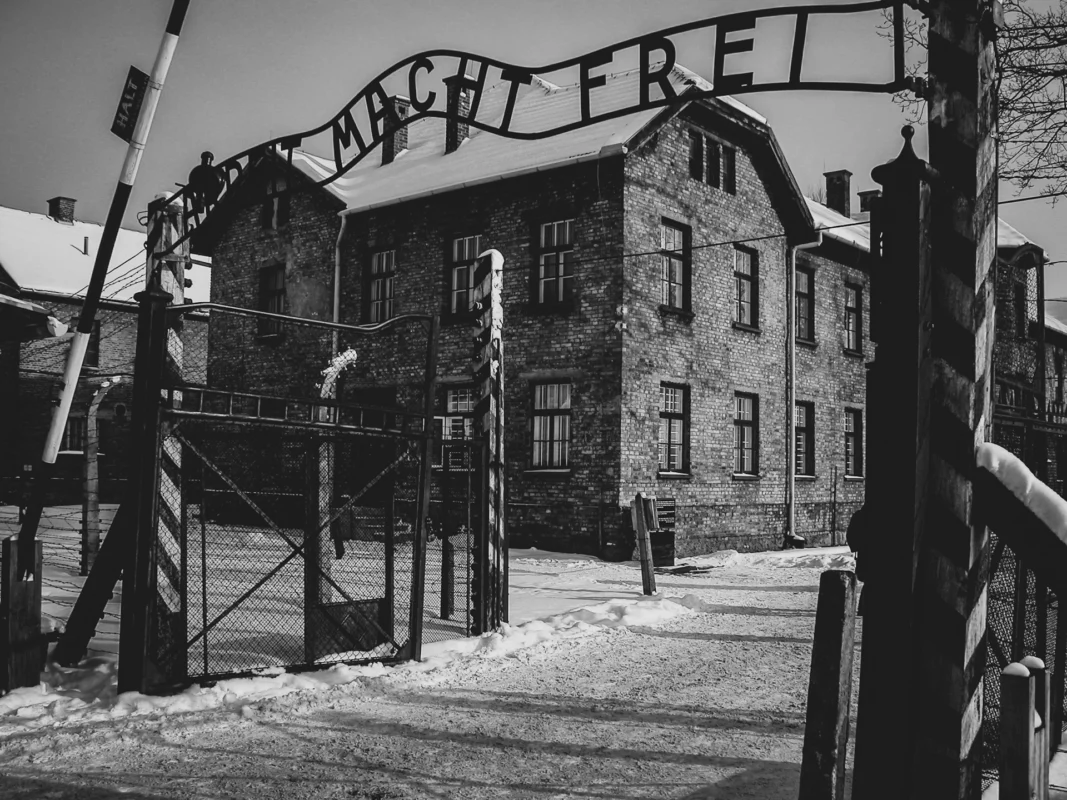
It was a concentration camp
“Auschwitz” has long been associated with genocide, serving as a stark warning to humanity. Each year millions visit this camp as tributes are paid in memory of Holocaust victims – it is considered an act of moral duty for many politicians and state leaders to visit this sacred site.
Auschwitz-Birkenau received its inaugural transport of prisoners on June 14, 1940, marking its official opening as an extermination site. Furthermore, this camp served as an abject slave labor center where those deemed fit were registered and given serial numbers before entering through its famous gate with “Arbeit Macht Frei” (“Work Will Set You Free”).
Many prisoners worked within their camps, building buildings or tunnels or working factories to produce weapons and goods for the German war effort. Others were sent outside their camps to mine coal or dig rock quarries and contribute to construction projects like roads or bridges.
Heinrich Himmler directed Auschwitz commander Rudolf Hoss in 1941 to set up a center at Birkenau for mass killing of Jews using Zyklon B gas, testing its lethal effects. Later four large gas chambers would kill six thousand per day disguised as showers so victims believed they were receiving disinfection treatment.
Although Auschwitz camps were hellholes of terror for prisoners, some rebelled. A few attempted escape, and several members of the Sonderkommando who worked in crematoria staged an uprising and destroyed one of its gas chambers – this rebellion ultimately cost all rebels their lives; but their diaries served as authentic documentation of crimes committed at Auschwitz.
Prisoners at Auschwitz were kept apart from society through electric barbed-wire fences and guarded by armed soldiers, living in barracks with limited access to only one part of the camp; not permitted to communicate freely or speak out, they were constantly watched by SS guards; their lives could be subjected to cruelty at any moment and subjected to medical experiments such as castration and sterilisation, often conducted by Josef Mengele (SS Captain Josef “Angel of Death”).
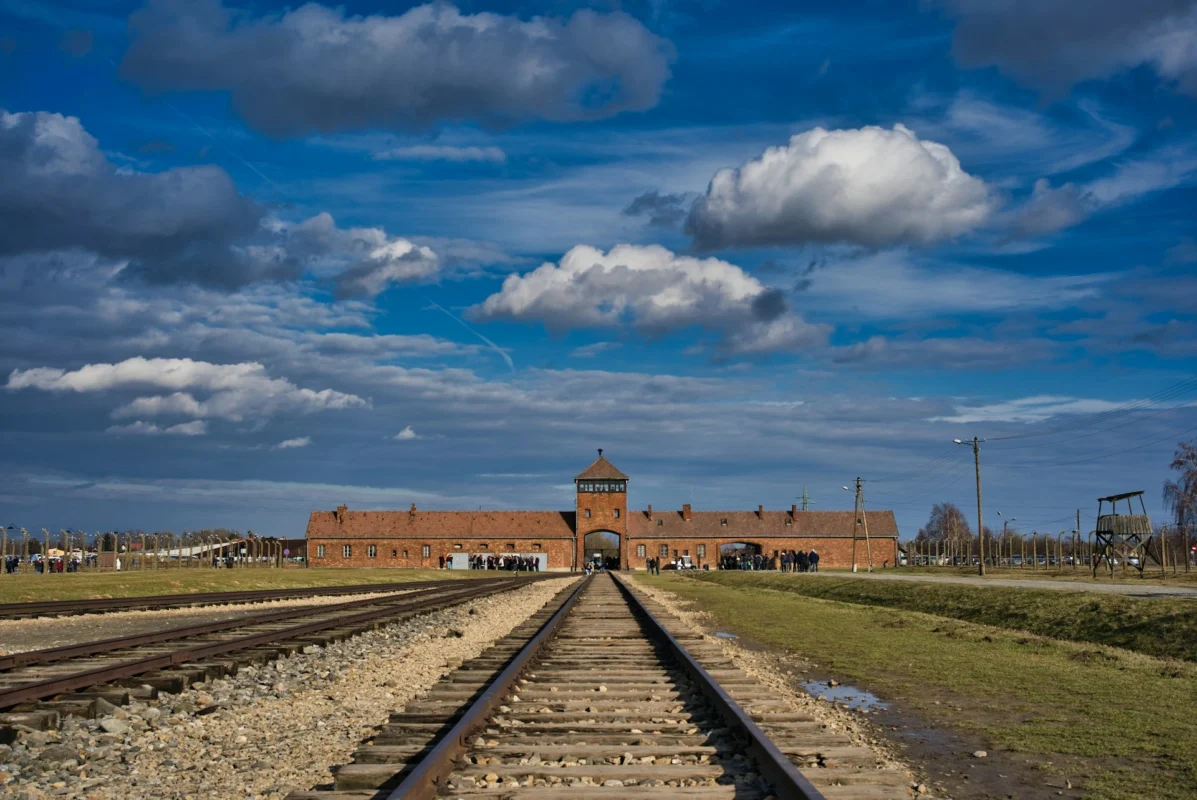
It was a death camp
As Nazi rule spread throughout Europe, Auschwitz was transformed from a concentration camp into a death camp. Here was one of the world’s most brutal mass murders conducted using slave laborers and four large gas chambers filled with Zyklon B poison gas; all this while being protected by barbed wire fences guarded by armed SS men.
Prisoners were forced to work long hours under inhumane conditions with limited food and water available, leading to many prisoners dying of hunger, exhaustion or disease – some by taking their lives while others by being killed in gas chambers – many even appearing like walking corpses, too emaciated even to stand upright.
The Nazi Sonderkommando unit managed the death camp. These men were responsible for carrying out extermination activities at the death camp without stopping or pausing for daylight breaks, often working without breaks for days on end without stopping until extermination had been completed. There was also an extensive network of subcamps which utilized prisoners as slave labor; Monowitz began operating as the largest one of these subcamps in 1942.
Himmler issued orders that allowed prisoners in his camp to receive packages from outside, in an effort to decrease deaths and extend work shifts longer. Although some prisoners managed to survive this attempt, many did not.
As it became clear that Germany would soon fall to the Soviet Army, Nazi forces began to eliminate evidence of their crimes at Auschwitz. Buildings were either torn down or demolished and records destroyed; crematoria were also demolished before Soviet troops entered in January 1945 and forced out all 58 thousand exhausted and starving prisoners from Auschwitz.
Auschwitz I served two primary functions, renting prisoners as slave labor for German enterprises in the depths of Third Reich Germany, and serving as a repository for plundered goods. It contained central employment office, political department (camp Gestapo) and garrison administration functions as well as central supply warehouses and workshops.
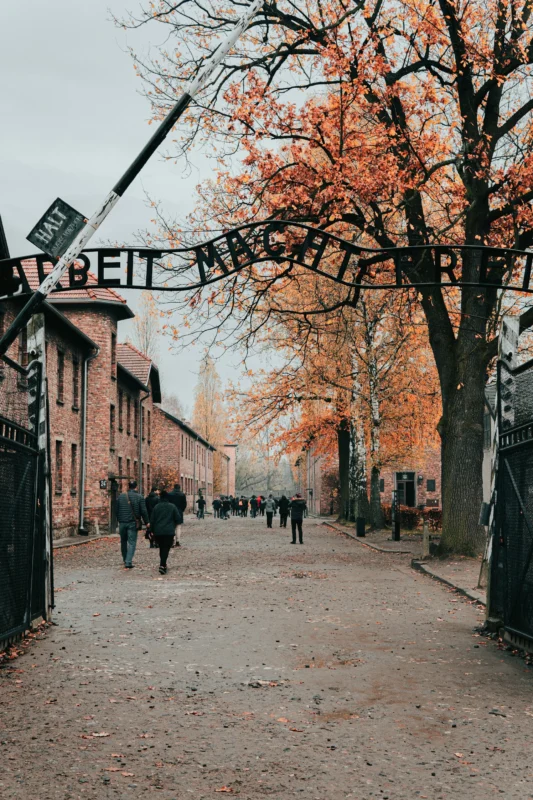
It was a labor camp
Labor camps were facilities in which prisoners were forced to work at an excruciatingly fast pace without adequate food or rest, often without sufficient rest breaks or enough resources for adequate production of chemicals and weapons. Prisoners worked in fields as diverse as mining, factories that produced chemical warfare agents, construction, as well as mines themselves – often working long days while being housed in cramped barracks.
Most prisoners were Jewish; others included Poles, Soviet POWs, and other people the Nazis deemed enemies of their state. Many died of illness, exhaustion or starvation while others were gassed using Zyklon B, used by the SS to poison people before crematoria burned their corpses; their ashes were then either buried in mass graves or used as fertilizer.
Oswiecim (Germanized to Auschwitz), in southern Poland, was home to Auschwitz-Birkenau where it housed prisoners while supporting war efforts through agriculture, food production, chemical manufacturing and industry services; whilst those that dealt with industrial manufacturing or armaments production were overseen by Auschwitz II-Monowitz.
People unable to work were sent directly into gas chambers. Prisoners arriving at camps underwent a “selection,” whereby the SS would examine them for signs of disease or weakness and kill anyone too weak or sick to work or too ill to work immediately; others would be sent on death marches towards other concentration camps such as Bergen-Belsen or Dachau.
At the entrance to this notorious prison, its notorious gateway bore the words: Arbeit Macht Frei (meaning, “Work Sets You Free”) but this was simply meant as a false advertising slogan for its true goal: extermination.
Prisoners were subjected to long hours of hard labor without access to food or medicine, often digging coal for roads and railways or working in factories that produced weapons and supplies for war efforts. Furthermore, prisoner labor was employed on large farms by SS soldiers.
People deemed fit to work would wear uniforms with their prisoner numbers displayed, undergo tattooing, undress and delouse treatment as well as have their body hair shaved before being sent through Canada, an area in the camp dedicated to sorting and storing belongings for later use.
It was a hospital
Auschwitz was not only a prison, but it was also home to an extensive network of medical camps. These camps provided treatment for sick people as well as being used to conduct cruel “medical experiments.” Doctors such as Josef Mengele conducted painful and traumatic experiments on men, women, children – even dwarfs and twins! His experiments aimed at creating better treatments for German soldiers and airmen while developing methods to sterilize those considered inferior by Nazis.
The camp medical staff consisted of doctors, nurses and prisoners who volunteered. Some workers were Polish; most were German. Though amoral and corrupt in nature, these volunteers did what they could to keep the hospital running despite frequent beatings from camp kapos and overseers.
Before 1942, Hans Bock ran the hospital as an SS criminal with several German deputies under him. Unfortunately for them, antifascist influences caused tension within. Over time they were replaced by Polish prisoner doctors and nurses with mature and democratic mindsets that successfully cleared away marauding Gestapo informers from within the hospital walls.
As time passed, more sick prisoners were transferred to the camp, housing them in barracks resembling prison cells but with narrow windows high above that allowed light into the rooms – many having been converted from horse stables.
SS doctors selected certain sick prisoners to undergo euthanasia by transporting them to Sonnenstein and Bernburg where they were gassed; others may have received poisonous injections instead.
By 1943, most sick and weak prisoners were being transferred from Auschwitz to other camps, with Jews taken care of by Soviet field hospitals while those left behind worked in gas chambers; all this activity was coordinated at Wannsee Conference held in January 1942.