


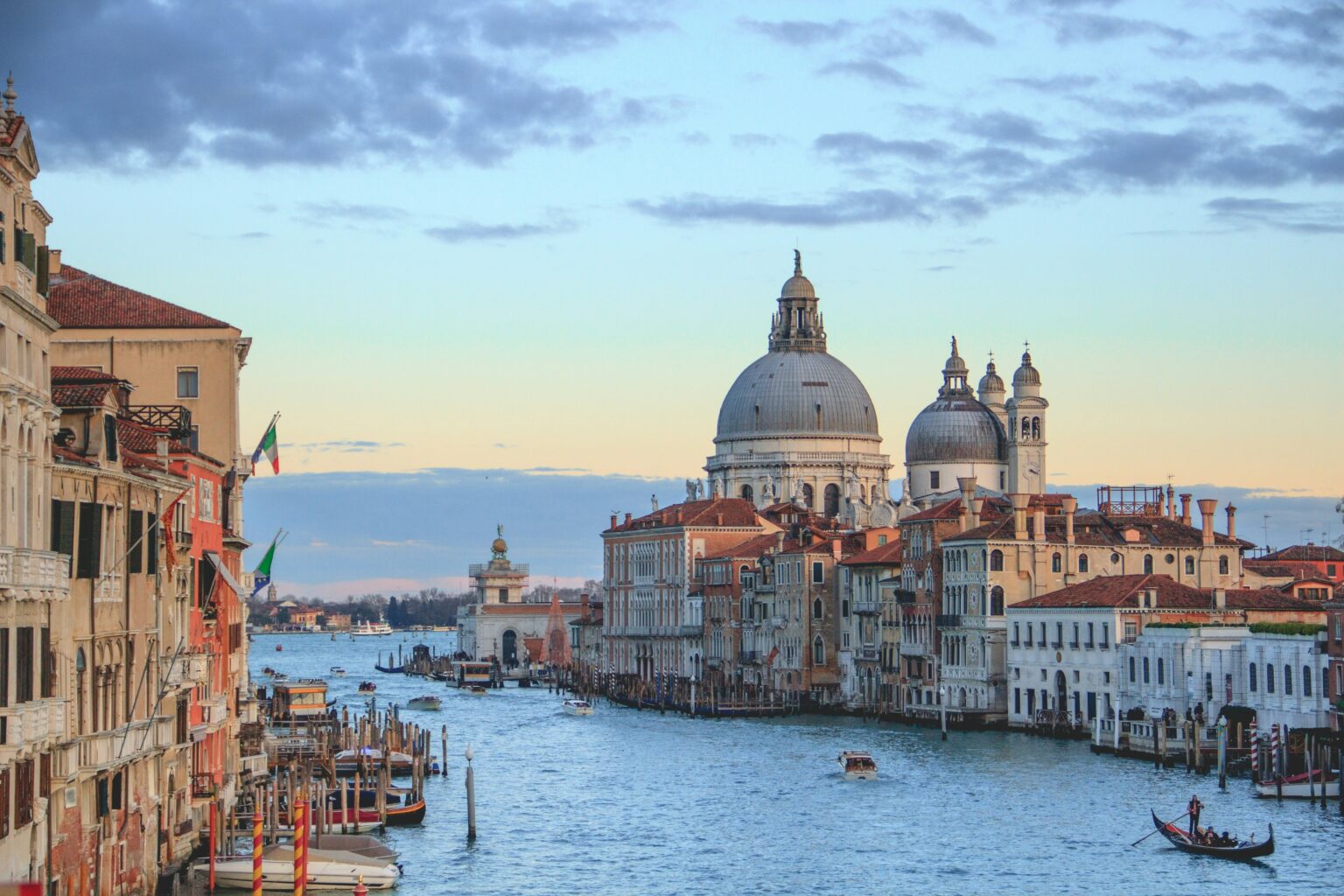

Venice stands apart as an environmental, architectural and historical wonder in Italy’s Adriatic Sea lagoon. A major Italian tourist and cultural centre.
Venice has long been home to artists and creative thinkers like painters and sculptors, composers like Antonio Vivaldi, writers such as Marco Polo and Giacomo Casanova as well as iconic landmarks.
The Doge’s Palace
The Doge’s Palace (Palazzo dei Doges) in Venice served as its seat of power. Built in Gothic style, this Gothic masterpiece expressed Venice’s power and wealth through the use of gilding and marble. The palace also showcased Venice’s maritime success through symbols representing trade and maritime success on its facade, while inside there were carved stone, stuccoes and engraved wood ceilings to showcase Venice’s riches. At its heart lay the Doge – head of state and supreme judge over all matters in Venice.
During the Renaissance period, this palace was further decorated by famous artists like Tintoretto and Veronese to symbolize its power and grandeur as part of Venetian Republic, which ultimately ended when Napoleon Bonaparte’s soldiers entered Venice in 1797.
Visits to Venice Palace provide an engaging journey into its rich history and the lives of its leaders. Of particular note is the Chamber of the Great Council; this large room was used as a gathering spot for patrician families with men over 25 years old to discuss politics, finance and trade matters as well as provide an archive for important documents such as decrees that established Venice or laws passed by its Doge.
The walls are adorned with paintings by Veronese, such as his large work Venecia Enthroned with Justice and Peace. On the ceiling is an array of frescos depicting various themes related to wisdom, faith, and justice in Venice; corner sculptural groups depicting Adam & Eve, Noah Drunkenness and Judgement by Solomon highlight Christian precepts.
Another intriguing piece in the palace is a doorway called the Papers Door, used for posting notices and housing the archives and scribes. At its summit is a relief depicting Doge Francesco Foscari kneeling before St Mark’s Lion (reproducing an earlier sculpture destroyed during revolutionary upheavals in 1797) which seems at odds with republican principles that prohibited any worshipping of any individual leader of its people.
The Bridge of Sighs
The Bridge of Sighs (Italian: Ponte dei Sospiri) in Venice is one of its most beloved landmarks despite its dark past. Although its exterior appearance may be picturesque, this enclosed limestone bridge with windows barred by stone bars once served a dark purpose when built by Doge Marino Grimani in 1600 and designed by his nephew Antonio Contino (architect of Rialto Bridge).
This bridge connects the interrogation rooms of Doge’s Palace to its prisons across Rio di Palazzo. This enclosed passageway earned its moniker due to prisoners and criminals passing from courtrooms below and into their cells at Doge’s Palace below. Furthermore, this point in Venice served as the final stop before condemned prisoners were transported for executions.
Today, the Bridge of Sighs is widely considered one of the finest examples of Renaissance bridge architecture. While you can visit at any time, we highly suggest planning your trip during autumn and winter when crowds tend to be lower.
Purchase tickets online prior to your trip as they’re often available at discounted rates and can save time waiting in lines. Tickets cover entrance to various areas of the Doge’s Palace as well as the Bridge of Sighs.
Due to its narrow, enclosed nature, this bridge is not advised for visitors with mobility issues or wheelchair users; additionally, bags and backpacks are not allowed inside. However, you can take a gondola ride beneath it to experience it from a unique vantage point.
Casanova may not approve, but according to tradition there is a belief that kissing someone under the Bridge at sunset while passing below on a gondola will cause you to fall forever in love. While we don’t know whether this tradition is true or not, visiting Venice during sunset time certainly offers plenty of romance! Not only that but this experience provides the best way of seeing this iconic landmark without being overwhelmed by thousands of tourists; to maximize enjoyment it would also be wiser visiting early in the morning to avoid crowds and heat.
The Bell Tower
The Bell Tower, one of Venice’s most beloved symbols, can be found outside St Mark’s Basilica and stands as one of its most recognizable structures. It boasts an unassuming appearance with five bells ringing out a belfry on top. Surrounded by bricks adorned with walking lions and allegorical figures representing Justice; further crowned by a pyramidal spire featuring Archangel Gabriel-themed weathervanes; it boasts simple yet classic design characteristics.
Historical accounts state that the bells in the tower were once used to regulate city activities by signalling beginning, pauses, and end of work; government assemblies; public executions; as well as at noon for lunch services. They would chime every hour.
However, bells were not immune to nature and often experienced storms or lightning strikes that damaged them severely. Furthermore, their structures had proven not particularly sturdy over the centuries due to various incidents or fires which damaged them further.
When El Paron de Casa collapsed in 1902, it caused significant damage to Loggetta and its surroundings. Notably, however, was that no harm came to Archangel statue and Venetians responded by rebuilding bell tower almost identically as before its destruction.
Today, the bell tower remains one of the city’s top tourist attractions. A symbol of Venice itself, this soaring structure draws visitors up its steps for breathtaking views over St. Mark’s Square below. To save time when purchasing tickets online for entry to St. Mark’s Square below it, it is wise to purchase them beforehand so as to avoid long lines upon your arrival.
Visitors who do not wish to climb all 323 steps of the bell tower can still experience breathtaking views from below, which are equally captivating. Entry costs approximately 8 euros; we advise booking online to obtain “skip the line” tickets and avoid lengthy lines.
The Jewish Ghetto
The Jewish Ghetto of Venice is both fascinating and often difficult to access, located within Cannaregio sestiere since being established on March 29, 1516 by Doge Leonardo Loredan’s decree – making it one of the oldest communities on Earth. At first, German and Italian Jews as well as Levantine families lived in a series of houses within a small space; but as time progressed, population levels exceeded what could comfortably fit within these boundaries. As a result, the Ghetto Vecchio (Old Foundry), was added as an adjacent area. Although segregated and subject to Venetian Republic law, over time the ghetto became a thriving hub of commerce and culture – as well as being the place where many early Hebrew books first made their debut appearances.
Ghetto dwellers were restricted to an area by gates which were locked at night, limiting them to only engaging in limited trades like money lending and pawn broking within it. Furthermore, they had to wear distinctive yellow badges that identified them as Jews while only those employed in banking or medicine could leave during the daytime hours.
Although some argue that Venice was an early precursor of Nazi concentration camps and death camps, other research points out its less anti-Semitic nature than cities such as London which forbade Jews to enter its territory. Furthermore, according to historian David Ravid’s assessment, its allowance of Jewish moneylenders working in its ghetto indicates its more open and pragmatic attitude at this time than most European cities at the time.
Explore Venice’s Ghetto is an unsettling experience, as hidden behind nondescript facades and doors are some of its most beautiful synagogues that reveal an ethnic mosaic once found living together in this neighborhood. While its exact origin remains uncertain, most scholars agree it likely comes from Hebrew words meaning house of worship; today these remarkable structures stand as precious gems within Venice itself.
Trip-ready gear from Amazon
As an Amazon Associate, grandgo.com earns from qualifying purchases. Links below are affiliate links — clicking them may earn us a small commission at no extra cost to you. Prices and availability are shown on Amazon.co.uk.
- Pacsafe anti-theft crossbody bag — Station pickpocket protection.
- Universal EU travel adapter — Every country different.
- Compact folding umbrella — Weather changes fast.