


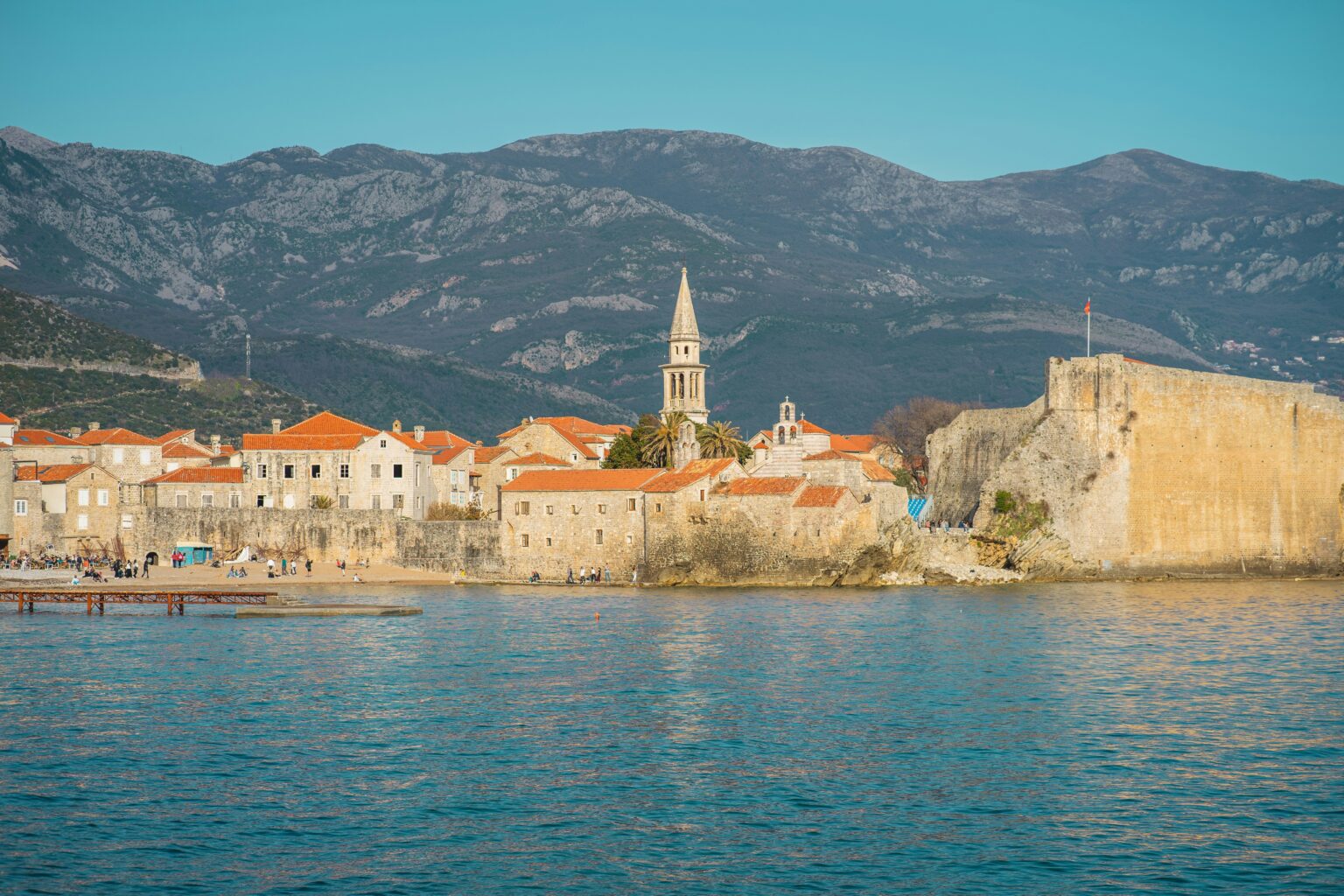

Montenegro boasts everything from rugged mountaintops to the warm blue waters of the Adriatic Sea, providing visitors with plenty of diverse experiences. Home to two UNESCO World Heritage Sites as well as various cultural and natural landmarks, it boasts something for everyone in Montenegro.
Montenegrin culture is rich and varied, from unusual beliefs to unique artwork. Additionally, its strong sense of family shows why the old saying ‘there is no place like home’ holds so true for this country.
History
Montenegro (which translates to “black mountain”) is a Balkan nation characterised by rugged mountains and medieval villages, the Bay of Kotor resembling a fjord, coastal churches, fortified towns, Durmitor National Park with limestone peaks and glacial lakes, plus Black River Canyon.
First written records of this region date back to ancient Illyrian settlements and later to Roman Republic membership before it became part of Dalmatia and Praevalitana following Illyro-Roman wars. Later still, in the Middle Ages this territory was under different empires or kingdoms before finally falling under Ottoman Turkish control during 16th century conquest.
Since the fall of the Ottoman Empire, its territory was subjected to various dynastic changes which eventually resulted in Montenegro becoming divided between Serbia and Yugoslavia. An EU-brokered deal in 2003 allowed for the formation of Serbia and Montenegro with an option of holding an independence referendum within three years; over 55% of voters approved and Montenegro became independent following its separation from Serbia in 2006.
Montenegro has a small population and its government is led by the Prime Minister who needs the approval of at least half of Parliament. Since independence, almost all governments have consisted of coalitions of at least three parties.
Montenegro has achieved much in the last 15 years on an international level, from good neighbourly relations and progressing toward membership of European Union, NATO and other regional organisations, to ongoing efforts at combatting corruption and organized crime that remain persistent challenges despite recent efforts made against them.
Geography
Montenegro is a small mountainous country boasting an extraordinary diversity of landscapes. From its rugged coastline gracing a warm sea to rugged forests and deep canyons that cut their way through mountains.
Dinaric Alps are a chain of high mountains spanning three countries in Europe, which feature some of the highest peaks such as Bobotov Kuk in Durmitor Mountains (formerly thought to be highest peak in Balkans) and Zla Kolata in Prokletije Mountains which both reach over 2,000 meters (6,200 ft).
Much of the country is karstic, comprising limestone caves that dissolve to create sinkholes and underground caves. This landscape provides home for various wildlife including wild boars, roe deer and bears.
Podgorica serves as both an industrial hub and major transport hub, while Herceg Novi and Tivat have developed into significant tourist, retail, and business centers. Kotor Bay with its Old Fortress Town are designated UNESCO World Heritage sites; Perast, perched upon a hill overlooking it all is also an outstanding travel destination.
Montenegro is known for its religious diversity, boasting both Orthodox and Islamic populations. Centuries of Ottoman influence can be found both in mosques and its cuisine; popular dishes in Montenegro’s interior regions include kacamak (a polenta-like dish) and japraci (dolma-like rolls made with minced meat seasoned with spices), while its Mediterranean location means seafood, olive oil, cheeses, fine wines such as Vranac and Krstac wines also produce fine wines like Vranac and Krstac; foreign visitors should feel secure traveling there with its safe travel environment ensuring traveler peace-of-mind when visiting.
Culture
Montenegro may only be home to less than one million residents, yet its citizens take great pride in their culture. From unique beliefs and quirky art pieces to distinctive behaviour and national pride – Montenegro boasts plenty of charming characteristics that will capture visitors’ interest.
Oral folk epic poetry is an integral component of Montenegrin and other Balkan cultures, and is traditionally presented to audiences accompanied by the gusle, an one-stringed bow played vertically over the knees by its musicians (called guslars ). These musicians sing ballads that recount battles or legends of heroes using decasyllabic verse and are meant to stir motivational and patriotic feelings among their audiences, giving them great influence over listeners.
Montenegrins are generally deeply religious people, so their country boasts an array of monasteries and other religious monuments for visitors to explore. Some popular tourist spots are Moraca, Piva, Sveta Trojica Durdevi stupovi Savina Ostrog and Ostrog. Others may be more off the beaten path such as Our Lady of Ostrog – possibly considered the oldest church worldwide!
Sport is an integral component of Montenegrin culture, and team sports such as football, water polo, basketball, handball and volleyball are particularly prominent. A few athletes also take part in individual sports like tennis cycling swimming judo karate.
Hierarchical structures are an integral part of Montenegrin culture, where respect for authority figures is highly revered. This may lead to more directive leadership styles where leaders provide clear instructions that must be obeyed without question, yet can lead to decreased collaboration among workers and an over-reliance on senior managers for problem resolution.
Cuisine
Montenegro boasts an unparalleled geographical position that affords it a diverse cuisine with both Mediterranean influences and traditional Balkan fare. Along the coast you’ll find light seafood dishes and salads, while inland regions feature heartier fare such as kacamak (a milk-based porridge often combined with potato), njeguski prsut (a type of prosciutto), and various forms of cheeses.
Montenegrin tables typically feature an assortment of meat – both smoked and roasted, homemade breads and pies, fresh vegetables and salads, dairy products such as sour cream and cheese, as well as locally produced fruits. You may even discover something truly local like Krvavac – an orange wine with its distinctive tart sour flavor!
On the seaside of Montenegro you will find delectable seafood dishes such as octopus or squid, as well as the signature black hue of cuttlefish ink-infused mussel stew ‘buzara.’ Inland Montenegro boasts brav u mlijeku: slow cooked lamb in milk that softens its meat to create an unforgettable stew experience.
On the dessert menu, try priganice – small, fried dough balls similar to donuts served with honey or powdered sugar. Palacinke are popular thin crepes stuffed with anything from jam to cheese to fruit; montenegrin cheesecake is another creamy delight crafted with sour cream, cheese, and vanilla; for an unforgettable finale try vio vranac; it boasts rich aroma and dark ruby color and is revered internationally, grown in Ljesske polje hills with government regulation to ensure quality standards are met in production of its production process.
Weather
Montenegro offers many appealing attractions during late spring and early fall; temperatures are pleasant while still permitting outdoor activities like hiking, nature photography and cultural festivals to be experienced comfortably. Beaches don’t yet become overrun with summer tourists either! You can still take advantage of all that Montenegro has to offer such as national parks and cultural festivals!
Montenegro offers some excellent skiing opportunities during January when the mountains are blanketed in snow. Kotor’s Old Town also comes alive during this month with festive decorations and Christmas markets that make the experience truly magical.
Montenegro’s climate is greatly shaped by both its proximity to the Adriatic Sea and mountainous interior, with coastal regions experiencing Mediterranean conditions while inland regions enjoy temperate continental ones.
During summer vacation season, coastal towns become bustling tourist hubs as visitors enjoy beach holidays with mild water temperatures that make swimming possible. Mountain trails can also be ideal destinations as hiking conditions become more comfortable, often leading to abundant sunshine.
From September on, temperatures begin to ease off while still providing stunning autumn views. Beaches become quieter and prices cheaper compared to peak season.
This graph depicts the average monthly sunshine (solid line) and rain/cloudy day counts in Montenegro; darker shading indicates more cloudiness/rainfall.
This data for this chart was obtained from a weather station located in Zabljak, Montenegro. Each month has a different solar day length; December 21 has the shortest and June 20 has the longest. This chart displays the average number of hours from sunrise to sunset for every month in Montenegro.
Trip-ready gear from Amazon
As an Amazon Associate, grandgo.com earns from qualifying purchases. Links below are affiliate links — clicking them may earn us a small commission at no extra cost to you. Prices and availability are shown on Amazon.co.uk.
- Compact daypack travel — For city sightseeing.
- Reef-safe sunscreen SPF 50 — Beach + outdoor.
- Lonely Planet destination travel guide — Trip planning essential.