


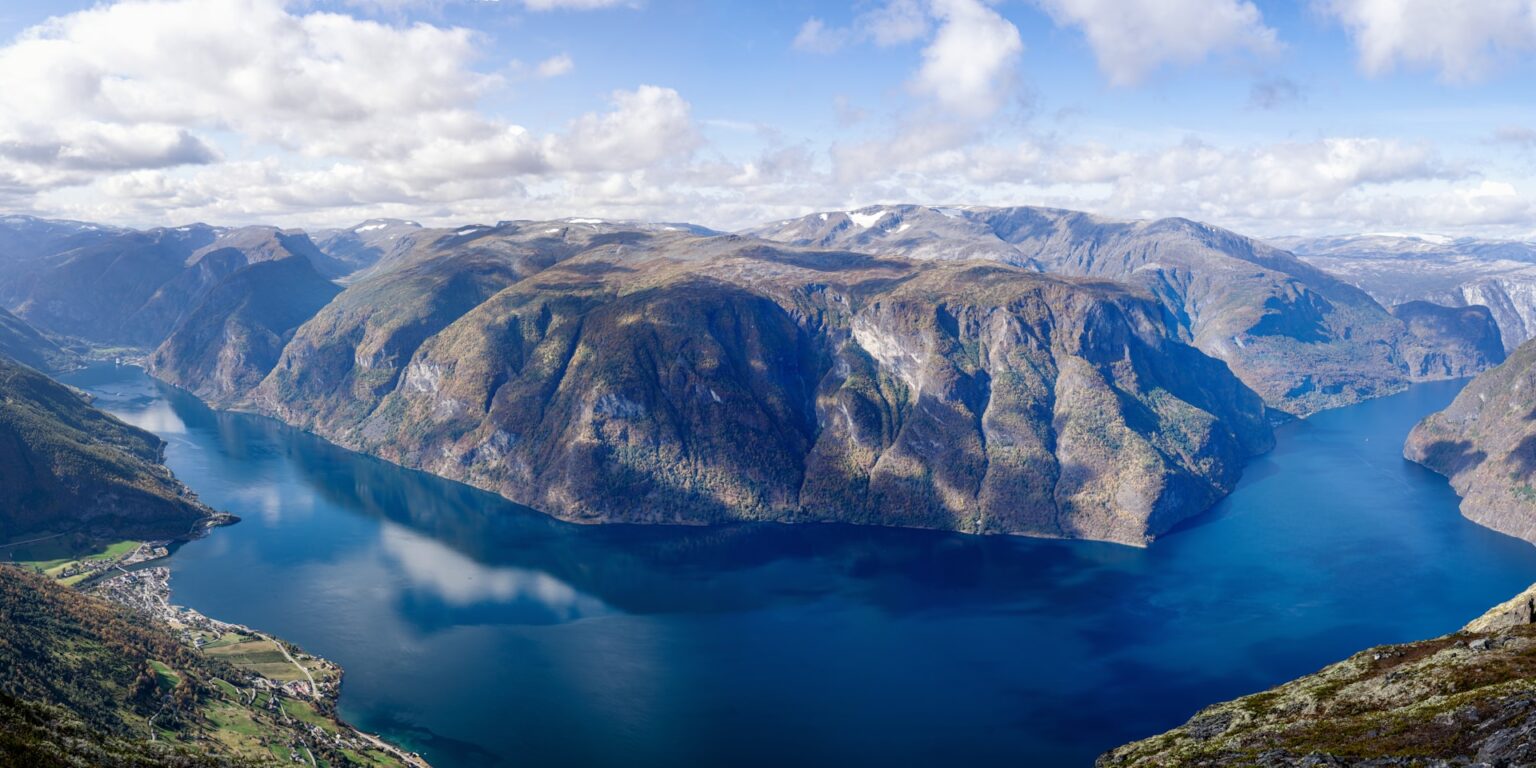

Fjords are long, narrow ocean inlets characterized by steep sides. Fjords form when glaciers move over continents and then melt away, leaving behind an immense, deep channel with rugged coastlines.
Fjords are one of Norway’s signature landscapes and one of its biggest draws for visitors, so to understand their significance we need to examine more closely their characteristics. To do this, let’s examine how fjords form.
Hydrology
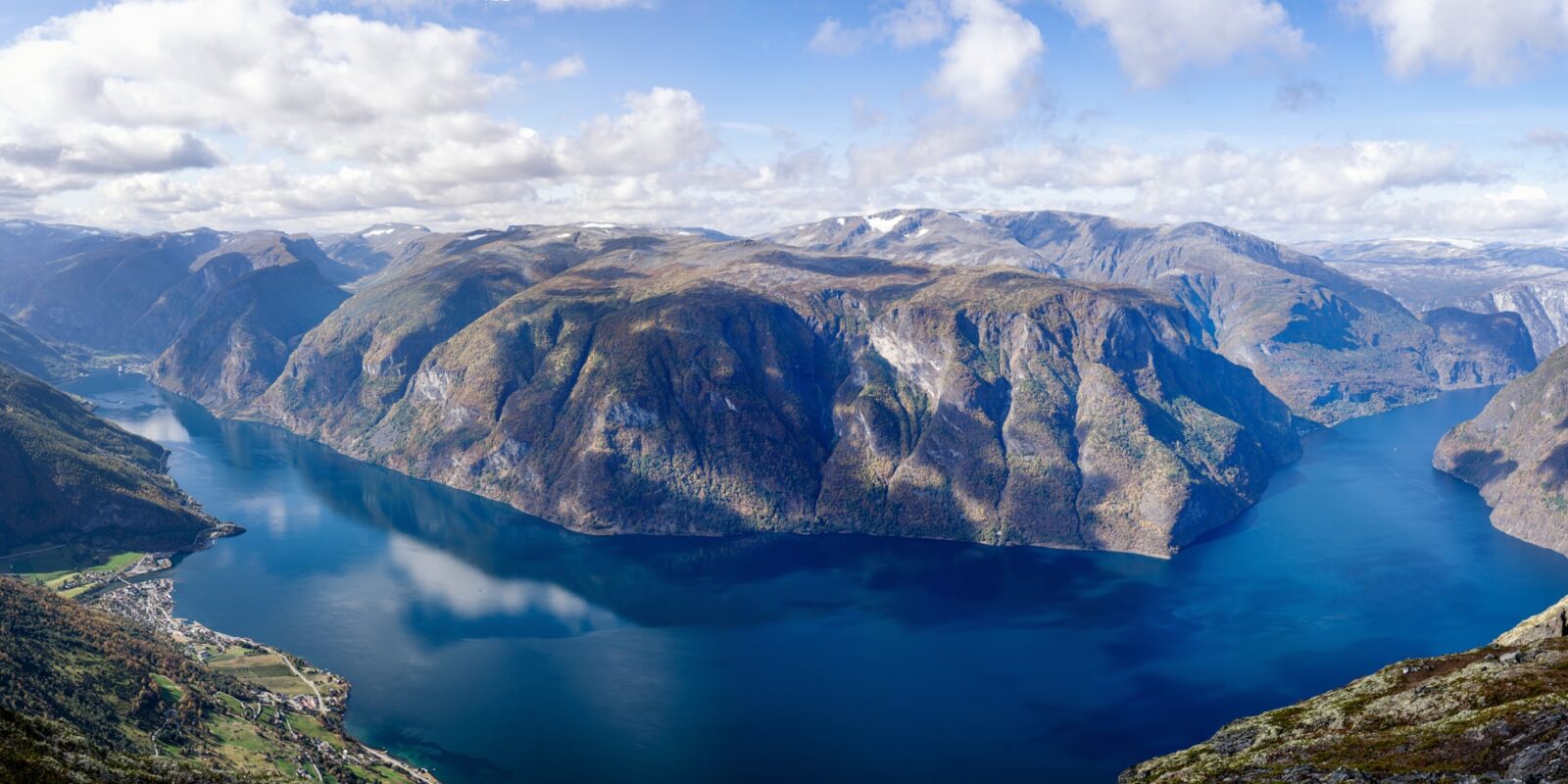
At the peak of glaciation (Pleistocene) of the Quaternary period, glaciers carved deep valleys through mountain range bedrock to form U-shaped valleys that eventually filled with seawater to become fjords surrounded by steep rock walls on three sides and offering access to seawater on four. Some fjords are extremely deep such as Norway’s Sognefjord which stands at 4,290 feet deep.
Fjord water consists of both salt and fresh waters; ocean tides provide dense salt water that fills its basin while rivers supply lighter freshwater from rainfall draining from their watersheds or, during summertime, melting snow and ice, giving the river water its milky hue. Glacial meltwater also often brings with it finely ground rock known as “rock flour,” giving fjord water its milky appearance.
As the waters move through a fjord, they mix with salt water before being carried back up by waves to the surface. This mixing is essential for circulation within a fjord as it allows saline ocean water to mix with fresher river water for exchange purposes. Furthermore, sedimentation process moves older layers to the bottom while newer waters rise to the top, further contributing to circulation within its confines.
As a result of their unique physical structure, fjords experience different circulation than open seas. Fjord ecosystems can become compromised due to this trend as its effects impede on their ability to circulate waste and transport freshwater from hydroelectricity plants, while simultaneously transporting pollution such as oil or toxic substances. Lack of circulation in fjords can leave pollutants trapped at great depths for years, which poses serious threats to their health and vitality. As it is essential to the future health and viability of fjords, it is imperative that we understand their constituent factors so as to preserve them into the future. As a result, many efforts are currently being put forth towards expanding knowledge on fjord dynamics such as ocean circulation processes and sedimentation processes.
Waterfalls
From above, it’s easy to appreciate how fjords’ steep sides create an undulating landscape reminiscent of rugged and wild terrain. Waterfalls seem to spring forth at every corner as if bleeding titans battle with earth, wind and sky for supremacy.
This valley was formed over time through a long series of events shaped by glacial activity and post-glacial rebound. When glaciers recede, they leave behind sediment-laden trails which create narrow valleys with steep cliffs on three sides – thus producing narrow, deep valleys.
As glaciers retreat and melt, they leave behind a terminal moraine at the end of each valley. This large pile of soil, rocks, and other debris piles up before them as they move downstream – often several meters thick – which blocks waterflow and forms a deep pond at its endpoint.
These terminal moraines were then eroded away by waterflow, creating deep fjords whose depth often surpasses that of their feeding seas – due to glaciers being so massive they cut deep into the land before melting, leaving its bottom below current sea levels.
Fjords can also be formed through erosion and the inflow of freshwater from glacial melt and river runoff, often creating a delta where sea meets fjord, with land that slopes into it.
Geirangerfjord in Norway, which is listed as a World Heritage site by UNESCO, features spectacular waterfalls that draw visitors. One such waterfall known as Seven Sisters draws them in with its playful appearance on mountainside; visitors marvel at this sight.
Latefossen waterfall, located along Geirangerfjorden, is another magnificent attraction in this area. As one of the highest waterfalls in both Norway and Europe, Latefossen plumbs 705 meters (2,313 feet). A great place to spot wildlife like reindeer, moose and mountain goats! While Geirangerfjorden fjord is blessed with natural wonders that deserve protection, we should strive to leave behind less footprint than we came – leaving behind better conditions for future generations to enjoy its magic.
The U-Shaped Valley
Glacial valleys can be identified by a U-shaped cross section with steep walls and an even, level or rounded bottom (in contrast, river valleys tend to have V-shaped structures). Their unique form results from glacial erosion carving away at rock, filling the valley with debris such as glacial till or erratic deposits to form this U-shaped depression in its wake [1].
Fjords are formed by glaciers and feature steep walls up to hundreds of feet high with deep lakes between a few feet to thousands of feet below sea level. Fjords may occur along coasts or further inland as freshwater fjords, serving as reminders of an age in which much of Earth was covered by an ice sheet.
Fjords differ from canyons and gorges in that they were formed more quickly by glacial movement; rather than taking millions of years, their creation took mere millennia. When glaciers advance they carve through rocks while carrying away boulders and debris that accumulate along its path; creating valleys longer and deeper than any mountains around it.
At the conclusion of each ice age, glaciers melted back down to their source, releasing vast amounts of water bound up in landmasses that eventually found its way back into the ocean – raising sea levels significantly while filling any U-shaped valleys carved by glaciers with seawater.
Fjords are formed when rivers meet seawater through an inlet with a narrow neck of terminal moraine and drain into it. A fjord tends to be larger and deeper inland than outward, though due to its narrow neck it’s easy to miss when approaching its coast.
Fjords are one of the world’s most magnificent landscape features and one of the most breathtaking spots on Earth. However, their dynamic qualities constantly evolve with seasons and tectonic activity, as well as being affected by human activities like mining, aquaculture, agricultural run-off pollution, ship noise noise pollution deforestation climate change.
Fjords are widely revered and protected by national parks around the world for their unique and captivating beauty, serving as a reminder of how powerful forces shape our environment and how much impactful action can have an effectful impact.
The Delta
Fjords were formed over several ice ages by glaciers moving slowly across bedrock, chipping away deposits which then filled in by melting water, eventually leading to deeper than average depth fjords which create dangerous currents for ships navigating them.
Additionally, glaciers deposited a great deal of sediment into the fjords which ultimately formed into what is known as a delta. Fjord-head deltas tend to be smaller and coarser-grained than standard river deltas yet still follow similar patterns – with steep gradients offshore increasing before gradually decreasing over time in an exponential fashion.
Fjord-head deltas often host numerous small islands known as skerries that are comprised of sand, silt, and rock. These can often be found near the mouth of fjords and can make passage for ships dangerous.
Fjords often feature terminal moraines, or large piles of soil, rocks and debris left by retreating glaciers as they receded toward the ocean. Think of shoveling snow; once you get a good scoop you push it towards the ocean just like glaciers do when retreating!
Due to their distinctive characteristics, fjords can be found across the world. They’re especially prevalent in mountainous regions that see heavy rainfall such as Western Norway and Spain (Galicia), Greenland, Alaska Canada New Zealand Chile etc.
Norway boasts some of the most breathtaking and captivating fjords in Europe, boasting over 1,000 of them that stretch deep and long across its landscape. Norway also uses this term to refer to any narrow inlet of sea that has steep mountains on three sides enclosing it; any fourth side that opens directly into the sea is known as its mouth – in Norwegian, Danish and Swedish the term is known by this same name.