


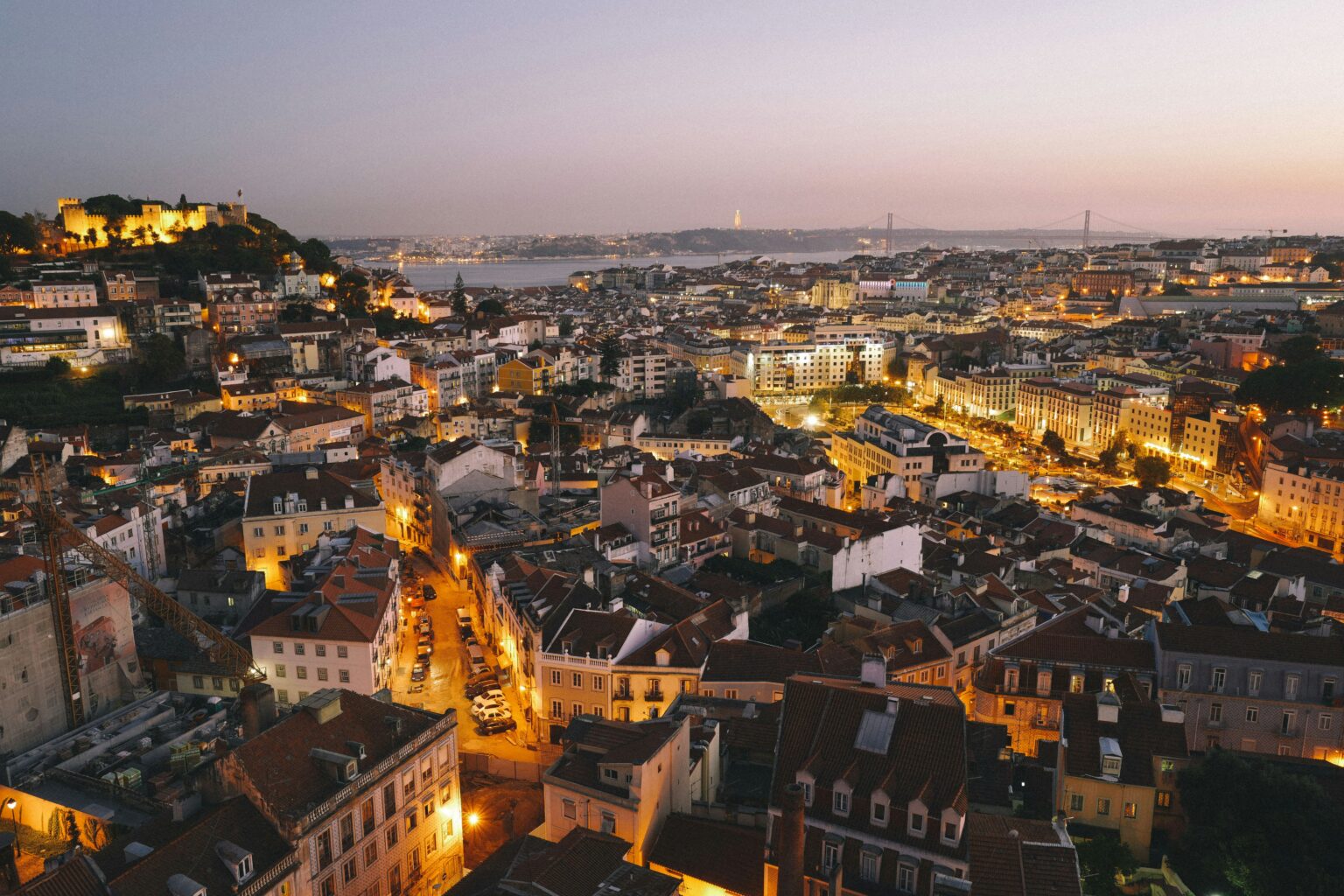

Are you seeking culture? Visit the Gulbenkian Museum! You’ll find everything from Rembrandt paintings to ancient Greco-Roman art here.
Rossio Square with its mesmerizing wavy tiles is another worthy sight. To save yourself some extra costs, we advise skipping the Santa Justa Lift (Elevador de Santa Justa).
Praça do Comercio
Commerce Square in Lisbon is the grandest of its squares, featuring buildings characterized by yellow Pombaline buildings arranged around an expansive plaza. Conceived as an entranceway into the city from these lands, its centerpiece is a majestic equestrian statue of King Joseph I which draws visitors. Over its long history it has also hosted parades, shows, merriments, and notable events; for example in 1908 when both King Carlos I and Luis Filipe were assassinated amid unrest that overthrew their monarchy.
Today the square serves as a busy transport hub with both the E15 tram to Belem and Hop On Hop Off Yellow Bus Tour both stopping here. Additionally, it serves as an ideal spot for people-watching due to being home of Lisboa Story Centre which provides an audio/visual introduction of Lisbon’s major historical events in 60 minutes.
A stroll through the plaza reveals its former life as a seaport; its western edge still bears the pier where ships used to dock. Today, however, its promenade features shops and restaurants of varying upscaleness while remaining reasonably priced enough for anyone visiting for lunch or coffee.
Rua Augusta, the main avenue running through the center of Lisbon, connects directly with Baixa/Rosseio district via pedestrianized Rua Augusta Avenue and vigorously trafficked streets lining either side. This area houses some of the city’s most significant government buildings known as Baixa/Rosseio District.
Cais das Colunas, an elegant marble pier where dignitaries used to arrive by ship before walking directly to their palace, can be found across from Plaza. It was named for two tall columns situated in its frontage.
The Praca do Comercio is an ideal starting point to discover Lisbon’s storied past, while also serving as an excellent hub from which to explore other historic gems of this vibrant city. A great option is Avenida Ribeira das Naus, which runs east from Praca do Comercio along a stunning riverfront walk leading directly into Cais do Sodre.
Bairro Alto
The high district is Lisbon’s bohemian heart and, by nightfall, it becomes an outdoor buffet of buzzing bars and traditional fado houses spilling out onto narrow cobbled streets. Here you will find both locals and tourists mingling, gay couples dancing alongside straight ones and young people taking up space on narrow cobblestoned streets. It offers something special to everyone.
At night, Bairro Alto becomes an unforgettable experience. By day, this central neighbourhood can be best explored on foot or via free tram 28 which makes regular loops. Here, there are plenty of charming cafes and curious shops, along with several delicious eateries offering gluten-free options.
Take a break from the bustle of Lisbon at Miradouro de Santa Catarina to admire Lisbon’s rooftops and Tagus river views at sunset with a bottle of wine or beer in hand! Or explore more by using hop-on hop-off tickets or the Lisboa Card which offer savings when traveling around.
The high district is home to some of Lisbon’s best bars and restaurants, featuring intimate spaces suitable for meeting up with friends or romantic dates. It also features boutique hotels such as Raw Culture Bairro Alto; converted printworks boasting 12 loft-style apartments designed by individual artists with collections that rival any retro store – perfect for design enthusiasts who wish to stay connected to Lisbon’s hip scene!
Alfama
Alfama, Lisbon’s oldest district, holds the key to understanding its rich history. Its medieval streets, steep staircases and labyrinthine alleyways seem unchanged over the decades – exuding rustic charm that charms visitors from far and wide. A walk through its rabbit warren of narrow alleyways packed with caged canaries and fragrant balconies is the best way to appreciate Alfama’s charm and get an understanding of its atmosphere.
As you ascend, you’ll be astounded at how many artisan shops and charming plazas there are tucked into every corner, inviting you in for a closer look at their treasures. Relax during a break by visiting one of the cafes or independent restaurants; and if you still have energy left over from walking uphill, miradouros offer stunning panoramic vistas over both city life and Tagus River.
Alfama began as Lisbon’s working class residential district for sailors and dock workers; over time however it has grown into a cultural hub. A stroll through Alfama’s narrow streets provides the ideal way to appreciate this neighborhood’s history and culture; you’ll see this evident through the architecture, wrought iron balconies, chipped paintwork, etc.
Alfama is generally considered safe district, featuring strong police presence and some of the oldest churches and monasteries of the city nearby. Still, it’s best to remain wary against pickpocketing, particularly during busy events or crowd-filled spaces.
An important highlight of visiting Alfama is attending the Festas de Santo Antonio celebrations held annually from June 12-13. These extraordinary festivities transform some of Lisbon’s oldest neighborhoods – Alfama, Bairro Alto, Bica and Mouraria – into street parties featuring outdoor grilling (particularly of sardines!), beer drinking and singing to traditional Portuguese tunes – it offers one of the most authentic and enjoyable experiences available anywhere!