



Quick Answer
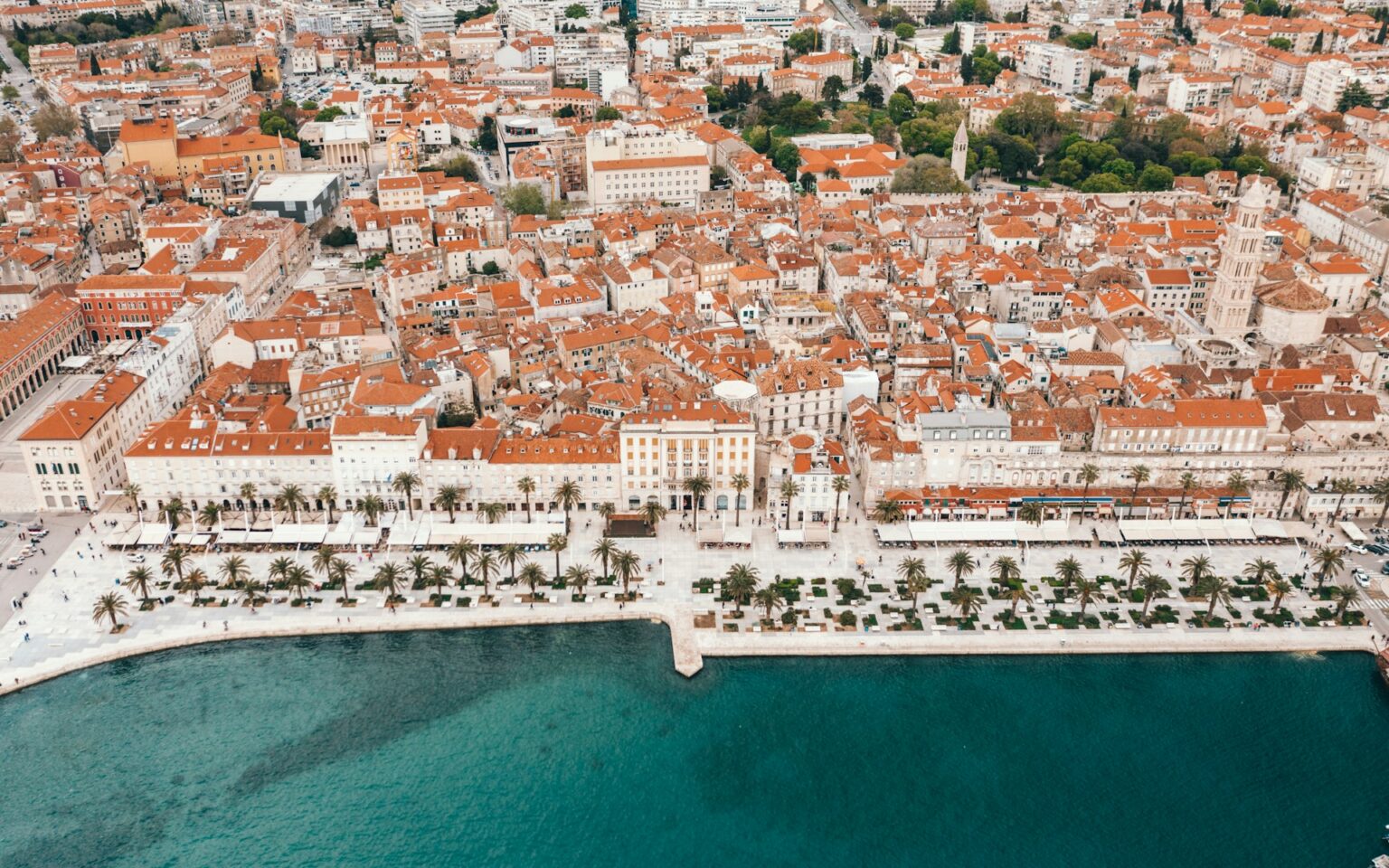
Split is Croatia’s second-largest city — Roman Emperor Diocletian’s retirement palace from 305 CE forms living UNESCO old town. Population 180,000. Mediterranean climate. Top sights: Diocletian’s Palace (UNESCO, 4-hectare living city), Cathedral of St. Domnius (oldest Catholic cathedral in world, 305 CE), Peristyle (palace square), Marjan Hill (panoramic viewpoint), Bačvice Beach (city beach). Riva promenade: palm-lined harbor walk. Day trips: Trogir (UNESCO, 30 min), Hvar (ferry 1h), Plitvice Lakes (3h drive), Dubrovnik (2.5h), Krka National Park (1h). Best time: April-June, September-October. Days: 2-3 minimum, ideal 4-5 with island hopping. Currency: Croatian kuna (HRK) becoming euro 2023. Budget: €60-120/day. Cheaper than Western Europe.
Diocletian’s Palace
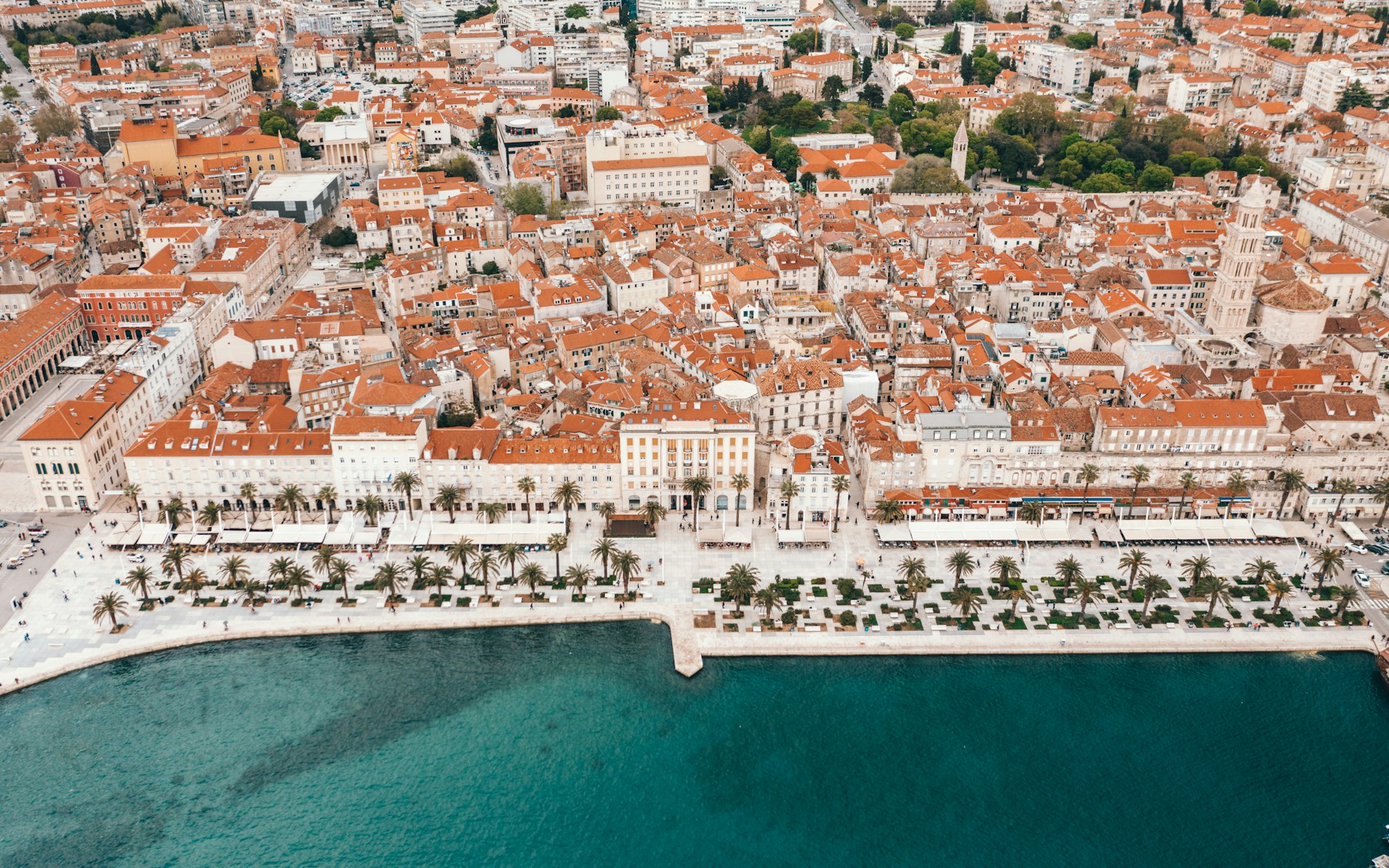
- UNESCO World Heritage 1979: built 295-305 CE by Roman Emperor Diocletian as retirement residence. Now living museum-city.
- Size: 4 hectares. 220 buildings within walls. 3,000 people still live inside today.
- Original purpose: retirement palace + military fortress. Diocletian retired here 305 CE.
- Layout: rectangular Roman castrum design. Decumanus (east-west axis), Cardo (north-south axis), 4 gates: Golden, Silver, Iron, Bronze.
- Cathedral of St. Domnius: originally Diocletian’s mausoleum. Converted to church 7th century. Oldest Catholic cathedral in world. €5.
- Peristyle: grand colonnaded square. Heart of palace life. Free.
- Cellars: well-preserved underground rooms. Filming location for Game of Thrones (Daenerys’ throne room). €5.
Walking tour itinerary
- Start at Riva (waterfront): palm-lined promenade. South gate of palace.
- Bronze Gate (Porta Aenea): south entrance. Direct to Cellars.
- Cellars: €5, 30 min. Game of Thrones backdrop, Roman engineering.
- Peristyle: palace square. Egyptian sphinx (3,000+ years old, brought from Egypt).
- Cathedral of St. Domnius: climb bell tower (€2) for panoramic views.
- Iron Gate (East): exit to Old Town beyond palace.
- People’s Square (Pjaca): medieval town square outside palace. Iron clock tower.
- Fruit Square (Voćni Trg): medieval square, Marko Marulić statue.
- Walk Marjan Hill: 1-hour climb. 178m. Panoramic views.
- Return via Riva: sunset cocktail at promenade café.
Beyond the palace
- Bačvice Beach: city beach, shallow water. Birthplace of “picigin” — Croatia’s traditional ball game in shallow water.
- Marjan Hill: 178m, “lungs of Split”. Pine forest, Mediterranean herbs. 1-hour walk + stairs to top.
- Bene Beach: on Marjan side. Locals’ favorite. Less crowded.
- Kasjuni Beach: further west. Beach bars.
- Mestrović Gallery: sculptures by Croatian artist Ivan Mestrović. €15.
- Archaeological Museum: Roman + Greek artifacts. €5.
- Croatian Maritime Museum: Adriatic seafaring. €5.
- Old Town beyond palace: medieval streets, churches, shops.
Dalmatian cuisine
- Pasticada: traditional beef stew. Slow-cooked with spices.
- Crni rižot: black risotto with cuttlefish ink. Iconic Dalmatian.
- Brodet: Dalmatian fish stew. Multiple fish varieties.
- Peka: meat or octopus slow-cooked under iron bell with hot coals. Order in advance.
- Ćevapi: grilled minced meat sausages. Balkan classic.
- Burek: phyllo pastry filled with meat or cheese. Breakfast staple.
- Wine: Plavac Mali (red, indigenous), Pošip (white). Try at konobas (taverns).
- Fish from Adriatic: orada (sea bream), brancin (sea bass), grilled simply.
Day trips from Split
- Trogir (UNESCO): 30 min, medieval town on island. Cathedral of St. Lawrence.
- Hvar Island: ferry 1h. Lavender-scented island. Hvar Town fortress, beaches, party scene.
- Brač Island: Bol’s Zlatni Rat (Golden Horn) beach changes shape with tides.
- Plitvice Lakes National Park (UNESCO): 3h drive. 16 cascading lakes. €25 entry. Most photographed spot in Croatia.
- Krka National Park: 1h drive. Skradinski Buk waterfalls. €30 summer.
- Dubrovnik: 2h30 by car. Game of Thrones King’s Landing. Walls €30.
- Bosnia & Herzegovina (Mostar): 2h drive. Stari Most bridge, Ottoman heritage.
Practical info
- Currency: Croatian became euro 2023. Previously kuna (HRK).
- Getting there: Split Airport (SPU), 25 km from city. Bus #37 €4.40, taxi €30.
- From Zagreb: Bus 5h, train 6h, flight 50 min.
- From Dubrovnik: Bus 4h, ferry 6h.
- Walking city: Split’s old town is compact. Mostly walking.
- Best season: April-October. Avoid August (peak crowds). May-June and September best balance.
- Where to stay: within Diocletian’s Palace (most atmospheric, can be noisy), Bačvice (beach), Marjan (peaceful).
Frequently Asked Questions
Is Split worth visiting?
Absolutely. Diocletian’s Palace UNESCO is unique in the world — a living Roman palace where 3,000 people still live inside the 4-hectare 1,700-year-old walls. Plus great Adriatic beaches, food, day trips.
How long do I need in Split?
Minimum 2 days for Diocletian’s Palace + Marjan + beaches. Ideal 4-5 days for day trips to Trogir, Hvar, Krka, Plitvice.
Where should I stay in Split?
Within Diocletian’s Palace (most atmospheric). Bačvice (beach access). Marjan (peaceful). Best avoided: industrial zones outside center.
Was Split Game of Thrones location?
Yes. Diocletian’s Cellars used as Daenerys’ Throne Room and dragon-keeping cellar. Several Croatia spots used: Dubrovnik (King’s Landing), Hrvatska (Riverlands), Sibenik.
How do I get to Hvar from Split?
Ferry 1 hour, several daily. €15-25 each way. Catamaran fastest. Day trip possible. Stay overnight for nightlife.
When is best time to visit Split?
April-June and September-October — warm, fewer crowds, lower prices. Avoid August (peak heat 35°C, crowded). May-June ideal balance.
Recommended on Amazon
As an Amazon Associate, grandgo.com earns from qualifying purchases. Links below are affiliate links — clicking them may earn us a small commission at no extra cost to you. Prices and availability are shown on Amazon.co.uk.
- Lonely Planet Croatia — comprehensive guide.
- Diocletian Palace guidebook — historical context.
- Croatian phrasebook — travel essentials.