


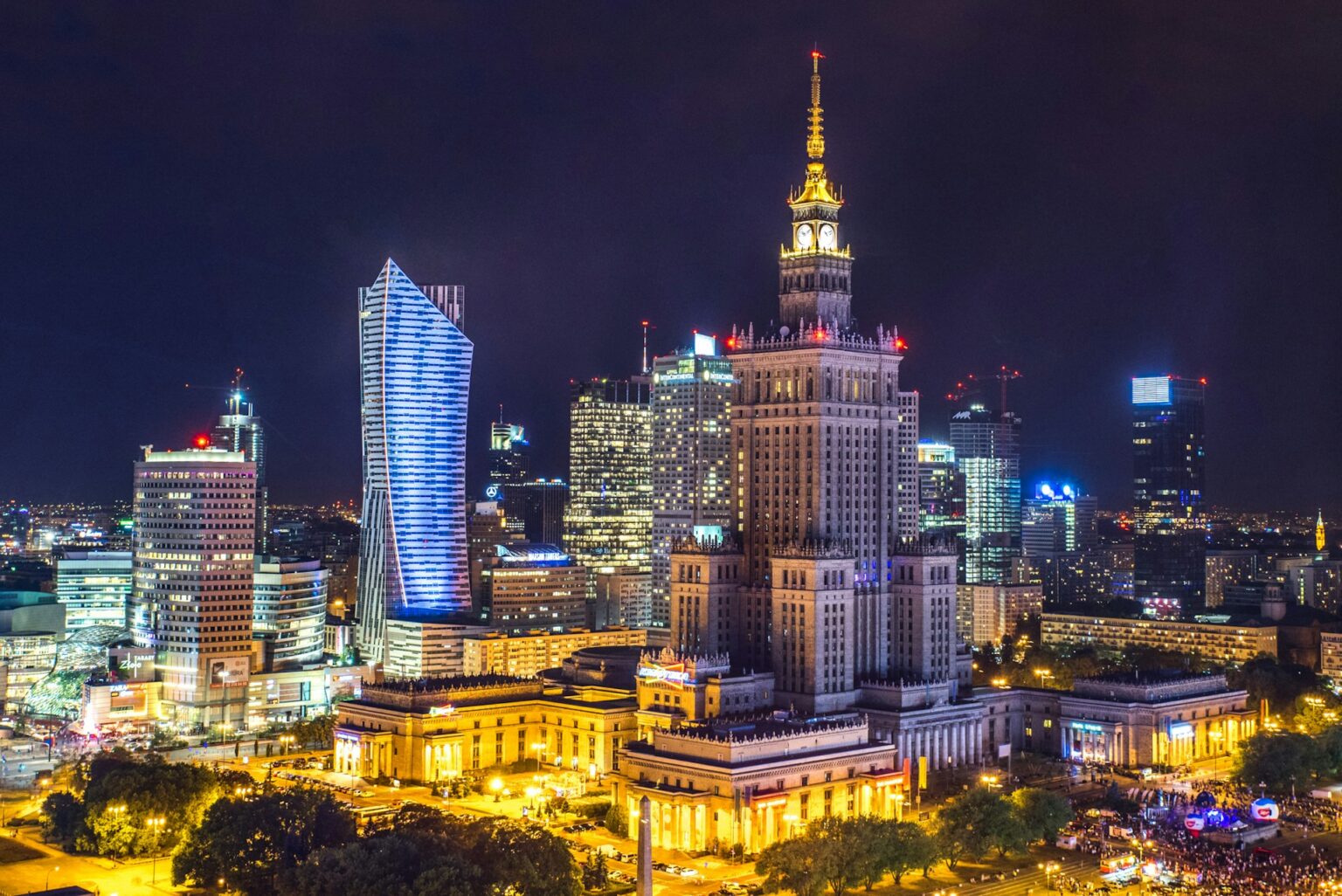

Architects and city planners have studied Warsaw’s reconstruction as a blueprint for postwar Ukraine. Lord Foster’s Metropolitan Office Building at Pilsudski Square stands out among these efforts, while Rondo ONZ by Skidmore Owings and Merrill and Daniel Libeskind’s Golden Terraces standout even more.
Here you can enjoy breathtaking views of the city – entry isn’t free but well worth it!

The Old Town
On any visit to Warsaw, one of the first things visitors must do is explore its Old Town. This beautiful area encompasses some of Warsaw’s main squares and is enclosed by its city walls.
This area is designated a national heritage site under Polish legislation and receives legal protection and conservation efforts through management by local government of Warsaw which takes into account values and wishes expressed by all stakeholders connected with its historic core.
From 14th to 17th centuries, Old Town experienced rapid development. Wealthy individuals settled there and an intricate network of streets, markets and a main market square began to take form. Unfortunately, various events brought an abrupt halt to its prosperity; Swedish invasion in 1655, war of Polish Succession 1733-38 and Third Coalition led to significant decline for this vibrant city.
After World War II, the Old Town was painstakingly restored based on historical and conservation research. Reconstruction efforts between 1945-1951 involved studying spatial layouts from 12th-century urban planning systems as well as paintings by notable artists like Bernardo Bellotto (commonly referred to as Canaletto).
As you explore the old streets, you will see many charming houses with charming details like wooden balconies, wrought iron fences, and colourful tiled facades. At Old Town Square is an idyllic centrepiece where cafes and restaurants serve traditional Polish fare such as pierogis and placki ziemniaczane (stuffed dumplings) as well as zurek (a sour rye soup).
Warsaw’s Old Town is also home to Sigismund’s Column, which commemorates one of Poland’s most prominent monarchs and serves as one of the city’s earliest secular monuments. Also, check out Old Town Market Square which boasts beautiful 19th century water pumps as well as colorful burgher houses where wealthy residents used to reside.
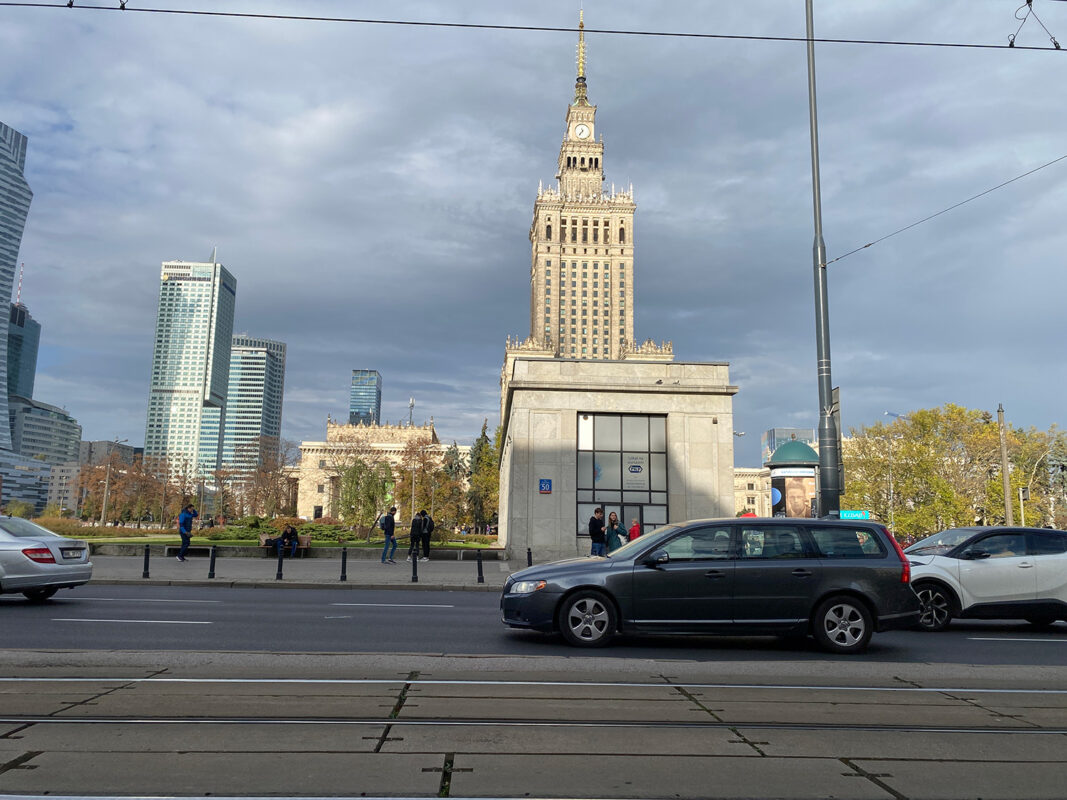
The Palace of Culture and Science
Warsaw visitors will likely recognize its grandiose Palace of Culture and Science (Palacia Kultury i Nauki), an impressive display of Socialist Realism architecture which stands in stark contrast with Warsaw’s pre-war 19th century tenement houses. Intended as Stalin’s gift to Poland, the multifunctional structure includes a 3,000-seat Congress Hall, four theatres, two universities, several museums, as well as an acclaimed music conservatory – not to mention restaurants, bars and clubs!
Attractions to this Palace include its iconic 30th floor view terrace, which offers stunning panoramic views of Warsaw from above. Though open to the public, viewing is best done during a guided tour.
Touring the Palace is an enlightening and fascinating way to learn more about one of Poland’s most remarkable structures. Guides will tell you all about its construction process, while pointing out some of its distinctive features like ballrooms with exquisite woodwork, conference rooms furnished with original furniture from 1950s, and majestic marble staircases.
While it may appear as Stalinist folly to construct such an extravagant building while cities were still recovering from war, it must also be remembered that it was part of a larger effort to transform Poland not just physically but emotionally and ideologically as well. The Palace of Culture and Science represented modern, democratic Poland.
While its cultural prestige has faded over time, the Palace remains an emblem of Polish pride and source of inspiration for younger architects and artists. Over recent years, numerous renovations have taken place to preserve its grandeur while adapting it to contemporary needs.
While The Palace does not house permanent residents, it remains an active hub of activity for both residents and visitors. Home to several animals including cats that help control mice populations as well as pigeons and kestrels; even an apiary managed by Mr Wiktor Jedrzejewski of Warsaw City Bees Association can be found there on its sixth-floor balcony!
POLIN Museum
The POLIN Museum of Polish Jews is an award-winning attraction housed in one of Warsaw’s most majestic buildings, dedicated to Poland’s thousand-year Jewish history and intended to promote mutual understanding and respect between Poles and Jews.
POLIN has an austere brick exterior reminiscent of Soviet-era aesthetic, while inside it is spacious and light-drenched. Walls curve around three stories high while an enclosed walkway hangs close to the ceiling – recalling bridges which once crossed over city tramlines to connect dense parts of ghetto to one another.
As visitors move through the galleries, history slowly unfolds before their eyes. Although the narrative often skips over important moments, it’s easy to get lost among its endless details and artifacts: fur-trimmed cloaks can easily give way to smart wool coats; ancient bracteates give way to modern banks; while rabbinic documents reveal how justice was administered in modern legal proceedings.
Navigating the museum can be tricky, with its mix of audiovisual and textual references for each period, and it seems arbitrary that curators chose to downplay some historical debates while amplifying others – for instance, Khmelnytsky massacre is subdued and vague, while deportations stories receive greater space than expected.
The museum’s core exhibition consists of eight interactive galleries that span one millennium of Jewish life in Poland. Visitors can witness how Jewish communities evolved their own identities and cultures over time; how war and genocide affected these identities; and how the Holocaust drastically altered life for Poles who are Jewish.
Even with its darker content, this museum remains worth visiting due to its impressive architecture. Lahdelma & Mahlamaki of Finland designed it with Lahdelma & Mahlamaki winning multiple design competitions and being nominated for several prestigious architectural awards such as European Union Prize for Contemporary Architecture or Mies van der Rohe Award nomination. Additionally, their structure has helped revitalize Muranow where the museum resides by drawing in young professionals who have opened cafes within close proximity and given Muranow a more youthful vibe.
The Warsaw Uprising Museum
Warsaw Uprising Museum is one of the city’s most beloved institutions, boasting interactive exhibitions designed with an innovative scenography, images and sound effects to bring the Uprising alive. Following the chronology of events the museum has various themed rooms dedicated to specific periods.
The ground-floor gallery depicts the years leading up to Warsaw’s Uprising under German occupation, dramatised through renaming streets and passing restrictive legislation by Nazi Germany. A replica of the Little Insurgent’s Room features children’s experiences during the Uprising; dedicated to Roza Maria Gozdziewska known as ‘the little nurse.’ There is also a full-size replica of an American B-24 Liberator bomber used by Allies to drop supplies for insurgents while on its first-floor there is a full-sized recreation of an American B-24 Liberator bomber used by Allies during Insurgent Newsreels that reconstructs events from insurgent newsreels that occurred. On its ground-floor cinema shows films reconstructed from these newsreels.
On the second level of this exhibit can be found a collection of insurgent armbands worn during battle and an antique stair shaft leading up to individual battle depictions on the third-floor gallery. Finally, on display at this point is an exhibit depicting the final days of the Uprising as it involves symbolic graves for each insurgent as well as a film showing its final surrender by Uprising forces.
Visitors to the basement can also experience how Uprising fighters moved through a sewer system by visiting its model of city streets and tunnels; also featured is an exact replica of Kubus armored vehicle which was assembled one week after its appearance during the Uprising.
The museum features several memorials dedicated to those killed during the Uprising, such as a replica of Prince Jozef Poniatowski Monument which was destroyed during World War II. You can enjoy panoramic city views from its observation tower and marvel at a panorama view from Prince Jozef Poniatowski Monument’s replica, both destroyed in 1944. Additionally, you’ll discover printing plants where underground newspapers were produced during the Uprising as well as 3D film City of Ruins which provides you with an aerial perspective after it all ended!