


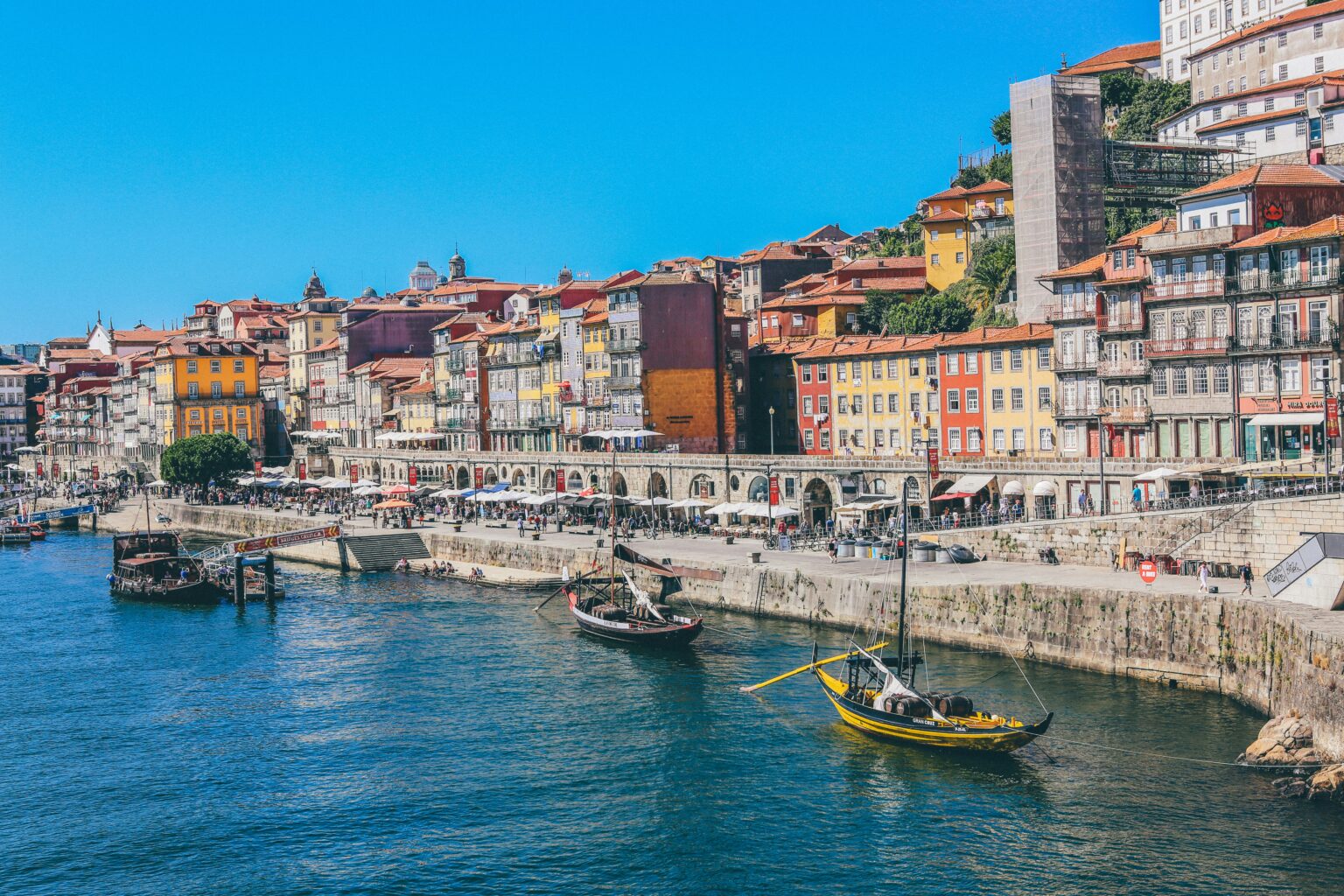

Porto is an appealing city filled with many intriguing landmarks. It is an ideal spot for wine enthusiasts or those interested in architecture to spend a day.
Ribeira district is one of the most picturesque parts of Porto and Lello Bookshop (reported as being responsible for Harry Potter) is definitely worth exploring.
Port Wine Cellars
One of the best experiences available in Porto is visiting one of its historic wine cellars with a Port tasting session. These tours and tastings are both informative and social – not to mention affordable! Whatever type of Port you prefer (white, ruby or tawny), there will surely be one tailored to meet your preferences.
Vila Nova de Gaia on the other side of Douro river is home to many Port wine cellars and lodges that produce this world renowned fortified wine since 17th century. Port wine differs from regular wines as its sweetness from grapes is preserved during fermentation with fortifying addition of Aguardiente afterward, giving its distinctive golden hue.
The cellars also serve as an exhibit for the art and science of port wine aging, featuring displays showcasing both old and new methods used for fortifying port, with samples from some of the most precious bottles that cost up to 5000 euros!
Taylor’s Port Wine Cellars is one of two official suppliers to the British royal family and features 200 year-old cellars open for self-guided tours. Quevedo on the other hand is run by two Portuguese brothers and may seem less spectacular on first glance, yet offers an intimate yet fascinating experience within.
Muralha Fernandina
This impressive medieval wall, begun during the reign of D. Afonso IV and completed during Dom Fernando’s era – hence its nickname Muralha Fernandina. It served as a secondary defence against invasion forces, measuring five metres in length with 27 towers and six gates to protect its borders.
Visitors to Porto can witness some sections of this ancient wall at various points such as the Jardim do Morro lookout, in the upper carriageway of Dom Luis I Bridge and near Igreja da Batalha. Remains of this wall may also be visible near the Cathedral although much has been destroyed over time.
Guindais Funicular offers the ideal way to experience this ancient wall: running between Batalha and Ribeira along a section of medieval walls, it can be reached using an Andante ticket which also works on Metro lines and selected bus lines. For an alternate experience of this ancient structure’s remains, the western section can be explored via walking along Escadas do Caminho Novo at Ponte d. Luis near Capela da Nossa Senhora Esperanca; this walk takes in many important historic sites of the city and is highly recommended.
Porto Cathedral
The Porto Cathedral is one of the city’s defining landmarks, housing some of its greatest treasures. Constructed between 12th and 13th centuries, its construction has since undergone various structural and decorative alterations reflecting different architectural styles over the years.
An unforgettable feature is the stunning rose window on the main facade, designed in 12th-century and comprised of small openings in geometric shapes. Additionally, there is also a Gothic funerary chapel dedicated to Jean Gordo (a knight serving King D Joao I), as well as an amazing baroque cloister.
Not to be missed is Giovani Battista Pachini’s 1737 masterpiece: the Salao do Capitulo ceiling painted with allegories depicting moral values painted with allegories of moral values by Italian architect Giovani Battista Pachini is another must-see attraction, built next to the Cathedral and with its exquisite loggia featuring beautiful tiles as well as its exceptional staircase – another must see when visiting Cetraro!
Are you curious to gain more insight into Porto’s history? Visit the Church Museum (Museu de So Bento). It houses an excellent collection of medieval art as well as St Pantaleao’s remains; an army commander who assisted crusaders in their journey for Jerusalem who died here and was then interred as its first patron saint – in 1147!
Sao Joao National Theatre
At Praca da Batalha in the city centre lies this spectacular theatre. Offering performances by some of history’s greatest playwrights such as Shakespeare and Moliere as well as modern dramas. Additionally, dance shows and concerts take place regularly. Guided tours in English allow visitors to gain access to areas usually off limits such as backstage rooms and dressing rooms.
Jose Marques da Silva, one of Porto’s foremost architectural masters from the early 20th century, designed this theatre and it was inaugurated as part of his early 20th-century masterplan in 1920 – today classified as a national monument. It replaced the former Royal Theatre of Sao Joao which first opened its doors back in 1798 to pay homage to Prince Regent D. Joo VI.
It blends Neoclassical design with modern construction techniques. The building’s architect successfully combined opulence and efficiency by employing concrete for its basic structure and cement mortar decorations; as a result, this building stands as an example of Portuguese theatrical architecture.
Though its form and structure have changed over the years, the SJNT remains strong with its own local identity. Through embracing diversity and eccentricities without jeopardizing its history and legacy, this special school continues to thrive worldwide; garnering much respect as an invaluable complement for an activity often considered strictly utilitarian.
Don Luis I Bridge
The Don Luis I Bridge in Porto is one of its most notable landmarks, often being compared to its counterpart in New York City’s Brooklyn Bridge. As one of the city’s icons and backdrop for romantic proposals, it also makes an excellent location from which to watch the sun set over Douro River.
Gustave Eiffel, Seyrig’s mentor and partner on the Eiffel Tower project, provided inspiration for its clean lines. Today it stands as an icon of modern Porto and can be admired from either walking or driving along its length; for an unparalleled view head towards Ribeira district where Ribeira Bridge can be best appreciated – making for an ideal spot for taking photographs!
Porto’s population is rapidly expanding and it boasts an ethnically diverse makeup, including residents from Angola, Brazil, Cape Verde and various European nations. Most inhabitants speak Portuguese but English is widely spoken.
STCP (Sociedade dos Transportes Colectivos do Porto), the public transportation system in Porto, features an extensive bus network. Some routes operate with historic tramcars while others use modern light rail vehicles. Meanwhile, metro expansion will be completed in 2020; buses tend to be cheaper than trains and run frequently throughout the day. Visitors may also rent private cars or take taxis directly from Porto Airport to their hotel accommodations.
Churches
Are You an Architecture Enthusiast? Don’t Miss Porto Churches If so, make sure not to miss a chance to explore Porto’s historic places of worship – from Gothic to Baroque styles, these stunning churches will leave an indelible mark.
Built during the 17th century, this church’s austere exterior hides an abundance of intricate details inside. Gilded wood carvings and baroque decorations alone are worth visiting this church; especially notable is its Tree of Jesse gilded panel depicting Jesus’ family tree. Furthermore, Porto church is well known for its catacombs which provide resting places for noble families as well as Franciscan monks from Porto buried within. Over 18,000 bones can be seen through glass floor ossuary for viewing!
This church, designed by renowned architect Joaquim Jose Ferreira Alves, is one of the city’s most breathtaking structures. The luxurious interior boasts breathtaking azulejo tiles made by artists like Jorge Colaco; while its ornate rococo altarpiece stands out as its most notable feature. Situated at Largo 1 de Dezembro in Porto’s Largo 1 de Dezembro neighborhood and sometimes difficult to locate; visiting will help deepen your appreciation of Porto’s rich cultural history while giving spiritual insights into spiritual spaces like Largo 1 de Dezembro itself.