


Quick Answer
The Camino de Santiago (Way of St. James) is a network of medieval pilgrimage routes to Santiago de Compostela in Galicia, Spain — where tradition holds Apostle James is buried. UNESCO World Heritage 1993. Most popular route: Camino Francés (French Way), 800 km from St-Jean-Pied-de-Port (France) to Santiago, 30-35 days walking. Other routes: Camino Portugués (640 km, Lisbon-Santiago), Camino del Norte (825 km, coastal), Camino Primitivo (320 km, original 9th-century route), Vía de la Plata (1,000 km, Seville). To get certificate (Compostela): walk minimum 100 km or cycle 200 km, get pilgrim passport stamps. Best season: April-June and September-October. Avoid July-August (40°C+, crowded). Costs: €25-40/day (basic albergue + meals). 350,000+ pilgrims/year complete pilgrimage. Holy Year 2027 next.
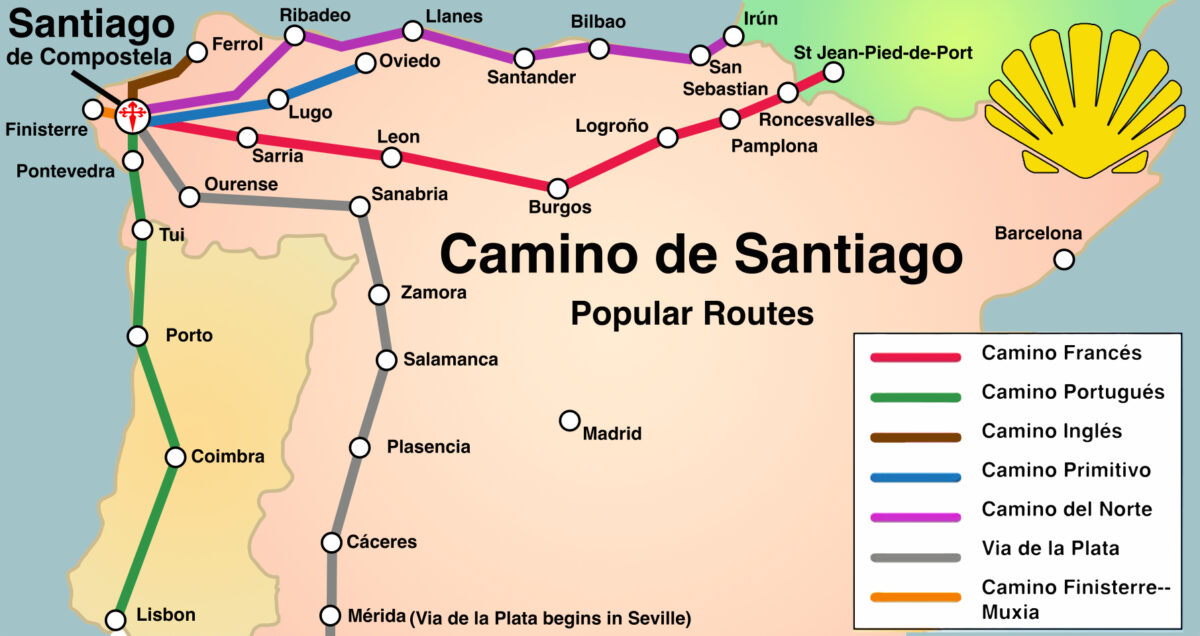
The five main routes
- Camino Francés (French Way) — 800 km, 30-35 days: most popular, well-marked, plenty of albergues. From St-Jean-Pied-de-Port to Santiago via Pamplona, Burgos, León.
- Camino Portugués (Portuguese Way) — 640 km, 24-28 days: from Lisbon. Less crowded. Or shorter from Porto (240 km, 12 days).
- Camino del Norte (Northern Way) — 825 km, 32-38 days: Atlantic coast via San Sebastián, Bilbao, Santander. Most beautiful but harder.
- Camino Primitivo (Original Way) — 320 km, 12-14 days: oldest route from Oviedo (9th century). Hardest, most mountainous, fewest pilgrims.
- Vía de la Plata (Silver Route) — 1,000 km, 35-40 days: Seville to Santiago. Longest, hottest, fewest pilgrims.
- Other: Camino Inglés (110 km, 5-7 days, from Ferrol — minimum length for Compostela).
Camino Francés stages
- St-Jean-Pied-de-Port to Roncesvalles: first day, brutal Pyrenees climb. 27 km, 1,200m gain. Sleep at Roncesvalles monastery.
- Pamplona: 60 km from start. Hemingway’s bullrun city. Catedral de Santa María.
- Burgos: 280 km. Cathedral UNESCO. El Cid’s tomb.
- León: 480 km. Cathedral León (medieval stained glass), San Isidoro Basilica (Romanesque).
- Astorga: 530 km. Gaudí’s Episcopal Palace.
- Ponferrada: 600 km. Templar castle.
- O Cebreiro: 720 km. Galician border, traditional pallozas (round houses).
- Santiago de Compostela: 800 km. Cathedral, Pilgrim’s mass at noon, hug the Apostle.
Pilgrim passport (Credencial)
- Get one: at start (€2). Allows access to pilgrim albergues. Stamps prove progress.
- Compostela certificate: requires minimum 100 km walking (last 100 km from Sarria for Camino Francés) or 200 km cycling.
- 2 stamps/day minimum: at albergues, churches, restaurants. Catedral de Santiago checks.
- Reasons stated: religious, spiritual, or cultural. Religious gets standard Compostela; cultural gets Certificate of Welcome.
- Pilgrims office in Santiago: present passport, get Compostela.
Accommodation: albergues
- Municipal albergue: €5-12/night. Run by towns. Basic (dorm, shared bathroom). First-come-first-serve.
- Private albergue: €10-20. Reservable. Better facilities.
- Donativo (donation-based): some albergues free, donations welcome. Often religious-run.
- Casa rural / Pension: €20-40 single/double. More privacy.
- Hotels: €50-100. For luxury Camino.
- Tip: first 100 km Sarria-Santiago has highest demand. Reserve ahead in summer.
- Etiquette: arrive by 4-5pm, leave by 7-8am. Quiet hours strictly enforced.
Packing essentials
- Backpack: 35-50 liters. Goal: 10% of body weight max.
- Hiking boots: broken-in. Trail running shoes also popular.
- Walking sticks: reduce knee impact 30%.
- Layers: base, fleece, rain jacket. Spring/autumn temperatures vary 10-25°C.
- Sleeping bag: lightweight required for albergues.
- Sandals: for evening + albergue showers.
- Sunscreen, sunglasses, hat: Spanish sun strong.
- First aid: blister kit (Compeed essential), pain reliever, antiseptic.
- Skip: excess clothing, hair products, heavy gear. Send home if too heavy at Sarria.
When to walk
- April-June: ideal — flowers, mild temps (15-22°C), increasing pilgrim numbers but not peak.
- July-August: peak — overcrowded (200+ pilgrims/day at Sarria), 35-40°C. Avoid unless needing.
- September-October: best — fewer crowds, harvests, mild weather. Most experienced pilgrims walk now.
- November-March: low season. Many albergues closed. Cold, rainy. Hardcore only.
- Holy Years (Año Santo): when July 25 (St James Day) falls on Sunday. Last 2021. Next 2027. More pilgrims, special masses.
Costs and budget
- Daily budget basic: €25-40 (albergue + 3 meals + drinks). Most budget pilgrims.
- Daily mid-range: €60-90 (private albergue or pension + restaurant meals).
- Pilgrim menu del día: €10-15 for 3 courses + wine.
- Total Camino Francés (35 days): €875-1,400 budget, €2,100-3,150 mid-range.
- Plus: flights, gear (€200-500 if new), insurance.
Frequently Asked Questions
How long does the Camino take?
Camino Francés (most popular, 800 km): 30-35 days. Camino Portugués (640 km): 24-28 days. Last 100 km only (minimum for Compostela): 5-7 days.
How much does Camino cost?
€25-40/day basic. Total Camino Francés: €875-1,400 budget, €2,100+ mid-range. Plus flights and gear (€200-500 if new).
Do I need to be religious to walk the Camino?
No. Pilgrim passport asks reason (religious, spiritual, or cultural). Most modern pilgrims walk for personal/spiritual reasons, fitness, or adventure. All are welcome.
What’s the best time to walk?
April-June and September-October. Avoid July-August (40°C, overcrowded). November-March: many facilities closed, cold/rainy.
Can I walk just part of the Camino?
Yes. Most popular: Sarria to Santiago (100 km, 5-7 days) — minimum to earn Compostela certificate. Many short caminos available.
How do I get the pilgrim passport?
Get Credencial at start (€2 from albergues, parishes, pilgrim offices). Collect 2+ stamps/day from albergues, churches, restaurants. Present at Pilgrims Office in Santiago for Compostela.
Recommended on Amazon
As an Amazon Associate, grandgo.com earns from qualifying purchases. Links below are affiliate links — clicking them may earn us a small commission at no extra cost to you. Prices and availability are shown on Amazon.co.uk.
- Camino guidebook 2026 — comprehensive route guide.
- Pilgrim backpack 40L — lightweight Camino-suitable.
- Compeed blister patches — essential for Camino.
See also
Related Guides
- How to Get from Bilbao Airport (BIO) to City Centre — Airport guide
More Train Station Guides
- Lisbon Gare do Oriente Guide — Train station guide