


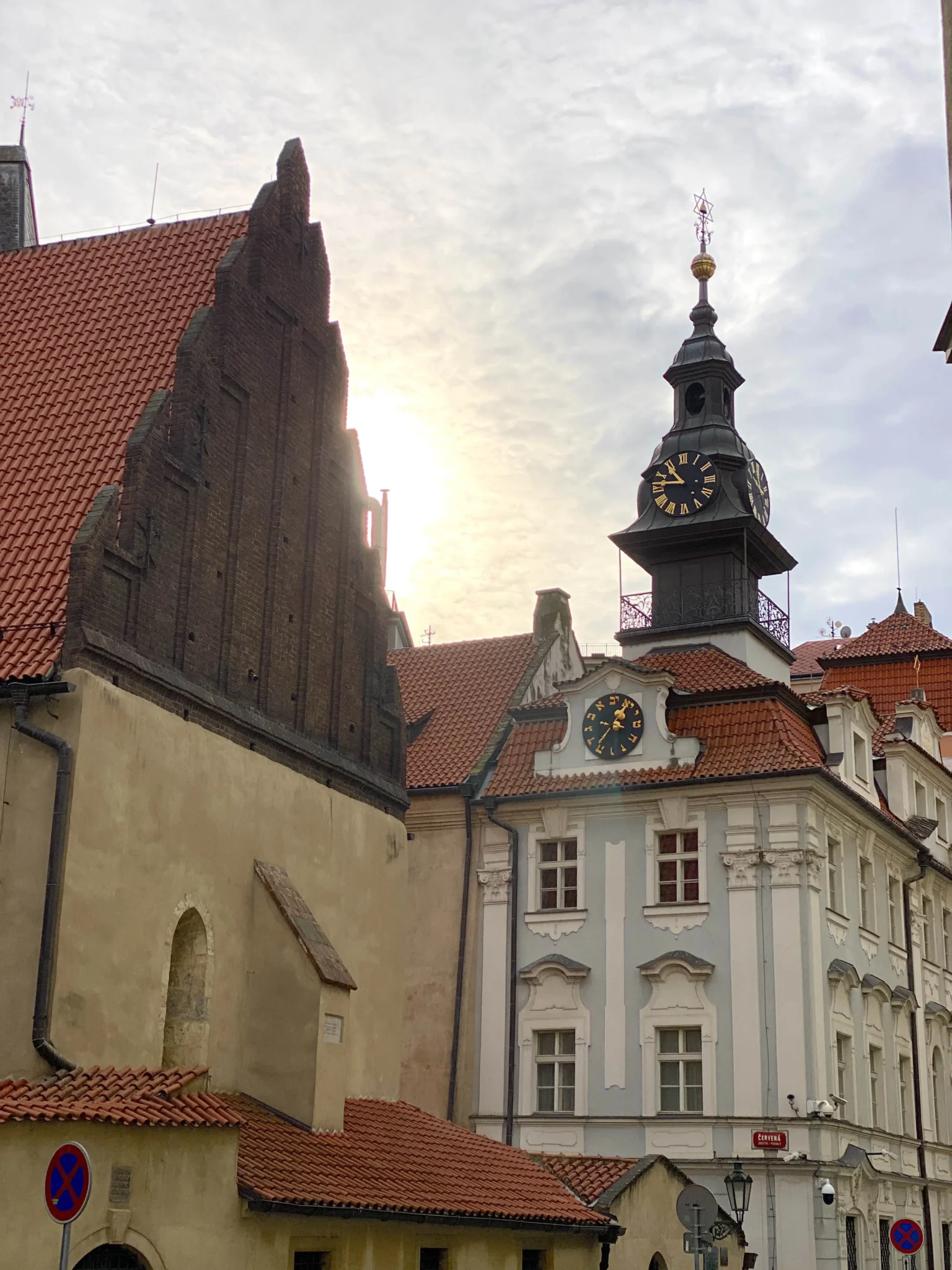

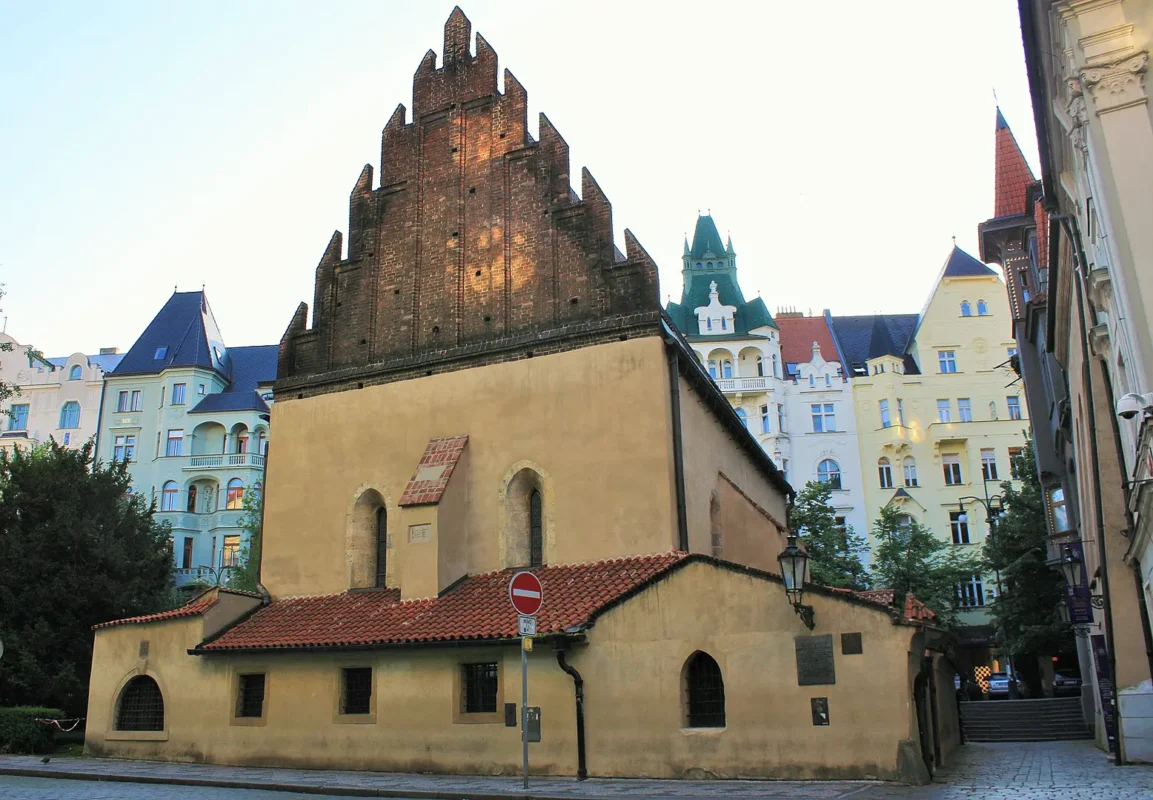
Nestled in the heart of Josefov, Prague, stands a monumental testament to Jewish heritage and architectural ingenuity – the Old New Synagogue, also known as Altneuschul. Dating back to 1270, this Gothic masterpiece is not only the oldest active synagogue in Europe but also the oldest surviving medieval synagogue with a twin-nave design, making it a remarkable historical site.
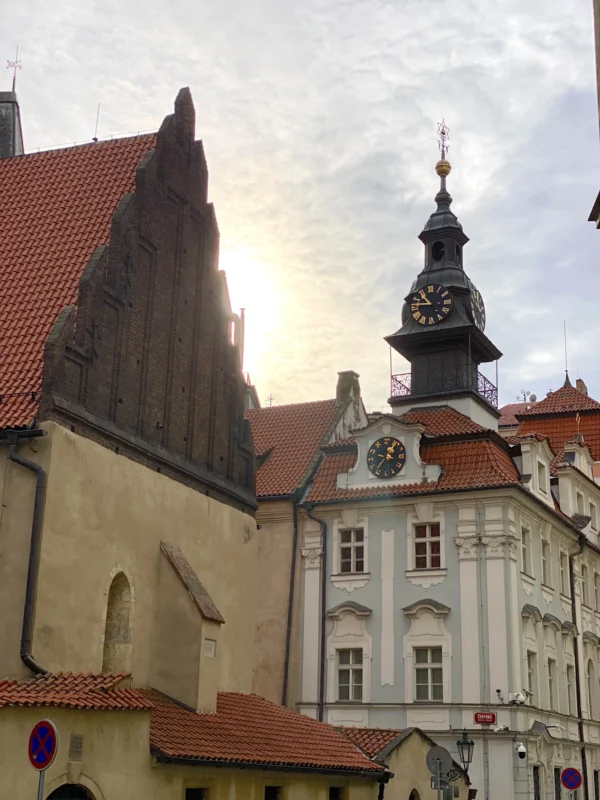
Originally known as the New or Great Synagogue, its name evolved to the Old-New Synagogue in the 16th century when newer synagogues emerged. Intriguingly, its name might also derive from the Hebrew עַל תְּנַאי (al tnay), meaning “on condition,” which aligns with a legend. It’s said that angels brought stones from the Temple in Jerusalem to build this synagogue, with the condition of returning them when the Messiah arrives.
Upon entering the synagogue, one is immediately struck by its unique architectural features. Nine steps lead to a vestibule that opens into a double-nave with six vaulted bays, likely inspired by Christian monasteries and chapels. The interior design includes a twelve-vine motif on the tympanum and twelve narrow Gothic windows, symbolizing the twelve tribes of Israel. The unusual vaulting of the bays, with five ribs instead of the typical four or six, is a subject of debate among scholars, with some suggesting it was to avoid associations with the Christian cross.
Central to the synagogue’s layout is the bimah, from which Torah scrolls are read, flanked by two large pillars. The bimah base repeats the twelve-vine motif, while the Aron Kodesh, storing the Torah scrolls, is on the eastern wall, elevated by five steps and flanked by stained glass windows. A lectern in front of the ark features a square well for the service leader.
The synagogue’s design led many to compare it to Solomon’s Temple, especially the twelve lancet windows directing light towards the bimah. Following orthodox customs, it has separate seating for men and women, with women sitting in an outer room with windows into the main sanctuary. The synagogue’s roof framework, gable, and party wall date from the Middle Ages.
A striking feature within the synagogue is a large red flag near the west pillar, featuring a Star of David and a Jewish hat, both stitched in gold, along with the text of Shema Yisrael. This flag, awarded by Ferdinand III for the Jewish community’s defense of Prague during the Thirty Years War, symbolizes the community’s resilience and contribution.
Adding to the synagogue’s mystique is the legend of the Golem, said to lie in the attic, created by Rabbi Judah Loew ben Bezalel. The attic, housing the genizah of Prague’s community, has been closed to the public since World War II when the Gestapo spared the synagogue.
The Old New Synagogue is not just an architectural marvel but a living chronicle of Jewish perseverance, faith, and community spirit. It remains a beacon of history, continuing to hold regular services and playing a vital role in Prague’s Jewish community. This ancient edifice is a must-visit for anyone interested in the rich tapestry of Europe’s religious and cultural history
Sprzęt podróżny — polecane na Amazon
Jako uczestnik programu Amazon Associates, grandgo.com uzyskuje dochody z kwalifikujących się zakupów. Poniższe linki to linki afiliacyjne — kliknięcie w nie może dać nam małą prowizję bez dodatkowych kosztów dla Ciebie. Ceny i dostępność są widoczne na Amazon.co.uk.